
A comfortable backyard should feel like an extension of the home, not a space where every conversation is on display. Yet privacy can be difficult to achieve when neighboring windows overlook a patio, houses sit close together, or a garden faces a shared walkway. Raising a fence may seem like the simplest answer, but it can be costly, restricted by local rules, and visually heavy. A more thoughtful approach uses plants, layout, shade, and carefully chosen outdoor features to create separation while keeping the yard open.
For homeowners exploring little elm landscaping, privacy planning should account for the property’s sunlight, available space, drainage, and the way the yard is used. A dining area may need screening at seated eye level, while a garden bench may benefit from a leafy backdrop and shade overhead. The goal is not to block every view. It is to soften the most exposed sightlines and make important parts of the yard feel more comfortable.
Identify Where Privacy Matters Most
Before buying plants or installing screens, spend time observing the yard. Notice which neighboring windows look toward the patio, where people can see into the garden from the street, and which areas feel exposed when you sit or stand. Check the space at different times of day, because sunlight and activity patterns can change how visible an area feels.
A simple site sketch can help. Mark doors, windows, patios, property boundaries, existing trees, utility equipment, and frequently used paths. Then identify the views you would most like to soften. This prevents the common mistake of screening the entire perimeter when only one seating area needs extra privacy.
Think about the type of privacy required. Visual screening can make a patio feel secluded, but it will not necessarily block voices or traffic noise. Dense planting may soften some sound, yet it should not be treated as soundproofing. If noise is the main concern, consider it separately when choosing the location and materials for the outdoor living area.
Use Layered Planting Instead of a Solid Green Wall
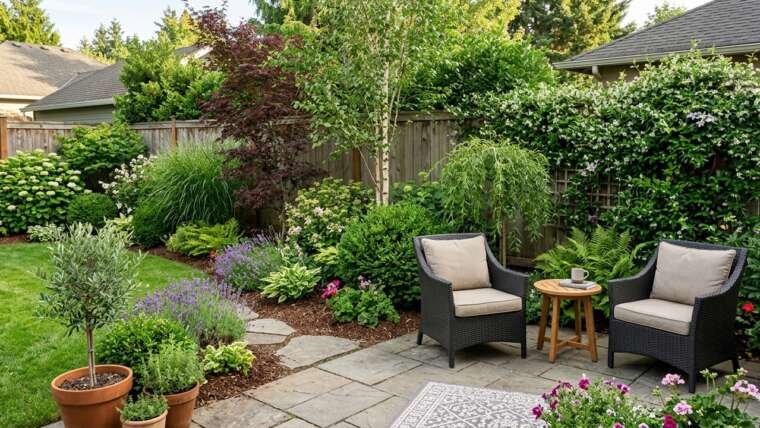
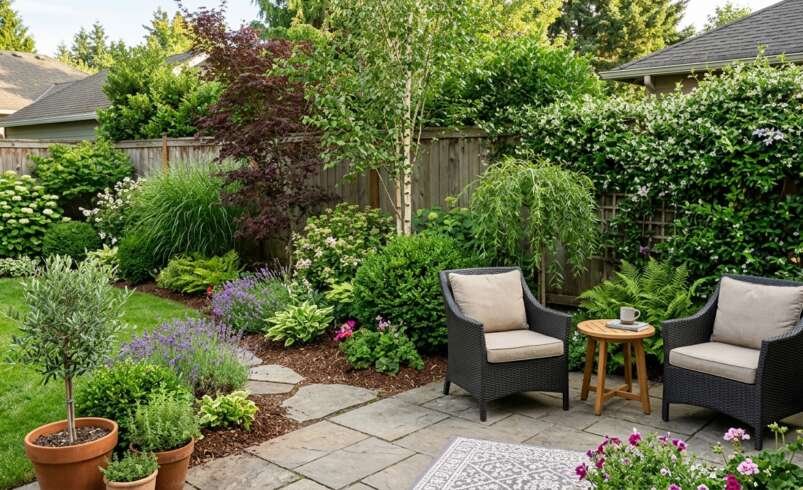
Plants can provide privacy while adding texture, seasonal interest, and habitat value. Rather than arranging a single row of identical shrubs, combine different heights and forms. A small ornamental tree can provide overhead screening, medium shrubs can soften views at eye level, and lower plants can finish the edge without creating a bulky hedge.
Layered planting tends to look more natural than a continuous wall of greenery. It also gives you more flexibility if one plant struggles or needs replacement. Before selecting species, check mature height and width, sunlight needs, water requirements, and suitability for the soil. A plant that eventually becomes too wide for its location can block paths, crowd neighboring plants, or require constant pruning.
For little elm landscaping, plant selection should also reflect North Texas conditions. Summer heat and periods of dry weather can challenge newly planted shrubs, while heavy rain may expose drainage problems. Regionally adapted plants can be useful, but the right choice still depends on the exact site. Avoid planting large shrubs where they will obstruct windows, hide utility access, or interfere with visibility near driveways.
Three ways to create a natural privacy screen
A successful screen usually combines more than one plant type or height. These approaches can help create a sense of separation without turning the yard into a closed corridor.
- Mix heights and textures: Combine a small tree, medium shrubs, and lower ornamental grasses or perennials where space allows. Varying forms creates a softer visual boundary than a uniform hedge.
- Screen the view, not the whole boundary: Place plants near the patio or along the specific sightline you want to block, rather than planting a dense row around every edge.
- Leave room for mature growth: Check the expected width of each plant and allow space for air circulation, maintenance, and access behind the screen.
Remember that a newly planted screen may take time to fill in. If immediate privacy is important, pair young plants with a temporary or permanent architectural feature rather than crowding shrubs together in an attempt to make them look mature sooner.
Position Seating to Make the Yard Feel More Secluded
Privacy often improves when furniture and outdoor activities are arranged more carefully. A patio placed directly in line with a neighboring window can feel exposed even when the yard has plenty of trees. Turning the seating area slightly, moving a dining table away from a boundary, or positioning a bench behind a planting bed can reduce direct sightlines without major construction.
Use the home itself as part of the layout. A covered porch, exterior wall, pergola, or existing tree may already provide some shelter. Place the main seating area where these features offer a useful backdrop, then add screening only where it is needed. Keep routes from doors to seating areas clear so the layout remains practical for everyday use.
Consider different levels of privacy for different activities. A dining table may need screening from nearby windows, while an open lawn can remain visible and spacious. Creating one intimate corner is often more effective than trying to make the whole yard equally secluded.
Add Screens, Trellises, and Pergolas With Care
Architectural features can provide privacy while maintaining a light, open design. A trellis with climbing plants filters views rather than creating a solid barrier. A slatted screen can shield a particular angle while allowing some light and airflow. A pergola may define an outdoor room overhead, especially when paired with climbing plants or outdoor curtains designed for exterior conditions.
Placement matters more than size alone. A screen positioned near a seating area may block a direct view with less material than a long structure placed along the property line. Think about how the feature looks from inside the house as well as from the yard. A screen that hides a neighbor’s window from the patio may unintentionally block a pleasant view from the kitchen.
Before installing any permanent structure, check applicable local requirements, property restrictions, and utility locations. Secure mounting and suitable materials are important, especially for features exposed to strong winds or storms. Outdoor curtains can offer flexible coverage, but they should be secured or removed when weather conditions make them vulnerable.
Three design details that keep privacy features from feeling bulky
A screen should make the outdoor area more comfortable without dominating the landscape. A few design decisions can help balance privacy with openness.
- Choose partial screening where possible: Slats, trellises, and open-frame structures can interrupt direct views while preserving light and airflow.
- Coordinate materials with the home: Repeat a color, finish, or material already used on the house, patio, or garden edging to make the feature feel intentional.
- Use greenery to soften hard edges: Place suitable planters or climbing plants near a screen, leaving enough room for growth and maintenance rather than covering the structure too densely.
These features work best when they support the layout instead of competing with it. Avoid adding several screens, tall planters, and dense shrubs in one small area, as the combined effect can make the space feel crowded.
Use Shade and Vertical Space for More Privacy
Privacy is not only about what happens at the property line. Overhead shade can make a patio feel like a separate outdoor room and reduce the sense of exposure from upper-level windows. Depending on the site, a pergola, shade sail, canopy, or appropriately placed tree may help define the space. Each option has different needs for anchoring, maintenance, and seasonal performance, so choose based on the structure and local conditions.
Vertical gardening can also make a small yard feel more layered. Trellises, wall-mounted planters, and tall containers add greenery without taking up as much ground space as broad planting beds. They are useful near patios or narrow side yards, where a full hedge may leave too little room to move. However, containers dry out faster than many in-ground plantings and may need more frequent watering during hot weather.
For little elm landscaping projects, consider how shade will change over time. A young tree may provide little screening at first but develop a broad canopy as it matures. Keep mature size in mind, and avoid placing trees too close to structures or underground utilities. Where quick coverage is necessary, combine long-term planting with a carefully positioned screen.
Compare Privacy Options Before Choosing One
Different solutions suit different yards. The most useful choice depends on how much space is available, whether the view comes from the side or above, and how much maintenance the homeowner wants to take on. A good little elm landscaping design considers these trade-offs before materials are purchased or planting begins.
| Privacy option | Best use | Main planning consideration |
|---|---|---|
| Layered shrubs and small trees | Softening views along a patio or boundary | Mature size, watering, and time needed to fill in |
| Trellis with climbing plants | Filtering a narrow or targeted sightline | Support strength, plant growth, and seasonal coverage |
| Slatted privacy screen | Blocking a specific view while retaining airflow | Placement, secure installation, and local requirements |
| Pergola or shade structure | Defining an outdoor seating zone and providing overhead shelter | Anchoring, shade pattern, and maintenance |
| Tall planters | Adding movable screening beside seating | Container stability, drainage, and frequent watering |
| Furniture repositioning | Reducing direct views into a dining or lounging area | Everyday circulation and access to doors |
| Small ornamental tree | Adding vertical structure and partial overhead screening | Mature canopy, roots, and distance from buildings |
A combination may work better than a single feature. For example, a short slatted screen beside the dining table, paired with medium shrubs farther back, can block a direct view without requiring a continuous barrier. Compare options based on the actual sightline and how the space will be used.
Balance Privacy With Light, Airflow, and Maintenance
Dense screening can solve one problem while creating another. Thick evergreen planting may reduce light to a garden bed, and a solid screen can block breezes or make a narrow yard feel darker. Before committing, consider what the feature will look like in summer and winter, how it will affect nearby plants, and whether you can reach it for pruning or repairs.
Maintenance is particularly important for living screens. Plants need watering while they establish, and some species require periodic pruning to remain healthy and fit the space. Choose a growth habit that suits the amount of attention available. If the yard is used mainly on weekends, a design that depends on frequent trimming may quickly become frustrating.
Keep drainage in view as well. Planting beds and large containers should not trap water against a wall or redirect runoff toward the house. When adding soil or changing grades, avoid covering siding, vents, or other features that need clearance. A privacy upgrade should improve the outdoor space without creating moisture or access problems.
Plan the Project in a Sensible Order
A little preparation can prevent unnecessary spending. Start by identifying the key sightlines and measuring the available space. Next, decide whether planting, furniture placement, a screen, or a combination will address each concern. Only then should you compare plant varieties, materials, and installation options.
Three checks before installation
Before work begins, confirm that the design will fit the site and remain practical once everything is in place.
- Measure and mark the footprint: Use temporary markers to outline screens, planters, or planting beds, then walk through the area to check clearances and views.
- Check site constraints: Locate utilities and review relevant rules or property restrictions before digging or installing permanent structures.
- Plan the upkeep: Consider watering, pruning, cleaning, and repairs, and make sure each feature can be reached safely when maintenance is needed.
If the project involves large trees, complex grading, retaining structures, or uncertain drainage, seek appropriate professional guidance before construction. Resolving these issues early is generally easier than correcting them after new plants and features have been installed.
Frequently Asked Questions
What is the quickest way to add privacy to a backyard?
Repositioning furniture, adding a suitable tall planter, or installing a well-placed screen can provide immediate improvement. The best choice depends on the specific view, available space, and local requirements for permanent structures.
Which plants are best for a natural privacy screen?
There is no single best plant for every yard. Choose species suited to the available sunlight, soil, water conditions, and mature space. Regionally adapted plants may be useful, but confirm their growth size and care needs before planting.
Can a pergola provide privacy from neighboring homes?
A pergola can help define a seating area and provide overhead shade, but an open pergola does not automatically block side views or upper-level windows. It may need carefully placed screening, climbing plants, or a different seating orientation to address specific sightlines.
How can a small yard feel private without looking crowded?
Focus on the views that matter most instead of screening every boundary. Use one or two layered planting areas, partial screens, and a clear furniture layout. Leaving some open lawn or visual space can help the yard feel larger.
Do privacy plants need frequent maintenance?
Maintenance varies by species, climate, and location. Most living screens need attention during establishment, and some require regular pruning or watering. Choosing plants that fit the site and their mature space can reduce unnecessary work.
Conclusion
A private backyard does not have to be surrounded by taller fences. Thoughtful planting, a better seating layout, partial screens, shade structures, and carefully selected containers can reduce unwanted views while preserving light and an open feel. The best solution starts with understanding where privacy is needed and choosing features that fit the space rather than adding barriers everywhere.
A practical little elm landscaping plan balances comfort with the realities of North Texas weather, available space, and future maintenance. By planning sightlines, mature plant sizes, drainage, and installation details before work begins, homeowners can create an outdoor setting that feels more personal and inviting without making it closed off from the rest of the yard.