
Managing vehicle movement has become an important part of modern infrastructure. Residential societies, corporate offices, shopping malls, factories, warehouses and commercial parking facilities handle hundreds or even thousands of vehicle movements every day. Without a proper entry management system, these locations can experience traffic congestion, unauthorised access and unnecessary delays.
Traditional gates and manually operated barriers may work for locations with limited traffic, but they become less efficient when vehicle movement increases. This is where an automatic boom barrier system provides a practical solution by combining automated operation, access control and vehicle management.
Today, boom barrier systems are widely used to create organised entry and exit points while improving the overall experience for visitors, employees and authorised vehicles.
What Is a Boom Barrier and How Does It Work?
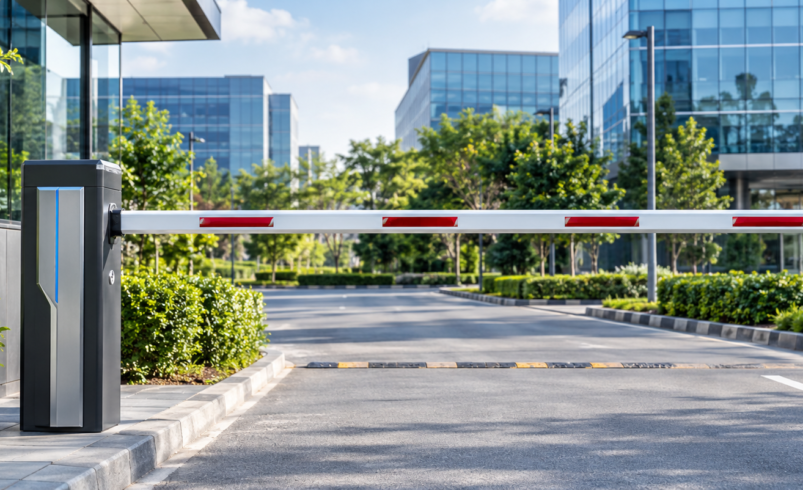
A boom barrier is a vehicle access control device that uses a horizontal arm to regulate the movement of vehicles through a designated entry or exit point. The arm moves vertically to allow authorised vehicles to pass and returns to its closed position when the vehicle has cleared the lane.
A typical automatic boom barrier consists of a motorised mechanism, control unit, barrier arm and operating system. Depending on the installation, it can receive commands through a remote control, push button, RFID reader or other access control equipment.
The basic operating process involves three steps:
-
A vehicle approaches the designated entry point.
-
The access control system verifies the vehicle or receives an authorised opening command.
-
The boom arm rises, allowing the vehicle to pass, and closes after the vehicle has cleared the area.
When integrated with suitable vehicle detection and safety devices, the system can help reduce operational errors and improve traffic flow.
Different Applications of Automatic Boom Barrier Systems
The requirement for vehicle access management varies depending on the location, traffic volume and security requirements. Therefore, automatic boom gate systems are used across several industries.
1. Residential Societies and Gated Communities
Residential complexes receive regular traffic from residents, visitors, delivery personnel and service providers. A parking boom barrier can help separate authorised and unauthorised vehicle movement.
When integrated with RFID-based access control, registered residents can access the premises without depending entirely on manual gate operation.
2. Corporate Offices and Commercial Buildings
Office buildings require organised entry management for employees, visitors and company vehicles. An automatic boom barrier can be integrated with employee identification systems and parking management solutions to improve access management.
3. Shopping Malls and Commercial Parking Facilities
Parking facilities experience varying traffic volumes throughout the day. A barrier boom gate connected with parking ticketing or access management software can help regulate vehicle entry and exit.
This arrangement also supports a more organised parking process and reduces dependency on manual intervention.
4. Industrial Facilities and Warehouses
Factories and logistics facilities need to monitor vehicle movement involving employees, delivery trucks, suppliers and transport vehicles. A boom barrier system can establish controlled entry points and support existing security procedures.
5. Toll Plazas and Highway Entry Points
Toll facilities require organised vehicle movement and integration with transaction or lane management systems. A toll boom barrier can operate as part of a larger traffic management setup, allowing authorised vehicles to proceed after the required validation.
Why RFID Integration Is Important in Modern Boom Barrier Systems
One of the major developments in vehicle access management is the integration of Radio Frequency Identification (RFID) technology.
An RFID boom barrier uses an RFID reader to identify an authorised tag associated with a vehicle. When the reader receives valid identification and the access control system approves the request, the barrier can open automatically.
This approach is particularly useful in locations where the same vehicles enter and exit frequently.
Some important advantages include:
-
Reduced dependence on manual remote operation.
-
Convenient entry for registered vehicles.
-
Better management of authorised vehicle access.
-
Support for vehicle entry records when connected to suitable software.
-
Improved integration with parking and security management systems.
A boom barrier with RFID can be especially useful for residential communities, corporate campuses, institutional buildings and organised parking facilities.
However, RFID is not the only available option. Remote controls, access cards, vehicle detection sensors and other identification technologies can also be considered depending on operational requirements.
Important Factors to Consider Before Selecting a Boom Barrier
Selecting the right boom barrier requires more than comparing product prices. The equipment should match the actual requirements of the installation site.
Traffic volume: Estimate the number of vehicles entering and leaving during peak hours. High-traffic locations may require equipment designed for frequent operation.
Boom arm length: The barrier arm should cover the required lane width. Site dimensions and available installation space should be evaluated before selecting a model.
Opening and closing speed: Faster operation can be beneficial for busy parking facilities and commercial entry points. However, speed should be balanced with appropriate safety measures.
Access control compatibility: Determine whether the system needs to work with RFID, remote controls, access cards, ticketing equipment or parking management software.
Safety features: Vehicle detection systems, photocells and suitable safety controls are important considerations to help prevent the barrier arm from closing on a vehicle.
Installation environment: Outdoor installations should consider exposure to rain, dust, temperature changes and other environmental conditions.
Maintenance and technical support: Availability of spare parts, installation assistance and periodic servicing can influence the long-term performance of the system.
Evaluating these factors helps businesses select a solution that suits their infrastructure instead of choosing equipment based only on its initial cost.
What Determines the Boom Barrier Price in India?
The boom barrier price in India can vary significantly depending on the equipment configuration and installation requirements. There is no single price suitable for every application because different sites have different operational needs.
Some important factors affecting the automatic boom barrier price include:
-
Type of motor and operating mechanism.
-
Barrier arm length and design.
-
Required opening and closing speed.
-
Traffic frequency and operating cycle requirements.
-
RFID or other access control integration.
-
Safety accessories and vehicle detection devices.
-
Installation, wiring and civil work.
-
Warranty, maintenance and after-sales support.
When comparing a boom barrier manufacturer or supplier, organisations should request a detailed quotation covering equipment specifications, accessories, installation requirements and service support.
A lower initial quotation may not always represent the best long-term investment. Compatibility, reliability and maintenance requirements should also be considered.
Choosing the Right Boom Barrier Manufacturer and Supplier in India
The selection of a reliable boom barrier manufacturer is an important step in establishing an effective vehicle access control system.
Businesses should evaluate manufacturers and suppliers based on product suitability, technical information, installation support and the ability to understand project-specific requirements.
A dependable supplier should help assess the site, recommend an appropriate configuration and explain the integration possibilities before installation.
For organisations exploring automatic vehicle access solutions,
can be considered as part of the evaluation process.
Reviewing the available product information and discussing the site’s requirements can help businesses identify a suitable boom barrier system for their parking, commercial or industrial infrastructure.
Conclusion
Automatic boom barrier systems have become an important component of modern vehicle access management. From residential societies and office buildings to industrial facilities and toll plazas, these systems help organise vehicle movement and support controlled entry and exit operations.
The effectiveness of a boom barrier depends on selecting the appropriate equipment, integrating suitable access control technology and ensuring proper installation and maintenance.
As parking infrastructure and security requirements continue to evolve, automatic boom gates and RFID-based access solutions will remain valuable options for organisations looking to improve vehicle management and operational efficiency.