
Step into any well-designed garden on a hot afternoon and listen. Beneath the hum of the city there is often a soft, steady sound of moving water, and the space immediately feels calmer and cooler. That effect is exactly why landscape water features have become one of the most requested upgrades for villas, courtyards and entrance gardens across the capital.
But water in a desert city is also a serious design question. How do you enjoy a fountain or waterfall without wasting resources? Which style survives 45°C summers? How much care does a feature need once the installers leave? This guide answers those questions in plain language. You will learn what water features are, the main types, the benefits, the details that decide success, a practical planning process, and how to keep everything clean and efficient. The advice is based on the hands-on work of Atlanta Pools landscape experts, and for owners who want a larger statement piece, our premium swimming pool builders can integrate waterfalls, spillways and sheer descents directly into the pool design.
Have a corner of your garden in mind? Plan Your Water Feature with our team and we will turn the idea into a practical design.
What Are Landscape Water Features?
Landscape water features are decorative elements that bring moving or still water into an outdoor space. They can be as small as a bubbling urn on a patio or as large as a multi-level waterfall flowing into a pond. Most use a recirculating system, meaning a pump lifts water from a hidden reservoir or basin and sends it through a spout, spillway or channel before it returns to the start. This keeps consumption low because the same water is used again and again, with only small top-ups to replace evaporation.
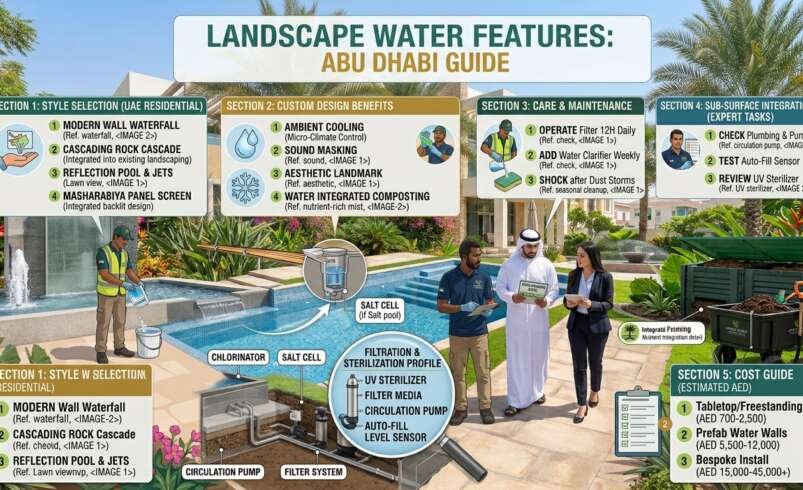
A complete feature has several parts that must work together: the basin or reservoir, the pump, pipework, the visible element (such as a fountain head or wall), a filtration or screening method, an automatic or manual fill system, and often lighting. The quality of each part, and how well they are matched, decides whether the feature stays beautiful or becomes a constant chore.
It is also worth separating water features from pools. A pool is designed for swimming and requires full sanitation, while most decorative features are not meant for bathing, so they use different equipment and care routines. In many modern villas the two blend, with the pool edge, steps and surrounding garden sharing the same design language. If you are still shaping your outdoor budget, this advice on budget-friendly garden landscaping ideas can help you decide how much to invest and where.
Types of Landscape Water Features
There is a style for nearly every space, taste and budget. These are the most common choices.
Freestanding Fountains
These are the classic choice, from carved stone tiers to sleek modern bowls. They work well as focal points in courtyards or at the end of a garden path. Because they are self-contained, they are relatively easy to install and move.
Wall-Mounted Water Features
When floor space is limited, a wall feature is an elegant answer. Water slides down textured stone, glass or metal panels into a concealed basin below. Walls are ideal for narrow side yards, balconies and entrance areas.
Waterfalls and Cascades
Multi-level waterfalls create movement and sound. They can be built from natural-look rock, cast stone or contemporary slabs. A well-designed cascade hides its pipes and edges so that it looks like part of the landscape, not an installation.
Ponds and Reflecting Pools
Still water has its own charm. A reflecting pool mirrors the sky, trees and architecture, adding depth to a modern garden. Shallow ponds can support aquatic plants, though fish require careful temperature and oxygen management in hot climates.
Pondless Waterfalls and Bubblers
These features use a hidden underground reservoir, so there is no exposed pool of water. They are popular with families because they reduce the open-water risk for small children, and they also lower evaporation compared with a large surface area.
Rills, Channels and Spill Bowls
Narrow channels of water running along a path or terrace give a refined, linear look. Spill bowls and scuppers add sculptural interest and are often used in contemporary courtyards.
Pool-Integrated Features
Sheer descents, raised spillways, laminar jets and fountains can be built into pool design. They bring sound and motion to the swimming area and can be switched on only when the family is outside. If you are planning a new build, a professional pool maintenance programme should be considered at the same time, since moving water features add small mechanical and cleaning needs.
Indoor and Semi-Indoor Features
Atriums, lobbies and majlis spaces also benefit from small fountains or wall features that humidify and soften hard interiors. When combined with greenery, they create a spa-like mood, and trained indoor plant care services can keep the surrounding planting lush and healthy.
Benefits of Landscape Water Features
Water adds something that plants, stone and furniture cannot: movement, sound and light. Here is what owners value most.
A calmer atmosphere. The sound of flowing water masks traffic and neighbour noise, helping the garden feel private and peaceful. Many people find it relaxing after a long day.
A cooling impression. Evaporation and shaded water surfaces can make nearby air feel slightly fresher. The effect is modest, but combined with shade and planting it makes seating areas more comfortable.
A strong focal point. A feature gives the eye somewhere to rest and helps organise the layout. It can anchor a patio, welcome visitors at the entrance or make a small yard feel intentional.
Support for wildlife. Birds and beneficial insects are attracted to clean water. A shallow edge or bird bath adds life to the garden.
Higher perceived property value. Thoughtful outdoor design influences how buyers and tenants judge a home. A well-built feature signals quality and care.
Year-round enjoyment. Lit at night, water sparkles and extends the use of the garden into the evening. Pairing it with carefully chosen fixtures turns the space into a showpiece.
Flexible scale and budget. Water features can start small and grow later. A compact fountain can be a first step before adding more elaborate elements.
Features and Important Factors to Consider
Beautiful design is only half of the job. These practical factors separate a feature that thrives from one that disappoints.
Water Efficiency and Evaporation
In Abu Dhabi, evaporation is the biggest enemy. High temperatures, strong sun and wind carry water away quickly, especially from tall sprays and wide, shallow surfaces. Lower sprays, covered reservoirs, wind-sheltered placement and automatic fill valves all reduce loss.
Pump Size and Quality
A pump that is too small makes a weak, uneven flow, while one that is too large wastes energy and splashes water out of the basin. Choose submersible or external pumps designed for continuous use, and consider variable-speed or solar-assisted options to control running costs.
Placement and Shade
Full afternoon sun warms the water and encourages algae. Placing a feature where it receives partial shade, or adding a pergola or trees nearby, keeps it cleaner and more comfortable. Avoid positions directly under heavily shedding trees, because leaves will clog the system.
Filtration and Water Quality
Even decorative water needs protection against algae and debris. Skimmers, screens, mesh covers and small filters keep the system clear, and appropriate treatments prevent slime and odour. For features connected to a pool, filtration and sanitation are shared and should be sized together.
Materials and Finish
Stone, concrete, ceramic, glass, metal and composite all behave differently in heat. Choose finishes that resist fading, salt and mineral staining. Dark surfaces can become very hot, so consider textures and colours that remain comfortable to touch.
Safety
Families with children should prefer pondless designs, shallow depths or secure grating. Electrical components must be installed with proper protection and by qualified technicians, and cables should be concealed and waterproofed.
Noise Level
The sound should be pleasant, not distracting. A gentle trickle suits a bedroom terrace, while a stronger cascade works in a larger garden. Test the sound at different flow rates before finalising the design.
Drainage and Overflow
Rain is rare but can be heavy, and splash and overfill must go somewhere. Good drainage protects nearby paving, planting and walls from damage.
Community Rules and Permissions
Some villa communities have guidelines on structures, visible height or utility connections. Check requirements early to avoid redesign.
How to Plan and Choose the Right Water Feature
A structured approach saves money and prevents regret.
- Define the purpose. Do you want sound, a visual focal point, wildlife or a cooling touch near a seating area? Purpose shapes every other decision.
- Walk the space. Observe sun, shade, wind direction, existing paving and views from inside the home. Mark where power and water connections already exist.
- Choose a style that matches the architecture. Modern villas suit clean lines and rills, while Arabic and Mediterranean homes often look best with tiled bowls, arches and carved stone.
- Set a realistic budget. Include design, materials, pumps, lighting, electrical work and ongoing care, not only the visible structure.
- Decide on size and water volume. Smaller is often smarter in a dry climate. A modest feature with excellent detailing can feel more luxurious than a large one that struggles.
- Plan the surroundings. Plants, seating, lighting and paving should frame the feature. For low-water ground cover around it, artificial grass installation experts can create a clean, green edge without extra irrigation.
- Request a detailed proposal. Make sure it lists equipment brands, pump capacity, filtration, fill system and warranty.
- Plan maintenance from day one. Decide who will clean, check and service the feature so it stays presentable.
A Simple Care Routine
- Weekly: skim debris, check water level, listen for pump noise and clear nozzles.
- Monthly: clean filters or screens, wipe stains from edges and inspect lighting.
- Seasonally: drain and deep clean small basins, check seals, adjust flow for summer and winter and treat scale or algae.
- After storms or sand events: remove debris, refresh water if needed and make sure the pump intake is clear.
Keeping Water Clean Without Heavy Chemistry
Small decorative features usually need gentler treatment than swimming pools. Good circulation, shade, regular cleaning and water-safe algae control are often enough. Never use pool chemicals in a fountain without checking compatibility with the materials and any plants or animals present.
Applications and Uses of Landscape Water Features
The same feature behaves differently depending on where it is placed.
Entrance courtyards. A feature at the front door makes a strong first impression and sets the tone for the home.
Backyard seating areas. A wall feature or bubbler near a lounge or barbecue area adds ambience and masks outside noise.
Pool surroundings. Waterfalls, jets and spillways create a resort mood and pair well with planting and lighting. Clean surroundings help too, so many owners schedule skilled pool cleaning teams alongside their garden visits.
Narrow side passages. Slim wall fountains turn forgotten corners into attractive routes.
Majlis and outdoor dining areas. Gentle water sounds enhance conversation and make evenings more memorable.
Commercial and community spaces. Hotels, cafes, clinics and residential compounds use water to welcome visitors and signal care.
Meditation and wellness corners. A small basin, stones and soft planting form a quiet retreat within a busy home.
Children-friendly gardens. Pondless splash pads or bubbling rocks give children interactive water play without deep, open water.
Water Features and Sustainable Landscaping
Responsible design is essential in a region where water is precious. Recirculating systems, covers, efficient pumps and low-spray styles keep consumption down. Pairing features with drought-tolerant plants, artificial turf in selected areas and smart irrigation controls balances beauty with efficiency. Some owners add solar-powered pumps for small fountains, while others set timers so features run only when the family is outside. These small choices lower costs and show respect for local resources without losing visual impact.
What Affects the Cost of Landscape Water Features?
No two features cost the same, because the price depends on several variables. Size and complexity are the first, since a small wall fountain is very different from a multi-level cascade. Materials follow, with natural stone or custom glass costing more than cast products. Equipment quality matters too: reliable pumps, filters and controls cost more at the start but reduce failures later. Site conditions such as access, excavation, electrical routing and waterproofing also affect the budget. Finally, lighting, planting and surrounding paving add to the total. The best way to control cost is to define priorities early and request an itemised quotation.
Why Choose Atlanta Pools for Water Features?
Atlanta Pools is known across the UAE for building and caring for water in outdoor spaces. Because water is our daily work, we understand pumps, plumbing, waterproofing, filtration and the hot-climate details that decide whether a feature will last.
What you can expect from us:
- Design that suits your home. We consider architecture, garden size, family needs and budget before proposing a style.
- Technical know-how. Our teams handle hydraulics, electrical safety and waterproofing carefully so the feature is reliable.
- Efficiency in mind. We recommend equipment and layouts that minimise water and energy use.
- Integrated outdoor solutions. From pools to gardens to nearby surfaces, we coordinate the elements so they work as a whole.
- Clear communication. You will know the scope, timeline and responsibilities at every step.
- Long-term support. We help you keep the feature clean and running, and our year-round pool care contracts can be extended to cover related equipment so you have a single dependable partner.
Choosing Atlanta Pools means working with specialists who understand both the beauty and the mechanics of water.
Conclusion
A well-planned water feature can turn an ordinary garden into a calm, memorable space. Success depends on choosing the right type, sizing the equipment correctly, protecting the water from heat and debris, and committing to simple regular care. With thoughtful design and a focus on efficiency, landscape water features in Abu Dhabi can deliver beauty and tranquillity without becoming a burden. Start with your goals, respect the climate, and let experienced professionals handle the technical details.
Ready to bring the sound and sparkle of water to your home? Get a Design Quote and our specialists will guide you from concept to completion.
Frequently Asked Questions (FAQs)
Do water features use a lot of water in Abu Dhabi?
Most use a recirculating system, so the same water is reused and only evaporation is replaced. Choosing lower sprays, covered reservoirs and shaded locations can keep top-ups small, especially during summer.
Which type of water feature is best for a small villa garden?
Wall-mounted features, compact fountains and pondless bubblers are popular choices. They take little space, use less water and are easier to maintain than large ponds or waterfalls.
Are water features safe for children and pets?
They can be, with the right design. Pondless styles, shallow basins, secure grates and properly protected electrical components reduce risks. Always supervise young children around any open water.
How often do landscape water features need cleaning?
Light weekly checks for debris and water level are recommended, with filters and nozzles cleaned monthly. A deeper clean of the basin is usually done seasonally or whenever algae or scale appears.
Can a water feature be added to an existing garden or pool?
Yes. Many features can be added later, as long as there is space for the basin, access to power and a suitable water source. A site inspection will confirm what is practical and recommend the best option.