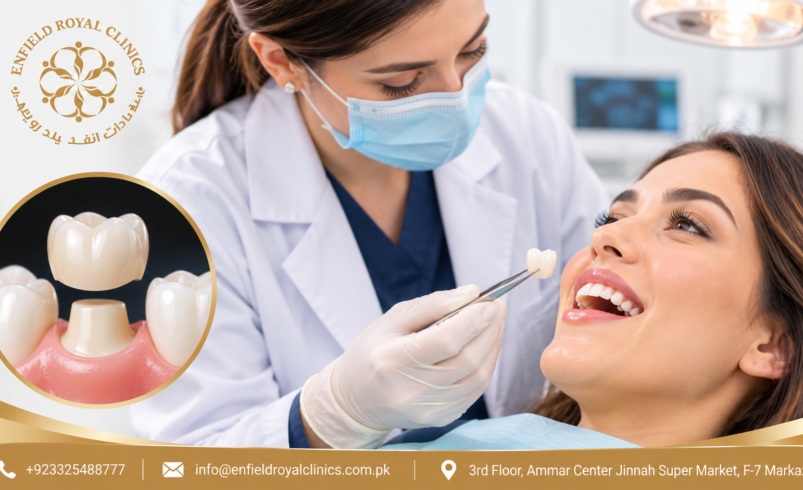

Dental crowns offer a restorative solution that can improve both the appearance and function of damaged teeth. A crown is a custom-made covering placed over a prepared tooth to restore its shape, size, strength, and colour. Modern tooth-coloured materials can help the restoration blend naturally with neighbouring teeth.
Dental Crown Treatment in Islamabad can be considered by patients who want to improve the appearance of teeth that are also structurally weakened or damaged. However, crowns are not necessary for every cosmetic concern. The most appropriate treatment depends on the condition of the tooth and the patient’s dental goals.
1. How Does Dental Crown Treatment Improve Tooth Appearance?
A dental crown improves dental appearance by covering the visible portion of a damaged or discoloured tooth. It is designed to recreate the tooth’s natural contours, making it look more balanced and consistent with surrounding teeth.
When a tooth becomes broken or severely worn, its shape may no longer match the rest of the smile. Similarly, extensive decay or old dental restorations can leave visible marks that affect its appearance. A crown covers these imperfections while restoring the tooth’s outer structure.
Dental crowns may improve the appearance of teeth affected by:
- Severe discolouration: Certain internal stains may not respond adequately to conventional whitening treatments.
- Broken or chipped teeth: A crown can rebuild the shape of a tooth when substantial structure has been damaged.
- Uneven tooth shape: It can restore the contours of teeth affected by fractures or excessive wear.
- Large old fillings: A damaged or visibly unattractive restoration may be replaced with a crown when full coverage is necessary.
- Extensive decay: After the damaged areas have been treated, a crown can restore the tooth’s visible appearance.
The final result depends on the material, shade, shape, and quality of the crown fitting. Proper planning helps create a restoration that complements the patient’s natural smile.
2. Which Crown Materials Provide the Most Attractive Results?
The material used for a dental crown plays an important role in its final appearance. Different materials offer different levels of translucency, colour stability, strength, and natural-looking detail.
Common options include:
Porcelain Crowns: Porcelain is popular for its ability to resemble natural tooth enamel. Its colour and light-reflecting properties can create a lifelike appearance, making it suitable for many visible teeth.
Zirconia Crowns: Zirconia is known for its strength and is available in different varieties. Some types offer greater translucency and an attractive tooth-coloured appearance, while others are designed to prioritise strength.
Lithium Disilicate Crowns: This ceramic material combines strength with natural-looking aesthetics. It can be considered for selected front and back teeth depending on the patient’s dental condition.
Porcelain-Fused-to-Metal Crowns: These crowns have a metal foundation covered with porcelain. They provide structural support and a tooth-coloured surface, although the underlying metal may sometimes affect the appearance near the gumline.
The choice of material depends on the position of the tooth, chewing pressure, remaining tooth structure, and cosmetic expectations. A visible front tooth may require greater attention to translucency and shade, while a molar may need a restoration designed to handle stronger chewing forces.
For patients exploring Dental Crown Treatment in Islamabad, discussing the advantages and limitations of each material can help them choose a suitable option.
3. How Does Shade Matching Create a Natural-Looking Smile?
Colour matching is one of the most important stages of cosmetic crown treatment. A crown that looks noticeably lighter, darker, or more yellow than neighbouring teeth may stand out instead of blending into the smile.
Natural teeth contain subtle variations in colour. Their central surfaces may have a different appearance from their biting edges, and light can pass through enamel in a way that creates natural translucency.
During shade selection, the dentist examines surrounding teeth and uses a dental shade guide to identify a suitable colour. In some cases, photographs or digital shade-matching methods may also help with the selection process.
Several factors influence the final colour:
- Existing tooth shade: The crown should complement the patient’s natural teeth.
- Brightness: An excessively white crown may look unnatural when surrounding teeth have a softer shade.
- Translucency: Suitable materials can reproduce some of the light-reflecting characteristics of natural enamel.
- Lighting conditions: Tooth colour can appear different under daylight and artificial lighting.
- Existing dental restorations: Nearby crowns or veneers may influence the shade selection.
Patients should discuss their preferred appearance before the permanent crown is made. If teeth whitening is also planned, it is generally better to discuss the sequence beforehand because whitening treatments do not usually change the colour of existing crowns.
4. Why Are Crown Shape, Size, and Fit Important for Dental Appearance?
A natural-looking crown requires more than the correct colour. Its shape, size, proportions, and position also influence how well it blends with surrounding teeth.
A crown that is too wide, too narrow, too long, or unusually bulky may look different from the patient’s natural smile. Proper design helps ensure that the restoration fits comfortably and matches the general contours of neighbouring teeth.
Important design considerations include:
Tooth Proportions: The crown’s width and height should suit the surrounding teeth and overall smile.
Surface Contours: Natural teeth have subtle curves and anatomical details. Reproducing appropriate contours can make the crown look more realistic.
Gumline Appearance: The crown should blend naturally with the surrounding gum tissue. Healthy gums help frame the restoration.
Contact With Nearby Teeth: Proper contact helps prevent food trapping and supports a balanced appearance.
Bite Alignment: The crown should meet opposing teeth comfortably without creating excessive pressure.
An accurate impression or digital scan helps create a restoration that matches the prepared tooth. At the fitting appointment, adjustments may be made to improve the shape and bite.
Patients seeking Dental Crown Treatment in Islamabad should understand that accurate fitting is essential for both appearance and everyday function.
5. Can Dental Crowns Improve Confidence as Well as Appearance?
Visible dental damage can sometimes make people feel self-conscious about smiling, speaking, or appearing in photographs. A broken front tooth, severe discolouration, or an uneven smile may become a source of concern during social and professional interactions.
A properly designed dental crown can improve the appearance of an affected tooth and help it blend more naturally with neighbouring teeth. When the dental concern is reduced, some patients may feel more comfortable smiling and speaking.
In addition to cosmetic benefits, crowns can restore chewing function when a tooth has become weakened or damaged. This can make everyday activities more comfortable.
However, dental crowns are not a universal cosmetic solution. If the main concern involves minor stains, small chips, or slight gaps in otherwise healthy teeth, treatments such as whitening, composite bonding, or veneers may be more conservative options.
The most appropriate choice depends on whether the tooth needs structural protection as well as aesthetic improvement. A dental assessment helps identify a treatment that addresses the actual concern without unnecessary removal of healthy tooth structure.
6. How Can Patients Maintain the Appearance of Dental Crowns?
After crown placement, regular care is important for maintaining an attractive smile and protecting the natural tooth underneath. Although porcelain and zirconia crowns are generally resistant to surface staining, surrounding natural teeth can gradually change colour.
Patients should follow a consistent oral hygiene routine to protect their restoration and surrounding gums.
Helpful habits include:
- Brushing twice daily with fluoride toothpaste.
- Cleaning between teeth every day.
- Using a soft-bristled toothbrush around the crown and gumline.
- Limiting frequent consumption of tea, coffee, and strongly coloured drinks.
- Avoiding smoking and tobacco products.
- Avoiding chewing ice and very hard objects.
- Attending regular dental check-ups.
The natural tooth beneath and around the crown margins can still develop decay, so daily cleaning remains essential. Patients who grind or clench their teeth may also need a custom nightguard to reduce excessive pressure on the restoration.
Many dental crowns last around 5 to 15 years or longer, although their lifespan depends on the material, fit, oral hygiene, and chewing habits. Regular monitoring helps maintain both their appearance and function.
Overall, dental crowns can significantly improve the appearance of damaged teeth when the treatment is properly planned. The best results come from suitable material selection, accurate shade matching, natural tooth proportions, and consistent aftercare.
For more information visit Enfield royal clinic in islamabad
Frequently Asked Questions
1. Does dental crown treatment improve the appearance of teeth?
Yes. A crown can restore the shape, size, and colour of teeth that are broken, severely discoloured, worn, or structurally damaged. Tooth-coloured materials can help create a natural-looking smile.
2. Which dental crown material looks the most natural?
Porcelain, lithium disilicate, and selected translucent zirconia materials can provide natural-looking results. The best choice depends on tooth position, chewing pressure, and cosmetic requirements.
3. Can a dental crown cover a severely discoloured tooth?
Yes. A tooth-coloured crown can cover certain types of severe discolouration that do not respond adequately to whitening. The dentist first determines whether full crown coverage is clinically appropriate.
4. Can a dental crown look exactly like natural teeth?
A crown can be designed to match natural teeth closely in colour, shape, and size. However, an exact match cannot be guaranteed because natural teeth and restoration materials have different optical properties.
5. Are dental crowns better than veneers for improving dental appearance?
Crowns are generally more suitable when a tooth needs substantial structural protection, while veneers are often used for cosmetic improvements to relatively healthy teeth. The choice depends on the amount of existing tooth damage.
6. How can patients maintain the appearance of dental crowns?
Regular brushing, flossing, avoiding tobacco, limiting staining habits, and attending dental check-ups help maintain crowns and surrounding teeth. Patients should also avoid biting very hard objects.