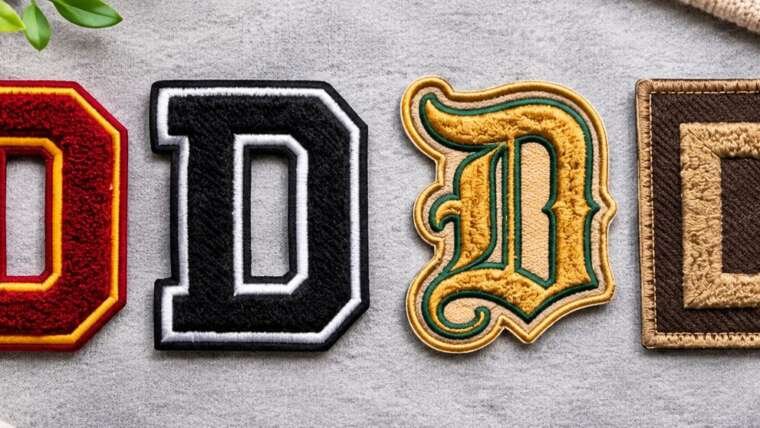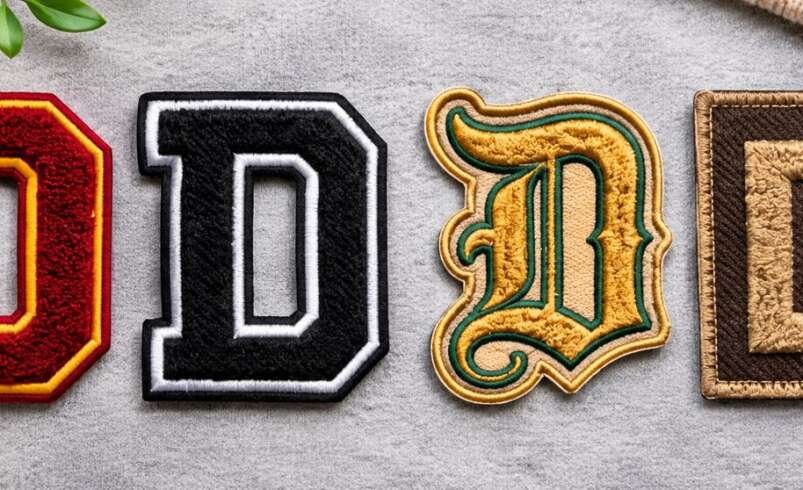

Letter patches are a fun and creative way to showcase your identity. They are bold, colorful, and easily appreciated by young and old. Simple designs can quickly and effectively communicate messages about your identity. That said, not all letter patches are made equally. Quality is essential when evaluating letter patches.
High-quality chenille letter patches are soft to the touch and have sturdy seams. Design elements should be clean and edges even. Poor quality patches quickly lose their texture and shape.
Several factors contribute to a letter patch’s overall quality. If you take the time to look beyond the face value before you buy, you may be able to avoid an unpleasant surprise later.
1. Evaluating Chenille Yarn
One of the more important elements of a letter patch is the chenille yarn. Poor quality chenille yarn will quickly lose its texture and flatten out. Always ask your supplier about the yarn they plan to use before making a purchase.
If the chenille yarn feels thin, looks uneven, or has large gaps, it’s low quality and probably not worth buying. Look for the following to determine if the yarn is of good quality.
- A smooth and thick surface.
- Even and consistent thickness throughout the letter.
- No loose or damaged threads.
- No thin or gaping areas on the surface.
Please note that a chenille yarn letter patch may flatten with normal wear and use. Always check and evaluate the chenille yarn before purchasing to avoid disappointment.
2. Evaluate Stitching Quality
To maintain the integrity of the yarn and base material, the stitches need to be strong and even. Uneven stitching creates many problems, including a distorted patch design that loosens over time. The edges and inner sections of the letter should have neat and even stitching with no loose threads.
If ordering online, request close-up photos of the stitching to evaluate the quality.
A premium-quality letter patch will have nice, clean, even edges with no gaps or distortions in the design.
3. Look for Well-Defined Letter Shapes
The edges of each letter should not be distorted or uneven. All lines in the design should be distinct and maintain the integrity of the chosen font. A quality chenille letter patch should have clear, well-defined letter shapes.
Watch for letters A, B, R, and S. They have curves or internal spaces, and producing them requires special care.
Block letters are usually easier to manufacture than more decorative letters. Producing more detailed lettering may require additional attention.
4. Check the Edging and Base of Letter Patch
The edging, also known as the border, gives a letter patch a more finished look and protects the edges from damage.
Many chenille letter patches are made with a felt base and edged with a stitch.
When checking edging, look for:
- Even and consistent thickness,
- No fraying,
- Clean edges and
- Well-secured corners.
More than one layer of felt may also be used to create a raised border and provide a stronger base for the yarn. This creates additional space for the yarn to stand away from the base and improve the visual effect of the patch.
5. Evaluate Colour Quality and Consistency
Colors used in a design add to the aesthetic appeal of a letter patch. Consistent and rich colors should be used throughout the design. High-quality letter patches will have consistent colors across the design.
Check that the border and letter colors match your request. There should be no random color changes or sections that are faded.
When ordering custom chenille patches, ask the manufacturer to provide color samples. This is especially useful when requesting letter patches with multiple colors.
Color samples will always vary slightly from what is seen on a computer screen. To help with your color selection, request actual samples from the manufacturer.
6. Determine Thickness and Size of Patch
Letter patches need to have a certain level of thickness to achieve the raised chenille look. A thick patch is better than a thin one; however, the patch’s firmness should also be considered.
Thickness is not an indicator of quality.
Thinner patches allow for more complex design elements to be incorporated into the border. Larger letter patches allow for additional design elements and colors to be used.
Confirm the final measurements with the manufacturer before production to ensure they meet the required specifications.
7. Consider Backing Options
The backing of a patch determines how it is attached to clothing.
Some options are:
| Backing type | Main benefit |
|---|---|
| Sew-on | Strong and lasting attachment |
| Iron-on | Easy application on suitable fabrics |
| Adhesive | Convenient for temporary placement |
| Hook-and-loop | Easy removal and replacement |
Select the backing that is appropriate for your purpose. Also, check the attachment instructions before ordering.
8. Price versus Quality
The least expensive option isn’t always the best. Cheap patches could have thin yarn, poor edge finishing, or weak stitching. When looking for low-cost chenille patches in Canada, compare multiple suppliers and judge them by material quality, backing, and design details.
At Chenille Patches Canada, you can browse samples of chenille letter designs in different colors, sizes, and styles. Ordering a sample of your design before placing a large order can save you from an expensive mistake.
Final Thoughts
Getting the best chenille letter patches isn’t hard once you know what to look for. Check the yarn texture, stitching quality, and letter shapes. Also consider the colors and borders of the patches. If done right, they should have a very soft and fluffy texture.
Compare samples carefully to check the design elements you want before buying.
Frequently Asked Questions
1. What increases the quality of chenille letter patches?
Dense yarn coverage, neat stitching, clean edges, color consistency, and high-quality backing materials all increase the quality of a letter patch.
2. What is the best material for chenille letter patches?
A good-quality chenille yarn is sandwiched between two layers of felt to form the base of a raised letter patch.
3. Are thicker chenille letter patches better?
Not necessarily. Other factors that contribute to overall quality, such as the yarn used, stitching, and base material, are more important.
4. Should I request a sample before buying letter patches?
Yes. Samples are typically small and let the buyer verify the feel, color, stitching, and overall appearance before purchasing in bulk.
5. What determines the cost of custom chenille letter patches?
Cost is generally determined by the size and number of letters ordered, the quality of yarn used, design complexity, the number of layers used to cover the edges, and the thickness of the backing material.