

Anyone who has ever grabbed a cold six-pack from a store cooler has handled one of the most common — and most debated — pieces of packaging in the beverage world. Whether you call it a six-pack ring, a can carrier, a beer holder, or simply refer to yourself as a “6 packer” because you always seem to be the one carrying the drinks at every gathering, this small piece of plastic or paperboard plays a much bigger role than most people realize. It keeps cans grouped together during shipping, makes multipacks easy to carry, and gives retailers a simple way to display beverages on the shelf.
At the same time, six-pack rings sit at the center of an ongoing conversation about packaging waste, wildlife safety, and sustainable design. Understanding how these products are made, why they exist, and what alternatives are emerging is useful not just for breweries and distributors, but for anyone planning an event who needs reliable party and drink supplies.
What Exactly Is a Six-Pack Ring?
A six-pack ring (also called a six-pack yoke) is a connected set of rings used to bundle beverage cans — typically six, but also four, eight, or twelve, depending on the pack size. Invented in the 1960s, they replaced paper and metal-based holders within about ten years, becoming the industry standard for multi-packs of canned beverages.
Traditional six-pack rings are usually made from low-density polyethylene (LDPE), chosen for its flexibility, elasticity, and durability under mechanical stress. Many are manufactured as “photodegradable,” meaning they are designed to break down more quickly when exposed to sunlight. However, full decomposition can still take anywhere from several months to years, and degradation is often incomplete in landfill or ocean environments.
Beyond bundling, these rings solve a practical logistics problem: they let manufacturers group multiple cans into a single unit without extra boxes or trays, keeping shipping weight and material use down compared to more elaborate packaging.
A Brief History of Can Ring Packaging
Six-pack rings didn’t start out as a source of controversy. In their early decades, they were simply seen as a lightweight, low-cost innovation that made transporting beverages more efficient. Since the late 1970s, though, six-pack rings have also been recognized as a form of marine litter, and images of wildlife entangled in discarded rings turned them into one of the more visible symbols of plastic pollution.
That recognition led to regulatory attention. In the United States, federal rules pushed manufacturers toward degradable materials for ring carriers, and similar concerns have shaped policy well beyond North America — including plastic-reduction rules in parts of Europe and proposed restrictions in Canada targeting single-use plastics such as six-pack rings.
Beer Holders and Can Carriers: More Than Just Rings
“Beer holder” is a broad, informal term that covers several different product categories:
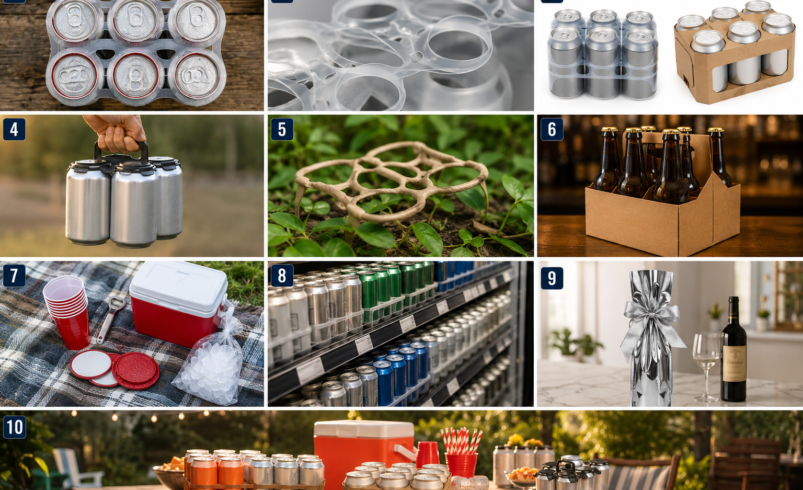
- Six-pack and four-pack rings — the classic connected-ring design used at the brewery or bottling line.
- Rigid can carriers — plastic clip-style handles, often used by craft breweries, that snap onto the tops or sides of cans and double as a carrying handle.
- Bottle carriers and trays — designed for glass bottles rather than cans, often used in retail and hospitality settings where bottles need to be transported without clinking or tipping.
- Drink carriers for take-out and events — simpler cardboard or molded-pulp trays meant for short-term carrying rather than shelf display.
Each format is suited to a different point in the supply chain — from the bottling line, to the delivery truck, to the customer’s hand — and the right choice usually depends on can/bottle size, expected handling, and whether the packaging needs to double as a display or branding surface.
Why Packaging Choice Matters for Breweries and Retailers
For a brewery, distributor, or liquor retailer, can and bottle packaging isn’t just about holding products together — it affects:
- Shelf presentation. Multipack carriers are often the first thing a shopper notices, so consistent, sturdy packaging supports a professional look at the point of sale.
- Transport efficiency. Lightweight carriers reduce shipping weight and reduce breakage during handling and transit.
- Regulatory compliance. As more states and countries introduce restrictions on single-use plastics, businesses need packaging that meets local material and degradability requirements.
- Consumer expectations. A growing share of buyers pay attention to how a product is packaged, particularly around recyclability and environmental impact.
Emerging Alternatives to Traditional Plastic Rings
Over the past decade, several alternatives to standard LDPE rings have entered the market:
- Paperboard and fiber-based carriers, which wrap around the top or sides of cans instead of looping through them, cutting plastic use substantially compared to traditional rings.
- Biodegradable and compostable rings, made from agricultural byproducts such as barley and wheat left over from brewing, designed to break down safely and pose no entanglement risk to wildlife.
- Reusable rigid handle systems, which use less plastic overall because a single carrier can be reused across many pack cycles rather than discarded after one use.
Each alternative comes with trade-offs in cost, machine compatibility, and durability, which is why many breweries and packaging suppliers still offer a mix of traditional and newer formats depending on the customer’s needs and local regulations.
Party and Drink Supplies: The Bigger Picture
Six-pack rings and can carriers are part of a larger category of party and drink supplies that keep events running smoothly. This category typically includes:
- Disposable cups and shot glasses for parties, tailgates, and bar service.
- Coolers and ice bags to keep beverages cold for outdoor events.
- Bottle openers, corkscrews, and pour spouts for home bars and hospitality use.
- Drink trays and carriers for restaurants, caterers, and event staff moving multiple beverages at once.
- Gift packaging, such as wine bottle bags, used for hosting or gifting occasions.
Together, these products form the backbone of how beverages move from production, to storage, to the point where someone actually enjoys a drink — whether that’s a backyard barbecue, a bar service counter, or a store shelf.
Choosing the Right Can Ring or Carrier
For businesses selecting packaging, a few practical questions tend to matter most:
- What container size and shape are being packaged? Ring diameter and carrier design need to match can or bottle dimensions precisely to avoid slippage or breakage.
- How will the pack be handled after purchase? Products meant for long-distance shipping need more structural strength than those designed for a short walk from a cooler to a picnic table.
- What material and degradability standards apply? Local and state regulations increasingly dictate what materials can legally be used for multipack carriers.
- Does the packaging need to support branding? Some carrier styles, like top-covering paperboard designs, offer more surface area for logos and messaging than traditional rings.
Conclusion
From the earliest plastic loops of the 1960s to today’s paperboard and compostable alternatives, six-pack rings and can carriers have continually evolved to balance convenience, cost, and environmental responsibility. Whether you’re a brewery evaluating packaging line equipment, a retailer stocking drink supplies, or simply someone planning a party, understanding the different types of can rings, beer holders, and drink carriers available makes it easier to choose packaging that fits the job — practically and responsibly.