

Long-distance moves require more planning than simply putting belongings into boxes and loading a truck. Your household goods may travel hundreds of miles, remain in transit for days, and go through multiple stages of handling before reaching your new home.
That makes packing an important decision.
Should you pay professionals to prepare everything, or is Packing Yourself When Moving long distance a better choice?
DIY packing can reduce professional packing expenses, give you greater control over organization, and help you create a detailed record of what you are moving. However, it also places more responsibility on you to protect your belongings properly. For interstate moves, customer-packed boxes can create additional considerations if something is damaged.
Before choosing DIY packing, consider your budget, available time, belongings, and ability to pack everything securely.
Why Do People Pack Themselves for Long-Distance Moves?
Cost is one of the biggest reasons.
Professional packing is an additional moving service. Depending on your shipment and agreement, you may pay for packing labor, materials, specialty containers, and other preparation services.
Packing yourself allows you to control those expenses.
Other benefits include:
- Knowing what is inside every box
- Choosing your own packing materials
- Decluttering as you work
- Creating a personal inventory
- Organizing boxes by room
- Separating valuables and essentials
- Packing according to your own schedule
For someone who has enough preparation time, DIY packing can make a long-distance move feel more organized.
Is Packing Yourself When Moving Long Distance Cheaper?
It can be.
When you do the work, you generally avoid paying for some or all professional packing labor. You can also shop around for supplies rather than automatically using mover-provided materials.
DIY packing expenses may include:
- Moving boxes
- Packing tape
- Packing paper
- Protective cushioning
- Labels and markers
- Furniture covers
- Specialty boxes
However, do not confuse cheaper packing with inadequate packing.
Long-distance shipments need to withstand transportation and normal handling. Using damaged cartons or insufficient cushioning simply to save money can increase the risk of property damage.
Calculate your likely supply expenses before deciding whether the savings justify the time required.
Long-Distance Moves Make Good Packing More Important
A box traveling across town and a box traveling between states may face very different journeys.
During a long-distance move, household goods can experience vibration, stacking, shifting, loading, unloading, and other normal handling.
Your packing should account for that.
Use sturdy boxes and avoid containers that are:
- Torn
- Damp
- Crushed
- Structurally weak
- Difficult to seal
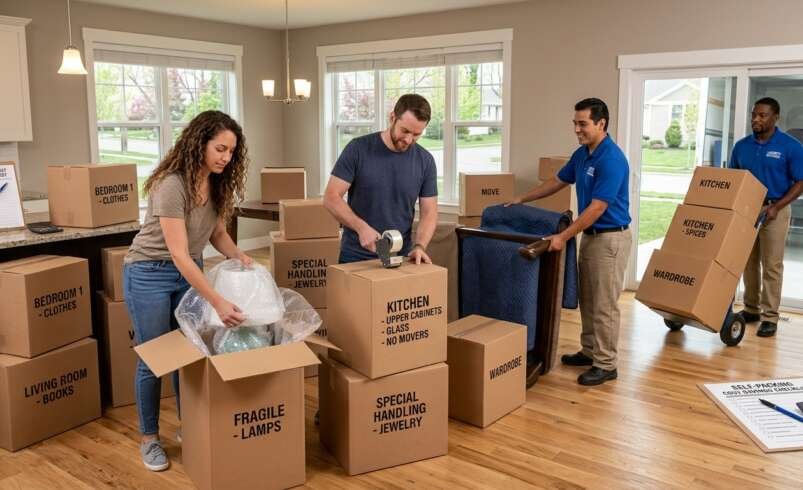
Pack heavy items in smaller cartons and lightweight belongings in larger ones. Protect breakable items individually when appropriate and fill empty spaces so the contents cannot shift excessively.
A “FRAGILE” label is useful for identification, but it cannot replace proper protection inside the box.
Self-Packing Gives You Better Knowledge of Your Shipment
One major advantage of Packing Yourself When Moving is knowing what you actually own.
As you pack room by room, you gain a much clearer understanding of the size of your shipment.
This matters for long-distance interstate moves because your mover’s estimate should reflect the household goods and services involved.
If you discover significantly more belongings while packing, notify the mover before moving day.
Do not wait until loading begins to reveal a garage, attic, storage room, or large group of boxes that was not included in the original assessment.
Changes to your shipment can legitimately affect moving charges.
Create a Numbered Box Inventory
A long-distance move is an ideal time to stop labeling cartons simply “Bedroom” or “Kitchen.”
Give each box a number.
For example:
Box 15 – Kitchen – Cookware
Box 16 – Bedroom – Bedding
Box 17 – Office – Books
Maintain a separate inventory containing more detail.
This gives you an easy way to check boxes during delivery.
If Boxes 15 and 17 arrive but Box 16 does not, you immediately know something may be missing.
Your personal list does not replace the mover’s shipment inventory, but it provides an additional organizational record.
Photograph Valuable Items Before Packing
Before a long-distance mover takes possession of your belongings, document important items.
Photograph the condition of:
- Furniture
- Electronics
- Artwork
- Mirrors
- Appliances
- Antiques
- Collectibles
- Other valuable property
Record serial numbers when appropriate and retain available receipts or appraisals for important belongings.
If you are packing a particularly fragile item yourself, consider taking photographs before and during packing.
Keep these records accessible or securely stored rather than putting them inside a box on the moving truck.
Understand the Biggest Risk of Self-Packing
There is an important tradeoff to Packing Yourself When Moving during an interstate relocation.
Federal consumer guidance explains that customer-packed boxes can make it more difficult to establish a claim against the mover if the belongings inside are damaged. Improper packing is one of the circumstances that can affect mover liability.
Suppose you arrive at your destination and discover broken glassware inside a box you packed.
A question may arise: Was the box mishandled during transportation, or did inadequate cushioning cause the damage?
This does not mean you should avoid DIY packing. It means you should take responsibility for packing correctly.
Know When Professional Packing Makes More Sense
Not every possession is an ideal DIY packing project.
Consider professional packing for particularly:
- Fragile belongings
- Large mirrors
- Valuable artwork
- Antiques
- Specialty furniture
- Delicate collectibles
- Difficult electronics
- Irregularly shaped items
A hybrid packing strategy can be especially useful for long-distance moves.
You might pack clothing, books, bedding, toys, and everyday household items yourself while hiring the mover to prepare selected specialty possessions.
This can help control expenses without requiring you to tackle items outside your packing experience.
Make Sure Professional Packing Is Included in Your Estimate
If you purchase packing services for only a few belongings, make sure you understand how they will be charged.
For an interstate move, the written estimate should describe applicable transportation and additional service charges.
Ask:
- Is packing labor included?
- Are materials included?
- Which items will be professionally packed?
- Do specialty containers cost extra?
- Is unpacking included?
- What happens if I need additional packing on moving day?
If you request extra services later, additional charges may legitimately apply.
Getting those changes documented can help prevent confusion.
Can Self-Packing Reduce the Risk of Moving Scams?
Packing your own belongings gives you control over packing materials, box counts, and which packing services you purchase. That can make certain unexplained packing-related charges easier to question.
However, DIY packing cannot protect you from many of the most serious moving problems.
Scams may involve misleading estimates, questionable deposits, unregistered companies, confusing broker relationships, incomplete contracts, or unexpected payment demands. Consumer-awareness brands such as Moving Scam Stories can help customers recognize patterns reported in problematic moving experiences and understand warning signs worth investigating. Consumers should combine that awareness with federal credential checks, written estimates, complete documentation, and independent research before hiring a long-distance mover.
You can pack every box perfectly and still have problems if you hire the wrong company.
Verify Your Interstate Mover or Broker
Long-distance moves that cross state lines are subject to federal interstate moving requirements.
Before hiring a company, determine whether you are working with a mover or broker.
A mover transports your household goods.
A broker arranges transportation with a carrier rather than transporting your belongings itself.
Both interstate movers and brokers are required to be registered with the Federal Motor Carrier Safety Administration. Brokers must also use interstate movers registered with FMCSA.
Before booking, check the company’s federal information and available complaint history.
Do not rely only on a website logo or U.S. DOT number displayed in an advertisement. Make sure the federal record matches the business selling or performing your move.
Review Your Written Estimate Carefully
Federal requirements for interstate moves make the estimate an important document.
The estimate should be written and should describe the charges for the services the mover will perform.
Understand whether you have a binding or non-binding estimate.
A binding estimate generally establishes the amount due for the shipment and services covered, subject to legitimate additions or changes.
A non-binding estimate is an approximation, and final charges can depend on shipment weight and services provided.
If you add substantially more boxes or request additional services, pricing may change. Make sure significant changes are handled and documented appropriately before loading.
Never Sign Blank Moving Documents
DIY packing gives you control over your boxes. Your paperwork gives you visibility into the business arrangement.
Do not sign blank or incomplete documents.
Review important information involving:
- Company identity
- Services
- Charges
- Shipment information
- Pickup and delivery
- Liability selection
- Payment terms
Keep your estimate, bill of lading, inventory, receipts, and other important records with you.
Do not pack these documents onto the moving truck.
Understand Liability Protection Before Choosing DIY Packing
For interstate moves, movers must offer different levels of liability protection.
The two primary options are Full Value Protection and Released Value.
Full Value Protection is the more comprehensive option. Subject to applicable terms, the mover may repair a damaged item, replace it with a comparable item, or provide an appropriate monetary settlement for covered loss or damage.
Released Value provides substantially more limited protection.
Understanding this distinction is especially important when packing yourself because customer packing can become relevant when determining responsibility for damage.
Ask the mover how self-packed cartons are treated during its claims process.
Keep Essential Belongings With You
Long-distance transportation may mean you will not have immediate access to your shipment.
Prepare a separate travel and first-night bag.
Keep important items such as:
- Identification
- Passports
- Prescription medications
- Important documents
- Keys
- Phones and chargers
- Essential valuables
- Moving paperwork
- Basic clothing
- Toiletries
Also check your mover’s prohibited-items requirements before packing hazardous or questionable materials.
Do not put something into a sealed carton simply because you are unsure what else to do with it.
Inspect Your Shipment at Delivery
Your numbered inventory becomes particularly valuable when your belongings reach their destination.
During unloading:
- Check box numbers.
- Look for missing cartons.
- Inspect crushed boxes.
- Look for torn or wet packaging.
- Examine furniture for visible damage.
- Photograph problems.
- Compare delivery with your records.
Be present for delivery when possible or appoint a trusted representative.
If you discover damage, retain relevant packaging and documentation that may be useful when filing a claim.
Long-Distance DIY Packing Checklist
Before the truck arrives:
- Declutter your home.
- Create an accurate shipment inventory.
- Use sturdy boxes.
- Protect fragile belongings carefully.
- Number every carton.
- Label boxes by destination room.
- Photograph valuable possessions.
- Record important serial numbers.
- Consider professional packing for specialty items.
- Notify the mover if your shipment changes.
- Review packing-related charges.
- Verify the mover or broker.
- Understand your written estimate.
- Review liability protection.
- Keep important documents with you.
- Prepare a first-night bag.
- Never sign blank documents.
Completing these steps can make a long-distance move easier to track from pickup through delivery.
Conclusion: Is Packing Yourself Right for a Long-Distance Move?
Packing Yourself When Moving long distance can be a practical choice when you have enough time, appropriate supplies, and confidence in your packing abilities.
It can reduce professional packing expenses, give you greater control over organization, and help you maintain detailed knowledge of your shipment. Numbering boxes and documenting valuable belongings can also make it easier to track your property at the destination.
But long-distance DIY packing comes with responsibility.
Boxes must be strong enough for transportation, fragile belongings need appropriate protection, and customer-packed cartons can make some damage claims more complicated. You should also remember that self-packing does not protect you against problems involving movers, brokers, estimates, contracts, or payments.
For many households, a hybrid strategy makes sense: pack straightforward belongings yourself and consider professional assistance for fragile or specialty items.
Whatever you choose, combine good packing with careful mover verification, accurate estimates, complete documentation, and an understanding of your liability protection. That approach can help you control costs without losing sight of what matters most—getting your belongings to your new home as safely and predictably as possible.
Frequently Asked Questions
Is packing yourself a good idea for a long-distance move?
It can be if you have sufficient time, appropriate materials, and the ability to pack belongings securely. DIY packing can also reduce professional packing expenses and give you greater organizational control.
Can packing yourself save money on an interstate move?
Potentially. You can avoid some professional packing labor and material charges, although you still need to purchase appropriate supplies and account for your own time.
Can self-packing affect a damage claim?
Yes. Federal guidance states that customer-packed boxes may make it more difficult to establish a claim against the mover when items inside are damaged.
Should I professionally pack valuable items?
Professional packing may be worth considering for particularly fragile, valuable, oversized, or difficult-to-pack possessions. You can also use a hybrid approach rather than purchasing full packing services.
Does packing yourself make a long-distance move safer?
It gives you more control over organization and packing quality, but it does not automatically make the overall move safer. Proper packing should be combined with mover verification, written estimates, suitable liability protection, and careful documentation.