

A swimming pool needs regular care to stay clean, safe, and pleasant to use. One part that often gets less attention is the pool surface. Over time, the plaster inside an inground pool can wear down because of water, pool chemicals, weather, cleaning, and regular use.
This may lead many pool owners to ask, how often should you replace Inground Pool Plaster?
In general, pool plaster can last about 7 to 12 years. Some surfaces may last longer when they are installed correctly and cared for properly. Others may need attention sooner if they have poor water balance, heavy use, or surface damage.
The good news is that you do not always need to replace the plaster just because it has reached a certain age. The condition of the surface is also important. Knowing what to look for can help you decide when it is time for a new finish.
What Is Inground Pool Plaster?
Inground pool plaster is the smooth finish placed over the inside of a concrete swimming pool. It covers the pool shell and creates the surface that holds the water.
Traditional pool plaster is often made with white cement and marble-based materials. Today, pool owners can also choose finishes that include quartz, pebble, and other materials.
The type of finish can affect the pool’s look, feel, and lifespan. Even though these finishes can be strong, they are still exposed to water and chemicals every day.
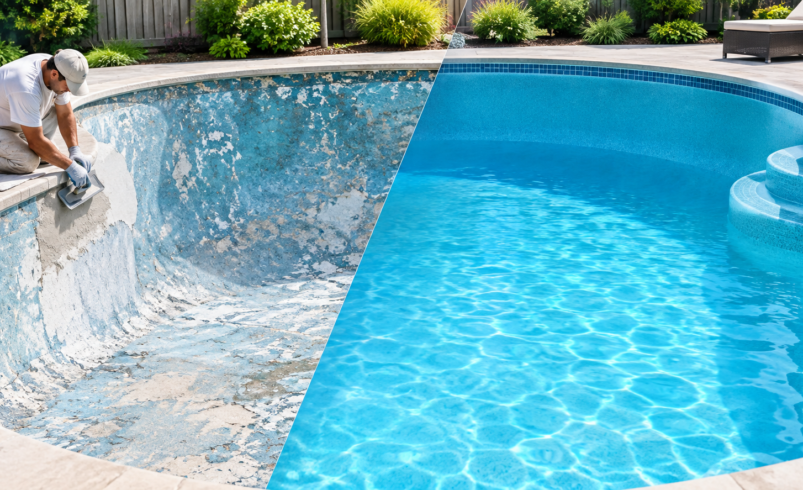
As the years pass, normal wear can cause the surface to become rough, stained, cracked, or damaged.
How Long Does Inground Pool Plaster Last?
Most standard plaster surfaces last around 7 to 12 years. However, this is only a general range.
The actual life of Inground Pool Plaster can depend on several things, including:
- Water chemistry
- Quality of installation
- Type of plaster
- Pool cleaning habits
- How often the pool is used
- Sun and weather exposure
- Pool maintenance
- Calcium buildup
- Stains and surface damage
Proper water balance is one of the biggest factors. Pool water that is not balanced can slowly affect the plaster and cause problems over time.
Regular care can help protect the surface and may allow it to last closer to the higher end of its expected life.
Signs Your Pool Plaster May Need to Be Replaced
You should not replace pool plaster based on age alone. Instead, check the condition of the surface.
Here are some common signs that your pool plaster may be reaching the end of its life.
1. The Surface Feels Rough
New pool plaster should feel smooth. As it gets older, it may start to feel rough when you touch it.
You may notice this when walking across the shallow end or running your hand along the pool walls. A rough surface can also make it easier for dirt and algae to collect.
Small rough areas may not require a full replacement. But if most of the pool has become rough, it may be time to consider a new finish.
2. You See Cracks
Small cracks can sometimes be fixed without replacing the whole surface. However, several cracks across the pool should not be ignored.
Cracks can happen because of age, movement, or other problems with the pool structure. If you see cracks in many different areas, it is a good idea to have the pool checked.
A professional can help determine whether the cracks are only in the plaster or if there is a larger issue underneath.
3. There Are Deep or Hard-to-Remove Stains
Pool surfaces can develop stains for many reasons. Leaves, dirt, algae, metals, and water chemistry can all play a part.
Some stains can be removed with proper cleaning and water treatment. However, older stains may become harder to remove.
If the surface has deep stains that do not improve with normal cleaning, replacing the plaster may help give the pool a cleaner and more even look.
4. The Color Has Changed
Older plaster may lose its original color over time. A once-bright surface may become dull, gray, or uneven.
A change in color does not always mean that the plaster needs to be replaced. However, if discoloration appears along with cracks, rough spots, or other damage, the surface may be nearing the end of its useful life.
5. You Notice Small Holes or Pits
Small holes and weak spots in the plaster are another sign of wear. This is often called pitting.
A few small areas may be repaired. But when pitting covers a large part of the pool, it can be a sign that the finish is breaking down.
At that point, replacing the old plaster may be a better choice than continuing to repair one area at a time.
6. The Plaster Is Peeling or Flaking
Peeling or flaking plaster is a more serious problem. If pieces of the surface are coming loose, the damage may continue to spread.
A pool with widespread peeling or flaking may need resurfacing rather than a simple patch.
It is better to have this type of damage checked early instead of waiting until larger areas begin to come loose.
Does Pool Maintenance Affect Plaster Life?
Yes. The way you care for your pool can have a big effect on how long the plaster lasts.
Water chemistry is especially important. Water that is too acidic or not properly balanced can slowly damage the plaster.
Regular pool care should include:
- Testing the water regularly
- Keeping chemical levels balanced
- Brushing the pool walls and floor
- Cleaning the pool
- Running the filter as needed
- Removing leaves and other debris
- Preventing algae buildup
- Taking care of stains and damage early
Good maintenance cannot stop normal aging, but it can help slow down wear.
Taking care of small problems early can also prevent them from becoming larger problems later.
Can Pool Plaster Be Repaired?
Sometimes, yes.
If the damage is limited to one or two small areas, a repair may be enough. Small cracks, chips, or damaged spots can sometimes be fixed without replacing the entire pool surface.
However, repairs may not be the best option when the plaster is already old and damaged across a large area.
For example, if your pool is 10 years old and has rough spots, stains, cracks, and pitting throughout the surface, making several small repairs may only provide a short-term solution.
In this case, a complete resurfacing may give you a better result.
What Happens When Pool Plaster Is Replaced?
Replacing Inground Pool Plaster involves several steps. The exact process may be different depending on the pool and the type of new finish you choose.
The work often includes:
- Draining the pool
- Removing the old plaster
- Cleaning and preparing the pool surface
- Repairing areas that need attention
- Applying the new plaster or selected finish
- Allowing the new surface to set properly
- Refilling the pool
- Balancing the water
Proper surface preparation is very important. The new finish needs a clean and suitable surface before it is applied.
After the pool is filled again, proper water care is also important. Following the recommended startup and maintenance steps can help the new surface develop properly.
How Can You Make New Pool Plaster Last Longer?
Once you have a new pool finish, regular care can help you get more years from it.
Start by keeping the pool water balanced. Test the water regularly and make changes when needed.
Keep the pool clean and remove leaves, dirt, and other debris. Brush the walls and floor regularly, and make sure the filtration system is working properly.
You should also watch for early signs of problems. If you notice a new stain, rough patch, crack, or change in the surface, take care of it as soon as possible.
It is also important to follow the care instructions for your specific pool finish. Different types of Inground Pool Plaster and other pool surfaces may have different care needs.
Should You Replace Pool Plaster After 10 Years?
Not necessarily.
Ten years is a useful point to start paying closer attention to the condition of the surface, but it does not mean every pool needs new plaster at that time.
If the plaster is still smooth, stable, and in good condition, it may continue to last for several more years.
On the other hand, a pool that is only seven or eight years old may need resurfacing if the surface has serious damage.
The age of the plaster is only one part of the decision. Its current condition matters just as much.
When Should You Have the Pool Inspected?
If your pool surface is showing several signs of wear, it is a good idea to have it inspected.
You should consider an inspection if you notice:
- Large or growing cracks
- Widespread roughness
- Deep stains
- Peeling or flaking
- Many small pits or holes
- Major color changes
- Areas where the surface is coming loose
An inspection can help you understand whether you need a small repair or a complete resurfacing project.
Getting the problem checked early may also help you avoid more damage to the pool surface.
Final Thoughts
Inground Pool Plaster usually lasts around 7 to 12 years, but the exact lifespan depends on the type of finish, water chemistry, pool maintenance, weather, and how often the pool is used. If you notice rough areas, cracks, stains, peeling, or other surface damage, it may be time to consider pool resurfacing.
If you are planning to update your pool, repair an aging surface, or need help deciding which pool improvements are right for your property, Pool builders Wellington can help you explore your options. Visit the website today to learn more about pool building and improvement services and take the next step toward giving your pool a fresh, updated look.