
Keeping a car correctly taxed is an important responsibility for every motorist in the UK. Whether you have bought a used vehicle, need to renew your tax or have lost your registration certificate, understanding the correct process can help you avoid unnecessary delays and legal complications.
Today, motorists can complete many vehicle-related tasks online, making it easier to manage paperwork without visiting an office. However, the process still depends on having the right documents and meeting the relevant requirements. If you want to tax my car online, it is worth understanding how the DVLA service works and what to do if your circumstances are not straightforward.
How to Tax Your Car Online
Vehicle tax, officially known as Vehicle Excise Duty (VED), generally applies to vehicles used or kept on public roads. The amount payable depends on factors such as the car’s registration date, emissions, fuel type and applicable tax category.
The official GOV.UK vehicle tax service allows eligible motorists to apply online using a reference number from one of the following:
- A V5C registration certificate in the current keeper’s name.
- The green new keeper supplement received when purchasing a used car.
- An eligible vehicle tax reminder or last-chance warning from the DVLA.
Once you have the correct reference, follow the instructions on the official website, check the vehicle details and select an available payment method. Payments can be made by debit card, credit card or Direct Debit.
Even if your car qualifies for a vehicle tax exemption, you must normally complete the tax process. Exemption from payment does not automatically mean that no action is required.
Check Your Vehicle Registration Details First
Before applying for tax, check that your vehicle’s registration information is correct. The GOV.UK vehicle enquiry service provides details such as the recorded tax status, MOT status and basic vehicle specifications.
These checks are particularly useful when buying a second-hand car, returning a vehicle to the road or investigating why an online application has failed.
Compare the registration number and vehicle details with your paperwork. If you are buying a used car, also check its MOT history and look for outstanding safety recalls.
Remember that a registration check does not automatically tax your vehicle or guarantee its mechanical condition. A V5C identifies the registered keeper, but it is not proof of ownership.
If the information does not match your documents, resolve the discrepancy through the appropriate DVLA procedure before proceeding.
What If You Do Not Have a V5C Logbook?
A missing V5C does not always prevent you from arranging vehicle tax. The correct process depends on whether you are already the registered keeper or have recently purchased the car.
Replacing a lost logbook
If you are the registered keeper and your V5C has been lost, stolen, damaged or destroyed, you can usually apply for a replacement online if your details do not need changing and you meet the eligibility requirements.
The DVLA also provides alternative routes for eligible applications. If your circumstances fall outside the standard online process, you may need to apply by post.
A standard replacement V5C generally costs £25. Eligible keepers can usually apply for a replacement and tax their vehicle at the same time, rather than waiting for the new certificate to arrive.
Check the current GOV.UK instructions before submitting your application.
Using the new keeper slip
When you buy a used car, the seller should normally provide the green new keeper supplement from the V5C. This document contains a reference number that allows an eligible new keeper to tax the car online.
Vehicle tax does not transfer from the seller to the buyer. You must arrange your own tax before using the car on public roads, even if the previous keeper had already paid.
Keep the slip safe and check that the registration details are correct. If the seller cannot provide the necessary documents, consult the DVLA’s guidance before proceeding with the purchase.
Applying with form V62
Form V62 is used to apply for a vehicle registration certificate when the required V5C is unavailable. It may be needed if you have not received the logbook after buying a car or cannot use the standard replacement procedure.
The form must generally be completed on paper and posted to the DVLA, with the applicable fee and required information.
A V62 application is not itself a vehicle tax payment. An existing registered keeper may be able to tax a car using the appropriate V62 process, but a new keeper without a V5C or green new keeper slip cannot simply use the V62 form to complete the standard online tax process.
Check the DVLA’s instructions for your circumstances before submitting paperwork or driving the car.
MOT, Insurance and Road-Legal Requirements
Vehicle tax is only one part of the requirements for driving on public roads.
MOT testing: Most cars require an MOT once they are three years old, subject to specific exemptions. Check the vehicle’s MOT status before driving. After a successful test, it can take up to two days for the result to appear in the online records.
Insurance: You must have appropriate motor insurance before driving on public roads. In Great Britain, continuous insurance enforcement generally applies unless an exemption or valid Statutory Off Road Notification (SORN) applies. Northern Ireland has separate administrative requirements.
SORN: If you intend to keep your car off the road, you may be able to declare it through a SORN. A vehicle covered by a SORN must not be used or kept on a public road, subject to limited statutory exceptions.
Roadworthiness: A valid MOT certificate does not guarantee that a vehicle remains safe to drive. Drivers are responsible for ensuring their cars are roadworthy.
Official DVLA Services and Tax My Motor
The DVLA is the government authority responsible for vehicle tax administration, registration records and issuing V5C certificates. Its official GOV.UK services explain the procedures and eligibility requirements for taxing a car, replacing a logbook and checking vehicle information.
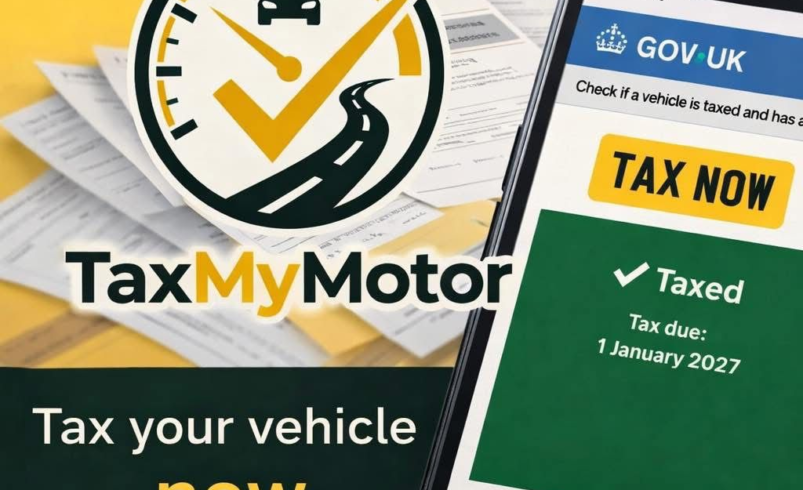
Tax My Motor is an independent assistance service, not the DVLA or a government department. Depending on the service selected, it may help motorists navigate vehicle tax procedures or prepare paperwork for certain applications. It cannot replace the DVLA’s authority to process official applications or issue registration documents.
Before paying for independent assistance, check exactly what the service includes, whether additional fees apply and whether you can complete the task directly through GOV.UK.
For official applications and current requirements, visit the GOV.UK vehicle tax service. You can also review the Tax My Motor vehicle tax page to understand its independent assistance offering before deciding which route suits your needs.
Common Mistakes to Avoid
A few simple precautions can make the process easier:
- Check your registration number before submitting an application.
- Use the correct reference number for your circumstances.
- Do not assume that vehicle tax transfers when a car is sold.
- Do not treat a V62 application as confirmation that your car is taxed.
- Check MOT and insurance requirements separately.
- Keep your application confirmation and follow up with the DVLA if the record does not update as expected.
If an application is rejected, investigate the reason instead of repeatedly submitting the same details.
Conclusion
Taxing your car online is usually straightforward when you have the correct documents and understand the relevant requirements. Registration checks, replacement logbooks, new keeper slips and V62 applications each serve a different purpose, so choosing the correct procedure is essential.
Before driving, confirm that your vehicle is taxed and meets the applicable MOT, insurance and roadworthiness requirements. If your paperwork is missing or an application does not proceed as expected, consult official DVLA guidance before taking further action. A few careful checks can help you manage your responsibilities as a motorist with greater confidence.