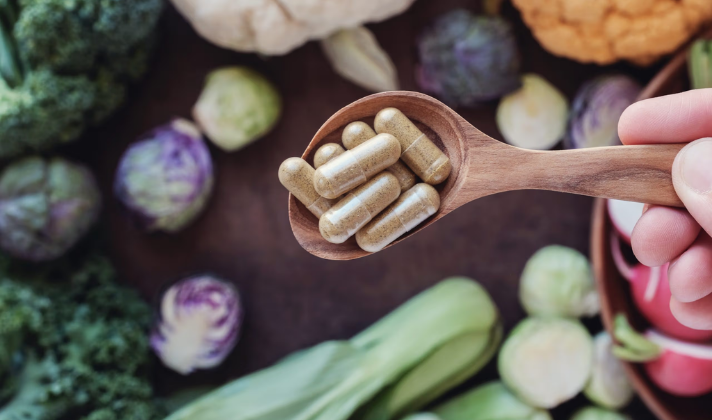

The liver performs hundreds of functions, including processing nutrients, metabolizing medications, producing bile, and regulating substances in the bloodstream. When liver function is affected by conditions such as cirrhosis, fatty liver disease, hepatitis, or other disorders, medical evaluation becomes important.
Several herbs for liver health have been investigated in laboratory experiments, animal studies, and human clinical trials. Milk thistle, turmeric, ginger, and ginseng are among the most frequently discussed ingredients.
However, no herbal supplement has been established as a universal treatment for liver disease. Research findings vary, and some concentrated herbal products can cause liver injury or interact with medications.
Below are 10 herbs commonly examined in liver-related research, along with important evidence limitations and safety considerations.
1. Milk Thistle (Silymarin)
Milk thistle (Silybum marianum) is a flowering plant traditionally associated with herbal preparations for liver conditions.
Its seeds contain several compounds collectively called silymarin, including silybin, silychristin, and silydianin.
What Does Research Say?
Researchers have investigated milk thistle extracts in people with hepatitis, cirrhosis, and fatty liver disease.
Some studies have examined changes in liver enzymes and other laboratory measurements. However, findings from human clinical trials have been inconsistent.
There is not enough high-quality evidence to conclude that milk thistle reliably treats liver disease or prevents its progression.
Safety Considerations
Milk thistle supplements may cause digestive discomfort, nausea, or allergic reactions in some individuals.
People allergic to plants in the daisy family should exercise particular caution.
The National Center for Complementary and Integrative Health provides additional information about milk thistle research and safety.
2. Ginseng
Ginseng is a plant used in traditional herbal practices, particularly in parts of Asia.
Two commonly discussed varieties are Asian ginseng (Panax ginseng) and American ginseng (Panax quinquefolius).
What Does Research Say?
Laboratory and animal research has investigated compounds found in ginseng, including ginsenosides.
Some small human studies have examined changes in liver enzyme measurements, including ALT and GGT.
However, results from individual studies do not establish ginseng as an effective treatment for liver conditions.
Further research is necessary to understand whether particular ginseng preparations have clinically meaningful effects.
Safety Considerations
Ginseng may interact with medications, including some used to manage blood sugar and blood clotting.
Products can also differ significantly in their composition and concentration.
People taking prescription medicines should discuss ginseng supplementation with a qualified healthcare professional.
3. Green Tea
Green tea comes from the leaves of Camellia sinensis.
It contains naturally occurring compounds called catechins, including epigallocatechin gallate (EGCG).
What Does Research Say?
Researchers have investigated green tea extracts in people with fatty liver disease and other metabolic conditions.
Some studies have measured changes in liver enzymes and liver fat.
However, the available evidence is insufficient to recommend green tea extract as a treatment for liver disease.
It is also important to distinguish drinking green tea from taking concentrated green tea extract supplements.
Safety Considerations
Green tea consumed as a beverage is generally well tolerated by most adults.
Concentrated green tea extracts, particularly in supplement form, have been associated with liver injury in some individuals.
People with liver disease should seek medical advice before taking concentrated extracts.
4. Licorice Root
Licorice root comes from Glycyrrhiza glabra, a plant used in several traditional medicine systems.
One of its principal compounds is glycyrrhizin.
What Does Research Say?
Licorice extracts have been investigated in laboratory research and small clinical studies involving liver-related conditions.
Some studies have examined liver enzyme changes.
However, the available evidence does not establish ordinary licorice supplements as reliable treatments for liver disease.
Results involving specialized preparations should not automatically be applied to products sold as general dietary supplements.
Safety Considerations
Regular consumption of substantial amounts of licorice containing glycyrrhizin may cause:
- Increased blood pressure
- Low potassium levels
- Fluid retention
- Abnormal heart rhythms
Licorice can also interact with certain medications.
People with high blood pressure, kidney disease, or heart conditions should be particularly cautious.
5. Turmeric (Curcumin)
Turmeric is a yellow-orange spice obtained from the root of Curcuma longa.
Curcumin is one of its principal naturally occurring compounds.
What Does Research Say?
Turmeric and curcumin have been studied in relation to several metabolic and inflammatory conditions.
Some clinical trials involving fatty liver disease have reported changes in liver enzymes or liver fat measurements.
However, study designs, supplement formulations, and results vary considerably.
Current research does not establish turmeric supplements as a proven treatment for fatty liver disease, cirrhosis, or other liver disorders.
Safety Considerations
Turmeric used in ordinary cooking differs from concentrated curcumin supplements.
Certain high-bioavailability curcumin products have been associated with liver injury.
Some supplements contain piperine, a black pepper compound that increases curcumin absorption and may influence medication interactions.
The NCCIH turmeric safety information explains these concerns in greater detail.
6. Garlic
Garlic (Allium sativum) is commonly used as a culinary ingredient and has a long history in traditional herbal preparations.
It contains sulfur-containing compounds such as allicin, alliin, and ajoene.
What Does Research Say?
Researchers have examined garlic intake and garlic supplements in relation to cholesterol, metabolic measurements, and fatty liver disease.
Some small clinical trials have reported changes in liver enzymes and metabolic markers.
Observational studies have also explored associations between garlic consumption and liver-related outcomes.
However, an association does not establish that garlic prevents liver disease, and supplement studies do not provide sufficient evidence for treating liver conditions.
Safety Considerations
Garlic consumed in normal food quantities is generally well tolerated.
Concentrated garlic supplements may cause digestive discomfort and can interact with medications, particularly those affecting blood clotting.
7. Ginger
Ginger (Zingiber officinale) is a widely used culinary ingredient that also appears in traditional herbal preparations.
Its naturally occurring constituents include gingerols and shogaols.
What Does Research Say?
Small clinical studies have investigated ginger supplementation in people with fatty liver disease.
Researchers have examined measurements such as ALT, blood lipids, and inflammatory markers.
Although some studies have reported changes in these measurements, the available evidence does not establish ginger supplements as effective medical treatment for liver disease.
Safety Considerations
Ginger used in ordinary meals is generally well tolerated.
Concentrated ginger products can cause heartburn, digestive discomfort, or medication interactions.
People taking anticoagulants or managing existing medical conditions should seek professional advice before taking high-dose ginger supplements.
8. Danshen (Salvia Miltiorrhiza)
Danshen is prepared from the roots of Salvia miltiorrhiza, a plant traditionally used in Chinese medicine.
It contains compounds including tanshinones and salvianolic acids.
What Does Research Say?
Danshen has been examined in laboratory and animal studies involving liver-related biological processes.
Some human studies have investigated specialized danshen preparations, including combinations with other treatments.
However, the quality and applicability of the available research vary.
These findings do not establish that ordinary danshen supplements prevent or treat liver disease.
Safety Considerations
Danshen may interact with medications, including anticoagulants such as warfarin.
Anyone taking medication that affects blood clotting should avoid using danshen without professional medical advice.
9. Ginkgo Biloba
Ginkgo biloba is a tree whose leaves are used in numerous herbal supplement products.
Its extracts contain compounds including flavonoids and terpene lactones.
What Does Research Say?
Some animal studies have examined ginkgo extracts in relation to liver tissue changes and biochemical measurements.
However, animal findings cannot establish effectiveness in humans.
There is insufficient clinical evidence to recommend ginkgo biloba for preventing or treating liver conditions.
Safety Considerations
Ginkgo supplements may cause headaches, digestive symptoms, or allergic reactions.
They may also increase bleeding concerns, particularly when combined with certain medications.
People taking blood thinners should consult a healthcare professional before considering ginkgo products.
10. Astragalus
Astragalus is an herb used in traditional Chinese medicine.
Its roots contain several plant compounds, including polysaccharides, saponins, and flavonoids.
What Does Research Say?
Laboratory and animal studies have investigated astragalus extracts in relation to liver fibrosis, metabolism, and other biological processes.
However, research involving animals or isolated compounds does not demonstrate that taking astragalus supplements improves liver health in humans.
Additional well-designed clinical trials are necessary.
Safety Considerations
Astragalus may interact with medications, particularly those affecting the immune system.
People with autoimmune conditions, transplant recipients, or individuals taking immunosuppressive medicines should seek medical advice before use.
Precautions Before Taking Herbs for Liver Health
Herbal supplements are not automatically safe simply because their ingredients come from plants.
Some concentrated herbal products have been associated with liver injury, while others can interact with prescription medications.
Important Points to Consider
- Existing liver conditions: People with hepatitis, cirrhosis, fatty liver disease, or other diagnosed conditions should seek individualized medical advice.
- Medication interactions: Herbs may affect how certain medications are absorbed or processed.
- Ingredient concentrations: A concentrated supplement may contain substantially larger amounts of plant compounds than normal dietary servings.
- Product quality: Supplements can differ in ingredient consistency, labeling, and manufacturing practices.
- Multiple ingredients: Combining several herbs may increase the difficulty of identifying interactions or adverse reactions.
People who experience symptoms such as jaundice, dark urine, persistent nausea, or unusual abdominal pain should seek medical assessment.
Understanding Herbal Ingredients in Liver Supplements
Commercial dietary supplements sometimes combine plant-derived compounds with vitamins, minerals, or other ingredients.
Before purchasing these products, it is useful to examine the Supplement Facts panel, serving instructions, and warnings.
For example, Paragon Cleanse TNM Liver Support lists TUDCA, NAC, Milk Thistle, Zinc, and Selenium among its ingredients.
Milk thistle is one of the herbs discussed above. TUDCA and NAC are not herbs, while zinc and selenium are minerals.
The presence of these ingredients does not establish that the product prevents liver disease, repairs liver tissue, or provides medical treatment.
For further information about differences between these ingredients, see the comparison of TUDCA, NAC, and Milk Thistle.
Frequently Asked Questions
What Are the Most Common Herbs for Liver Health?
Milk thistle, turmeric, ginger, ginseng, and licorice root are among the herbs frequently discussed in liver-related research. However, their popularity does not establish medical effectiveness.
Is Milk Thistle Proven to Improve Liver Function?
Human studies have produced inconsistent results. Current evidence is insufficient to conclude that milk thistle reliably improves liver function or treats liver disease.
Can Herbal Supplements Cause Liver Damage?
Yes. Certain herbal supplements and concentrated extracts have been associated with liver injury. Risk depends on the ingredient, formulation, dose, interactions, and individual circumstances.
Is Drinking Green Tea the Same as Taking Green Tea Extract?
No. Drinking green tea and consuming concentrated green tea extract supplements can involve substantially different amounts of active compounds. Some concentrated extracts have been associated with liver injury.
Should People With Fatty Liver Disease Take Herbal Supplements?
People diagnosed with fatty liver disease should discuss supplements with their healthcare professional. Herbal products should not replace recommended medical care or lifestyle management.
The Bottom Line
Several herbs have been investigated for their possible relationship with liver health, including milk thistle, ginseng, green tea, licorice, turmeric, garlic, ginger, danshen, ginkgo biloba, and astragalus.
However, laboratory findings, animal experiments, and small clinical trials do not establish these herbs as reliable treatments for liver disease.
The evidence varies considerably between ingredients, and some herbal supplements can cause adverse effects or interact with medication.
Anyone considering herbal supplements, particularly people with existing liver conditions, should consult a qualified healthcare professional before use.
Disclaimer: This article is for general informational purposes only and is not a substitute for professional medical advice. Dietary supplements are not intended to diagnose, treat, cure, or prevent liver disease or other medical conditions.