
Dentures play an important role in everyday life, helping people eat, speak and smile with confidence. However, regular use, accidental drops and natural wear can sometimes cause cracks, broken teeth or fitting problems. Even minor damage can make dentures uncomfortable and affect how well they function. Professional repairs can help restore damaged dentures and make them suitable for everyday use again.
Understanding what happens during a professional denture repair service can help patients feel more prepared when seeking assistance. From the initial examination to the final fitting checks, each stage helps determine the most suitable solution. Knowing what to expect also makes it easier to understand the available repair options and the importance of proper denture maintenance.
Initial Assessment of Damaged Dentures
The first step in a professional denture repair service is examining the damaged appliance. A dental professional or denture technician will check for visible cracks, broken sections, missing artificial teeth and other signs of wear. They may also ask how the damage occurred, whether the denture has been repaired previously and if it has caused discomfort. This information helps identify the problem and determine which repair method may be appropriate.
The examination also considers the overall condition and fit of the denture. Sometimes, visible damage can be connected to changes in the gums or pressure caused by an uneven bite. Identifying these issues before starting the repair is important because fixing a broken section alone may not resolve existing discomfort. A proper assessment helps establish whether the appliance needs a straightforward repair, an adjustment or further attention.
Identifying Common Denture Problems
Dentures can experience different types of damage depending on their material, age and everyday use. Common problems include cracks in the acrylic base, fractures across the denture plate, detached artificial teeth and damaged edges. Accidental drops can cause sudden breakages, while regular chewing may gradually weaken certain areas. Even a small crack should be examined because continued use can sometimes make the damage worse.
Loose or uncomfortable dentures can also indicate that an adjustment or relining service may be necessary. Changes in the shape of the gums and supporting tissues can affect how an appliance fits, causing it to move during eating or speaking. A professional can identify whether the problem is related to physical damage, poor fitting or general wear. Understanding the cause helps ensure that the recommended repair addresses the actual issue.
Understanding the Professional Denture Repair Process
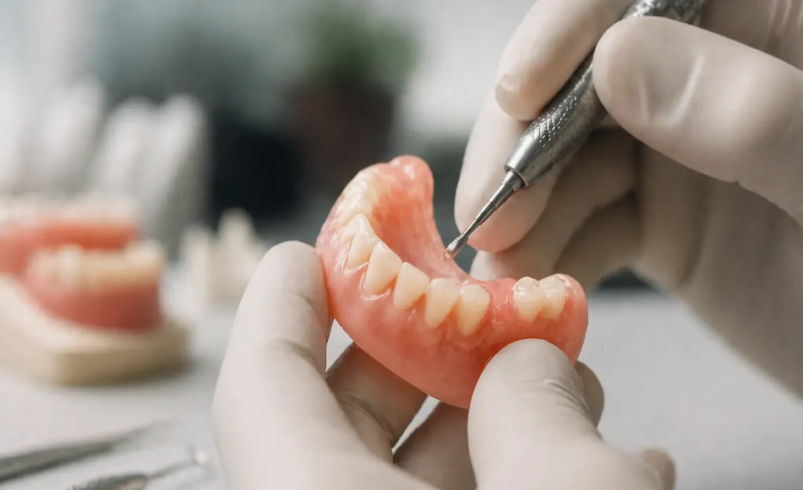
Once the damage has been identified, the appropriate repair work can begin. For example, when an acrylic denture develops a crack or breaks into separate sections, a technician may carefully reposition the pieces to restore their original alignment. Suitable dental materials are then used to reconnect the damaged areas. If an artificial tooth has become detached, it may be possible to repair or replace it, depending on the condition of the appliance.
After the main repair is completed, the affected area is carefully finished and polished. This helps remove rough edges and creates a smoother surface for everyday use. The technician also checks the repaired section to ensure that the pieces are properly aligned and the appliance has been restored appropriately. More complicated cases may require additional laboratory work or adjustments before the denture is ready to be used again.
How Long Does Professional Denture Repair Take?
The time required for denture repairs depends on the type and extent of the damage. A straightforward crack or detached tooth may be repaired relatively quickly, while more complicated fractures can require additional preparation and laboratory work. Some dental laboratories offer same-day repairs for suitable cases, but this service is not available for every type of damage. Patients should ask about the expected turnaround time before the repair begins.
The availability of laboratory facilities, the materials required and the need for further assessment can also affect the process. If the denture requires reinforcement, relining or extensive restoration, additional time may be necessary. A professional service should explain how long the work is expected to take and when the repaired appliance may be ready for collection. This allows patients to plan around the temporary inconvenience of being without their dentures.
Denture Adjustments and Relining for Better Comfort
Not every denture problem requires a physical repair. Sometimes, an appliance remains intact but no longer fits comfortably. Changes in the shape of the gums can create spaces between the denture and supporting tissues, causing movement, rubbing or irritation. In these situations, a denture adjustment or relining service may help improve how the appliance fits and feels.
Denture relining involves modifying the fitting surface to improve its contact with the gums. Depending on individual requirements, a soft lining may also be considered to provide additional cushioning. These services can be helpful for people experiencing discomfort with older dentures. A professional assessment can determine whether relining, adjustments or another solution would be more appropriate for improving everyday comfort.
When Should You Consider Denture Replacement?
Although many denture problems can be repaired, there are situations where replacement may be a more suitable option. Repeated cracks, extensive structural damage, worn artificial teeth and significant fitting problems can indicate that an appliance has reached the end of its useful life. If the denture has required several repairs, continuing to restore it may not always provide a reliable long-term solution.
The decision depends on the material, age and overall condition of the appliance. Some patients may benefit from replacement dentures designed around their current oral requirements, while others may only need a simple repair or adjustment. If you are looking for denture repair kings lynn , understanding the available repair and replacement options can help you make a more informed decision. A professional assessment can establish whether the existing appliance is suitable for restoration or whether a new denture would be more appropriate.
Conclusion
A professional denture repair service involves several important stages, including an initial examination, identifying the damage, completing suitable repairs and checking the final fit. Whether dentures have developed a crack, lost an artificial tooth or become uncomfortable, professional attention can help identify the most appropriate solution.
Regular maintenance and timely professional assessments can help prevent minor problems from becoming more complicated. It is also important to avoid attempting household repairs, as unsuitable adhesives and materials may damage the appliance further. Understanding when dentures need repairing, adjusting or replacing allows patients to make informed decisions and maintain their appliances in suitable condition.