

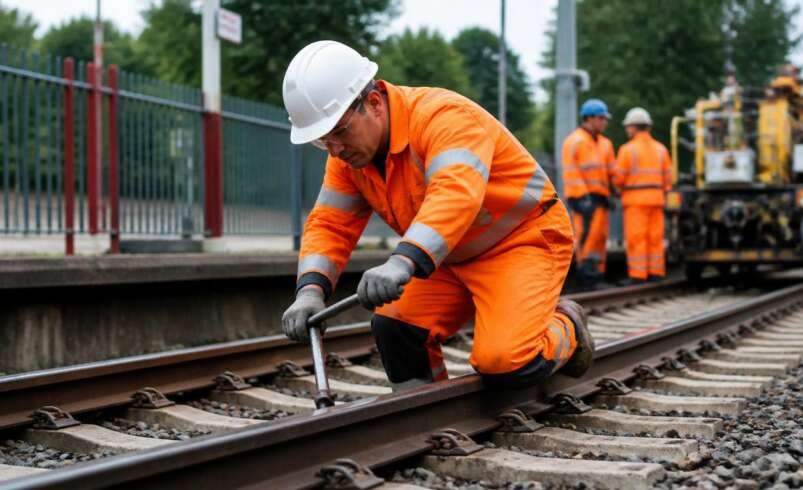

Working on or around the railway network is one of the most high-risk environments in the industrial sector. With high-speed trains, heavy on-track machinery, and live high-voltage electricity, there is absolutely zero margin for error.
For railway workers, safety skills are not just a list of guidelines—they are survival mechanisms. Whether you are an engineer, a track maintenance technician, or an onsite surveyor, possessing the right mix of technical safety competencies and sharp operational awareness is non-negotiable.
Here are the essential safety skills every railway worker must master to operate securely trackside.
1. Clear Communication Protocols
Miscommunication on a live track can lead to catastrophic consequences. Railway workers must be exceptionally skilled in clear, unambiguous communication, particularly when interacting with signallers or Controllers of Site Safety (COSS).
-
The Skill: Mastering the phonetic alphabet and using structured, standardized phraseology. When safety-critical messages are passed, workers must repeat the instruction back word-for-word to confirm absolute understanding.
-
The Impact: This eliminates guesswork, ensuring that everyone on the ground knows precisely which lines are blocked or active before stepping onto the track infrastructure.
2. Electrification Awareness (AC and DCCR Systems)
The UK rail network relies heavily on high-voltage power. Tracks are powered either by Overhead Line Equipment (OLE) pushing massive AC currents, or by live ground-level DC Conductor Rails (DCCR), commonly known as the third rail.
-
The Skill: Workers must know the exact safety clearance distances for both systems. They must understand the severe danger of stepping on or dropping tools near a live conductor rail, and learn how to identify isolated zones.
-
The Impact: Proper electrical awareness stops accidental arching and electrocution incidents, turning invisible dangers into strictly managed hazards.
3. Mastering the Danger Zone and Positions of Safety
Knowing exactly where to stand when a train approaches is the most fundamental rule of track safety. The area within the railway boundary where you could be struck by a passing train is known as the “danger zone.”
To learn these layout protocols legally, formal certification is required. Completing PTS Training courses in London provides the mandatory qualification needed to legally step foot on or near Network Rail infrastructure, teaching you how to read track layouts, navigate safe walking routes, and locate proper positions of safety.
-
The Skill: Workers must instantly calculate clearances and identify a verified “position of safety”—a designated safe area far enough from the line to clear a passing train safely.
-
The Impact: Immediate situational awareness prevents workers from freezing or panicking when a train approaches at high speed.
4. Sharp Dynamic Hazard Identification
The track environment changes constantly due to shifting weather, low visibility, passing trains, and changing ground conditions. A safe railway worker does not operate on autopilot.
-
The Skill: The ability to perform continuous, dynamic risk assessments as you work. This includes spotting blocked walking routes, un-flagged structural defects, loose ballast, or failing communication signals.
-
The Impact: Spotting and reporting small, local hazards prevents minor track issues from snowballing into severe derailment risks or worker injury.
5. Executing Precise Emergency Procedures
When an incident occurs—such as an obstruction on the line or an unexpected train entering a work zone—every second counts. Railway workers cannot afford to hesitate.
To read more about specific emergency signaling protocols, track layout structures, and the latest Sentinel card compliance guidelines, explore the specialist guides available on the JFK Technology.
-
The Skill: Knowing exactly how to use hand signals, track circuit operating clips, or red flags to immediately warn oncoming trains. Workers must also be skilled in contacting the signaller using the emergency “Railway Emergency Call” function via GSM-R radios.
-
The Impact: Fast, correct execution of emergency protocols can safely halt train traffic across entire line segments, containing a local incident before it worsens.
Conclusion: Safety is Your Ticket to the Track
Your safety skills are the most valuable tools you carry onto a railway site. By combining crisp communication, electrical awareness, layout knowledge, and fast emergency reflexes, you protect your crew and ensure you return home safely after every single shift.