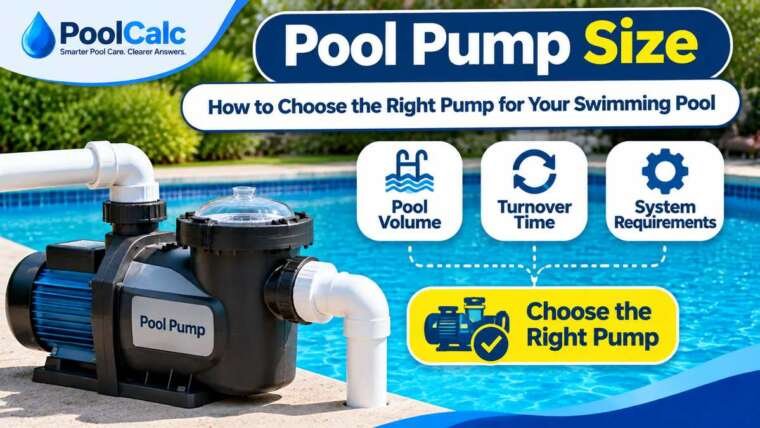

Pool Pump Size: How to Choose the Right Pump for Your Swimming Pool
A swimming pool pump moves water through the filtration and circulation system. Choosing the correct size helps maintain water quality while controlling energy consumption. Swimming Pool Calculator provides pool-related calculation tools that can help owners understand important maintenance measurements.
A pump that is too small may not provide enough flow for effective circulation. A pump that is too large can consume unnecessary electricity, create excessive pressure, and cause problems with filtration equipment.
The right choice depends on pool volume, required turnover time, plumbing resistance, filter capacity, and equipment specifications. Horsepower alone does not tell you whether a pump is suitable.
Before selecting equipment, estimate the pool’s water capacity. The pool pump size calculator can support the sizing process.
What Does Pool Pump Size Mean?
Pump size is commonly described by horsepower, but flow rate is more useful for system design. Flow rate measures how much water a pump moves over a period of time, usually in gallons per minute or gallons per hour.
The actual flow depends on the pump curve and total dynamic head. Plumbing length, pipe diameter, fittings, valves, filters, heaters, and other components affect resistance.
How to Determine the Required Flow Rate
A common starting point is the desired turnover time. Turnover time estimates how long the pump would need to circulate a volume equal to the pool’s capacity.
For example, a 20,000-gallon pool with an eight-hour turnover target requires an average flow rate of about 41.7 gallons per minute.
The calculation is:
Required GPM = Pool volume ÷ Turnover time in minutes
For this example:
20,000 ÷ 480 = 41.7 GPM
This is a planning estimate, not a guarantee that every part of the pool will be filtered equally. Actual system design must account for plumbing resistance and equipment limits.
Factors That Affect Pump Selection
Pool Volume
Larger pools generally require greater circulation capacity. However, pool volume should not be the only sizing factor.
Pipe Diameter
Smaller pipes can increase water velocity and friction loss. This may reduce the actual flow delivered by the pump.
Total Dynamic Head
Total dynamic head represents the resistance the pump must overcome. It includes friction and elevation effects throughout the circulation system.
Filter Capacity
The pump must operate within the filter’s rated flow range. Excessive flow can reduce filtration performance or damage equipment.
Pool Features
Waterfalls, spas, heaters, cleaning systems, and other features may require specific flow rates. These requirements should be included in the design.
Single-Speed vs. Variable-Speed Pumps
Single-speed pumps operate at one fixed speed. They are straightforward but may use more energy than necessary for routine filtration.
Variable-speed pumps allow operators to adjust motor speed. Lower speeds can reduce energy use for suitable circulation tasks. The best settings depend on plumbing, filtration requirements, and pool equipment.
A variable-speed pump may have a higher initial purchase price, but operating costs can be lower over time.
Signs Your Pool Pump May Be Incorrectly Sized
- Weak return-jet flow.
- Poor circulation in certain areas.
- Frequent filter pressure problems.
- Excessive noise or vibration.
- Unusually high electricity use.
- Equipment operating outside manufacturer limits.
These symptoms can also result from clogged filters, air leaks, blocked baskets, or plumbing issues. Inspect the complete system before replacing the pump.
How to Maintain a Pool Pump
Clean the pump basket regularly. Check for leaks and unusual sounds. Keep the surrounding area ventilated and follow the manufacturer’s maintenance schedule.
Do not operate equipment with damaged electrical connections. Electrical repairs should be handled by a qualified professional.
Frequently Asked Questions
What size pool pump do I need?
The correct size depends on pool volume, desired flow, total dynamic head, and equipment ratings. Calculate the required flow before choosing a model.
Is a bigger pool pump always better?
No. An oversized pump can increase energy costs and exceed the safe flow limits of other equipment.
How many hours should a pool pump run?
The operating schedule depends on pool conditions, weather, swimmer load, sanitizer demand, and circulation design.
Are variable-speed pumps worth it?
They can reduce energy use when properly selected and programmed. Compare the initial cost with expected electricity savings.