
Choosing the right footwear is not just about design and appearance. The sole material also plays an important role in comfort, flexibility, durability, grip, and everyday performance. Among the popular footwear sole materials, EVA and rubber are widely used in different types of footwear. But when comparing EVA sole vs rubber sole, which one is better for your needs?
Both materials offer different advantages, and understanding their properties can help buyers make an informed decision.
What Is an EVA Sole?
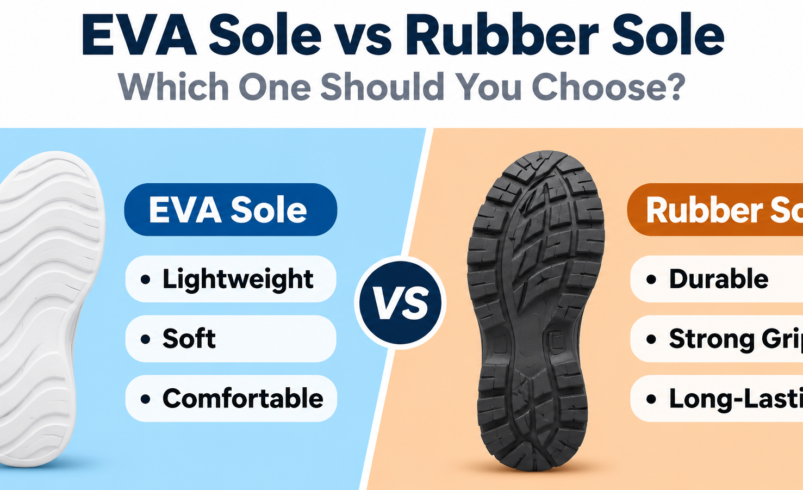
EVA stands for Ethylene Vinyl Acetate. It is a lightweight, flexible, and cushioning material commonly used in slippers, sandals, clogs, and casual footwear.
One of the biggest advantages of EVA is its lightweight structure. It helps reduce the overall weight of footwear and provides a soft, cushioned feel while walking. EVA soles are also flexible, making them suitable for everyday use.
Benefits of EVA Sole Shoes
-
Lightweight Construction: EVA footwear feels lighter on the feet and is comfortable for extended everyday wear.
-
Shock Absorption: Its cushioning properties help absorb some impact during walking.
-
Flexibility: EVA material bends easily, allowing natural foot movement.
-
Comfort: Soft cushioning makes it a popular choice for casual footwear.
-
Water Resistance: EVA does not absorb water easily, making it useful for many wet-area and outdoor applications.
These features make EVA sole shoes a popular choice for people looking for lightweight and comfortable footwear.
What Is a Rubber Sole?
Rubber soles are made from natural or synthetic rubber compounds. They are commonly used in footwear where traction, grip, and resistance to wear are important.
Rubber generally offers better surface grip than standard EVA, although performance depends on the rubber compound and sole design. It can also provide good durability for regular use.
Benefits of Rubber Soles
-
Better Grip: Rubber soles generally provide reliable traction on different surfaces.
-
Durability: They are often more resistant to abrasion and regular surface wear.
-
Stability: Rubber can provide a firm and stable walking experience.
-
Flexibility: Depending on the formulation, rubber soles can offer different levels of flexibility.
-
Versatility: Rubber is suitable for casual, outdoor, work, and other footwear applications.
EVA Sole vs Rubber Sole: Key Differences
Understanding the difference between these two materials makes it easier to select suitable footwear.
|
Feature |
EVA Sole |
Rubber Sole |
|
Weight |
Lightweight |
Generally heavier |
|
Comfort |
Soft cushioning |
Depends on compound |
|
Flexibility |
Highly flexible |
Varies by formulation |
|
Grip |
Depends on tread design |
Generally offers better traction |
|
Durability |
Can wear faster with abrasion |
Generally more abrasion-resistant |
|
Water Resistance |
Does not absorb water easily |
Generally water-resistant |
|
Common Uses |
Slippers, sandals, clogs |
Casual, outdoor and work footwear |
What About PU Material Shoes?
Apart from EVA and rubber, polyurethane (PU) is another important material used in footwear manufacturing.
PU material shoes are valued for their balance of flexibility, cushioning, and durability. PU soles can offer good resistance to everyday wear and are used in different footwear categories.
The performance of PU footwear depends on its formulation, density, manufacturing quality, and intended application. Buyers should compare the material according to their comfort and usage requirements rather than selecting footwear based only on its material name.
Which Sole Should You Choose?
The right choice depends on where and how you plan to use your footwear.
-
For lightweight everyday footwear: EVA is a practical option because of its soft and lightweight construction.
-
For better surface traction: Rubber is worth considering, especially when grip is a priority.
-
For casual slippers and sandals: EVA can provide a comfortable and flexible experience.
-
For regular outdoor use: Rubber may be preferable where abrasion resistance and traction are important.
-
For balanced footwear performance: PU can also be considered depending on the product design.
Final Thoughts
Both EVA and rubber soles have their own advantages. EVA is known for its lightweight construction, flexibility, and cushioning, while rubber is valued for its grip and abrasion resistance. PU is another useful option for footwear manufacturers and buyers looking for different performance characteristics.
Before purchasing footwear, consider your daily activities, comfort preferences, surface conditions, and durability requirements. Comparing these factors will help you choose the right sole material.
For businesses, retailers, and bulk buyers exploring footwear options, Picaaso Footwear offers footwear solutions for wholesale and business requirements. Visit Picaaso Footwear to explore its product range and bulk enquiry options.