
Retatrutide is a triple-agonist peptide. It targets GIP, GLP-1, and glucagon receptors. Its Phase 3 programme asks one big question in different groups of people: does it work, and is it safe?
Different Trials, Different Questions
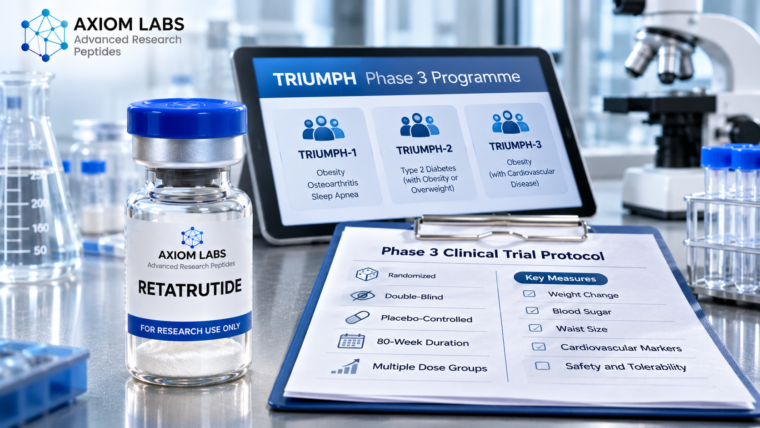
Each TRIUMPH trial studies a different group.
- TRIUMPH-1: Includes a main obesity trial plus two smaller trials for knee osteoarthritis pain and obstructive sleep apnea. lilly
- TRIUMPH-2: Enrolled 1,152 adults with type 2 diabetes and obesity or overweight. hcplive
- TRIUMPH-3: Studies adults with a BMI of at least 35 and established cardiovascular disease. hcplive
How the Trials Are Built
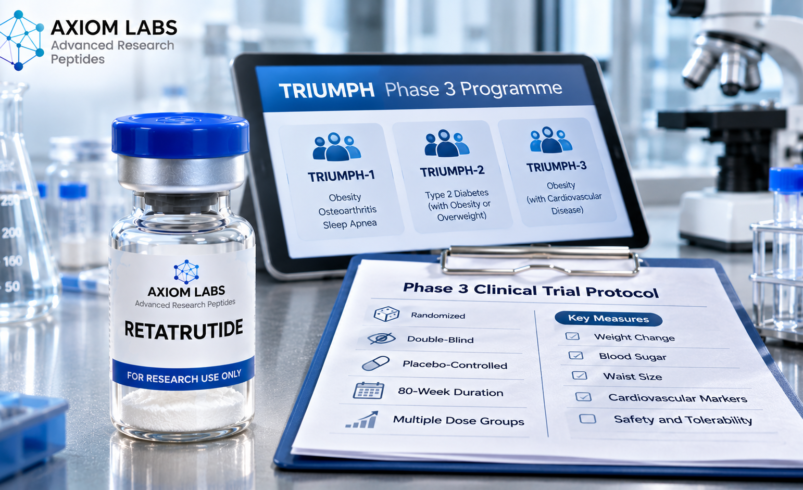
TRIUMPH-2 and TRIUMPH-3 are 80-week, randomized, double-blind, placebo-controlled trials. Doses are studied side by side, so researchers can see how results change from one dose to the next. lilly
What Researchers Measure
The main goal is weight change from the start of the trial. Other measures include blood sugar, waist size, and heart-health markers. Safety is tracked in every trial, with stomach-related side effects reported most often.
Where Retatrutide Trial Results Stand
Results so far are company-reported topline data. Full details are being shared at medical meetings and in journals. The sponsor plans to submit for FDA approval in the first quarter of 2027. Retatrutide is still investigational. lilly
Want the Details?
This post explains what is being tested. For endpoints, dosing steps, and what the data means for peptide research, see Retatrutide Phase 3 data explained.
Final Thoughts
Phase 3 is about proof across many groups. Each trial answers a different piece of the puzzle. Follow the full publications for the final picture.
Disclaimer: For information only. Not medical advice. Retatrutide is an investigational compound.