

Manuka Honey: Benefits, Uses, Nutrition, and Everything You Need to Know
Introduction
Manuka honey is one of the most sought-after and premium varieties of honey available today. Produced by honeybees that collect nectar from the flowers of the Manuka tree (Leptospermum scoparium), this unique honey is primarily harvested in New Zealand and parts of Australia. Unlike regular honey, Manuka honey contains naturally occurring compounds that give it exceptional antibacterial properties, making it popular not only as a natural sweetener but also as a wellness product.
Over the years, Manuka honey has gained worldwide recognition for its potential to support wound healing, soothe sore throats, improve digestive health, and provide antioxidant benefits. It is commonly used in homes, healthcare settings, and skincare products because of its unique composition and quality.
This article explores everything you need to know about Manuka honey, including its origin, nutritional value, health benefits, uses, grading systems, storage tips, and precautions.
What Is Manuka Honey?
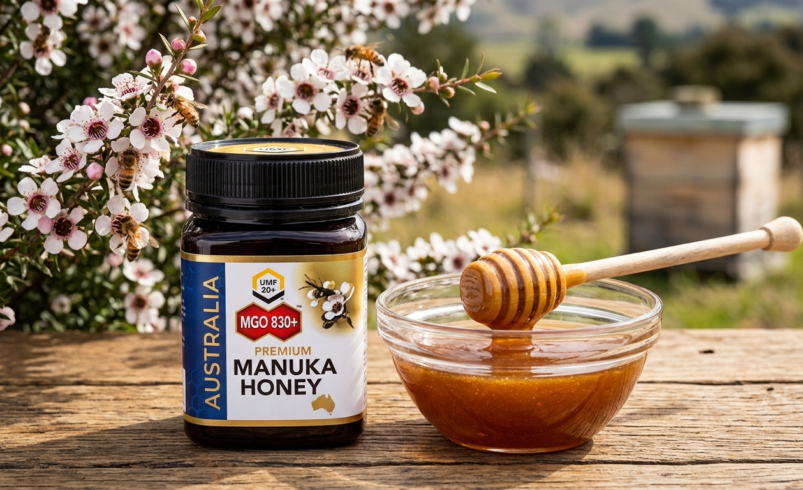
Manuka honey is a monofloral honey produced when honeybees gather nectar from the blossoms of the Manuka tree. This tree grows naturally in New Zealand and southeastern Australia and blooms for only a few weeks each year, making Manuka honey relatively rare.
What sets Manuka honey apart from ordinary honey is its high concentration of methylglyoxal (MGO), a naturally occurring compound responsible for much of its antibacterial activity. Researchers have studied Manuka honey extensively because it maintains antibacterial properties even when exposed to heat and light, unlike some other types of honey.
Its rich, earthy flavor and thick texture also distinguish it from traditional floral honeys.
How Is Manuka Honey Produced?
The production process begins when bees collect nectar from Manuka flowers during the flowering season. The bees convert this nectar into honey inside the hive through natural enzymatic processes.
After harvesting, the honey is:
- Carefully filtered
- Tested for purity
- Evaluated for MGO levels
- Certified using recognized grading systems
- Packaged for consumers
Because authentic Manuka honey requires strict quality testing and limited seasonal production, it is generally more expensive than regular honey.
Nutritional Value of Manuka Honey
Although Manuka honey is primarily composed of natural sugars, it also contains several beneficial nutrients and bioactive compounds.
A typical tablespoon contains approximately:
- Calories: 60–70
- Carbohydrates: 17 grams
- Fat: 0 grams
- Protein: 0 grams
It also contains small amounts of:
- Potassium
- Calcium
- Magnesium
- Zinc
- Iron
- Amino acids
- Natural enzymes
- Flavonoids
- Phenolic compounds
- Antioxidants
These nutrients contribute to its popularity as part of a balanced diet when consumed in moderation.
Health Benefits of Manuka Honey
1. Natural Antibacterial Properties
One of the most significant benefits of Manuka honey is its natural antibacterial activity. Its high MGO content helps inhibit the growth of certain bacteria, making it different from many other honey varieties.
This antibacterial action has led to its use in medical-grade wound dressings and healthcare products.
2. Supports Wound Healing
Medical-grade Manuka honey has been used to help manage certain wounds and burns under healthcare supervision.
Potential benefits include:
- Maintaining a moist wound environment
- Helping reduce bacterial growth
- Supporting natural tissue repair
- Assisting with odor control in some wounds
Only sterile medical-grade products should be used for wound care.
3. Soothes Sore Throats
Manuka honey is a popular home remedy for sore throats.
Its thick consistency coats the throat, while its natural properties may help reduce irritation and provide temporary relief from discomfort.
Many people add a teaspoon to warm herbal tea or consume it directly.
4. Supports Digestive Health
Some studies suggest that Manuka honey may contribute to digestive wellness by supporting a balanced gut environment.
Potential benefits include:
- Supporting beneficial gut bacteria
- Helping maintain stomach health
- Assisting with mild digestive discomfort
More research is ongoing, but many people include it as part of a healthy diet.
5. Rich in Antioxidants
Manuka honey contains antioxidants that help protect cells from oxidative stress caused by free radicals.
A diet rich in antioxidants may support overall health and contribute to healthy aging.
6. May Support Immune Function
Although no food can prevent illness on its own, Manuka honey contains natural compounds that may support normal immune function when included in a balanced diet.
It is often consumed during seasonal changes as part of a daily wellness routine.
7. Promotes Oral Health
Unlike ordinary sugary foods, Manuka honey has demonstrated antibacterial activity against certain bacteria associated with plaque and gum issues.
It should not replace regular brushing, flossing, or professional dental care, but it may complement good oral hygiene habits.
8. Supports Healthy Skin
Manuka honey is widely used in skincare products because of its moisturizing and soothing properties.
It may help:
- Hydrate dry skin
- Calm minor irritation
- Improve skin texture
- Support the skin’s natural barrier
Many face masks, cleansers, and creams contain Manuka honey as an active ingredient.
Common Uses of Manuka Honey
Manuka honey is highly versatile and can be enjoyed in several ways.
As a Natural Sweetener
Use it in:
- Tea
- Coffee
- Smoothies
- Yogurt
- Oatmeal
- Toast
Daily Wellness Routine
Many adults enjoy one teaspoon daily as part of a balanced lifestyle.
Skincare
Manuka honey is a common ingredient in:
- Face masks
- Moisturizers
- Cleansers
- Lip balms
Medical Applications
Sterile, medical-grade Manuka honey is used in specialized wound care products under professional guidance.
Understanding UMF and MGO Ratings
Authentic Manuka honey is often labeled with grading systems that indicate its quality and antibacterial strength.
UMF (Unique Manuka Factor)
The UMF grading system verifies authenticity and measures important natural compounds.
Common ratings include:
- UMF 5+
- UMF 10+
- UMF 15+
- UMF 20+
- UMF 24+
Higher UMF ratings generally indicate greater antibacterial activity.
MGO (Methylglyoxal)
MGO measures the concentration of methylglyoxal in the honey.
Typical ratings include:
- MGO 100+
- MGO 250+
- MGO 400+
- MGO 550+
- MGO 850+
Higher MGO values represent higher concentrations of this naturally occurring compound.
How to Choose Authentic Manuka Honey
Because of its popularity, counterfeit or blended products are available in the market.
When purchasing Manuka honey, look for:
- Certified UMF or MGO ratings
- Country of origin listed as New Zealand
- Clearly labeled manufacturer information
- Independent quality certifications
- Sealed packaging
Avoid products with vague claims that do not provide recognized grading information.
Proper Storage
Correct storage helps preserve quality and flavor.
Follow these tips:
- Keep the lid tightly closed.
- Store at room temperature.
- Avoid direct sunlight.
- Keep away from excessive heat.
- Store in a dry place.
There is generally no need to refrigerate Manuka honey unless the manufacturer recommends it.
Possible Side Effects and Precautions
Manuka honey is considered safe for most healthy adults, but some precautions are important.
Potential concerns include:
- Allergic reactions in people allergic to bees or honey
- High natural sugar content
- Extra calorie intake if consumed excessively
People with diabetes or those following a sugar-restricted diet should consult a healthcare professional before consuming significant amounts.
Children under one year of age should never be given honey due to the risk of infant botulism.
Manuka Honey vs. Regular Honey
| Feature | Manuka Honey | Regular Honey |
|---|---|---|
| Source | Manuka tree nectar | Various flowering plants |
| Antibacterial Activity | High | Moderate |
| MGO Content | High | Low |
| Flavor | Rich and earthy | Varies by floral source |
| Price | Premium | Generally more affordable |
| Medical Applications | Common in medical-grade products | Limited |
Why Is Manuka Honey So Expensive?
Several factors contribute to the higher price of Manuka honey:
- Limited flowering season
- Restricted production areas
- Extensive quality testing
- Certification costs
- High international demand
- Premium harvesting practices
These factors make authentic Manuka honey one of the most valuable honey varieties in the world.