
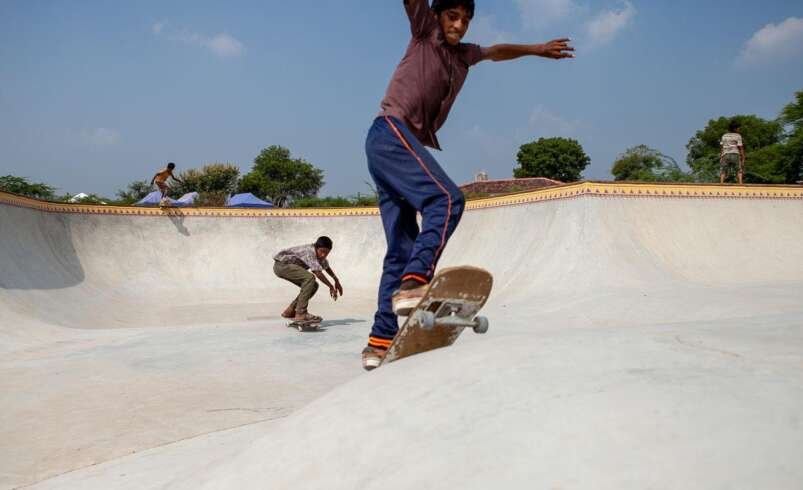

A skateboard used to be an unusual sight on an Indian street. Today, it is increasingly becoming a symbol of a different sporting culture—one built around creativity, independence and a willingness to try something that does not always look conventional.
India’s young action-sports community is growing through skateboarding, BMX, roller freestyle, scootering, surfing and other urban disciplines. The growth is still modest compared with cricket or badminton, but it is becoming much harder to dismiss as a passing youth trend.
Skateboarding’s Olympic status has helped enormously. The sport made its Olympic debut at Tokyo 2020 and returned at Paris 2024, where 88 athletes competed across men’s and women’s street and park events.
For Indian teenagers, that visibility changes the conversation. A sport that once looked like a hobby can now be seen as a genuine competitive pathway.
At the same time, India’s own ecosystem is developing. The Roller Skating Federation of India included skateboarding in the 2026 India Skate Games, alongside disciplines such as inline freestyle, roller freestyle and scooter. The event was held in Chennai in April 2026 and included selection trials for skateboarding.
The rise is not only about medals. It is about giving young people another way to compete, express themselves and build confidence.
Why Action Sports Are Connecting With a New Generation
Traditional sports often come with a clear structure: join a club, learn the rules, enter competitions and progress through rankings.
Action sports can feel different.
A young skateboarder may begin simply because a friend owns a board. They learn to balance, fall, get back up and eventually land a trick they have been practising for weeks.
That sense of personal progress is one of skateboarding’s biggest attractions.
There is no coach shouting instructions every second. The athlete has to experiment. They have to understand their own body, timing and limits.
That independence is particularly attractive to teenagers who want sport to feel creative rather than overly controlled.
Skateboarding also has a strong community element. Beginners can watch experienced riders, copy techniques, exchange advice and celebrate each other’s progress. A skatepark can therefore become both a sporting facility and a social space.
The Skateboarding India Federation says its mission includes building skateparks, raising awareness and creating opportunities for young people to learn and develop through the sport. Its website currently lists 21 managed skateparks and more than 6,000 skateboarders joined through its platform.
Those figures should be understood as organisation-reported numbers rather than a national participation census, but they nevertheless illustrate the infrastructure-building effort underway.

From Street Culture to Serious Competition
One of the most interesting changes is the gradual professionalisation of skateboarding in India.
For a long time, skateboarding existed largely outside India’s mainstream sporting system. Riders found their own spaces, bought equipment through specialised shops or online communities and learned from one another.
Now there are more organised competitions and clearer sporting structures.
The 2026 India Skate Games included skateboarding as an official discipline, with cadet, sub-junior, junior and senior participation structures. The event’s bulletin also listed skateboarding selection activity alongside other skating disciplines.
That age-group structure matters.
A sport becomes sustainable when a 10-year-old beginner can see a path that potentially leads to junior competition and eventually senior events.
It also gives parents something concrete to understand.
Instead of saying, “My child just rides a skateboard,” a family can now see that the activity can involve coaching, competitions, rankings and structured development.
The Olympic connection adds another layer.
Skateboarding is divided into two Olympic disciplines: street and park. Street focuses on obstacles resembling an urban environment, including rails, ledges and stairs, while park uses bowls, ramps and transitions.
That distinction is useful for beginners because the two disciplines require different approaches.
A young athlete who enjoys technical tricks and obstacle combinations may gravitate toward street. Someone who loves speed, air and transitions may prefer park.
Neither is automatically better.
The sport rewards individuality, which is one reason it appeals strongly to young people.
A successful skateboarder is not simply trying to copy somebody else. At advanced levels, athletes need to develop combinations and styles that distinguish them from competitors.
That creativity is also making skateboarding attractive to brands and digital audiences.
Short-form video is naturally suited to action sports. A successful trick can be understood visually within seconds. That makes skateboarding easier to share on Instagram, YouTube and other platforms than sports that require lengthy explanations.
This creates opportunities for young athletes beyond competition.
A skilled skateboarder can potentially build a following, work with brands, create instructional content, participate in events or become involved in coaching.
Of course, social media should not be confused with sporting success. A viral video does not automatically mean an athlete is competition-ready.
The foundation still needs to be technical ability, physical preparation and safe progression.
Safety is particularly important.
Skateboarding involves falls. Beginners should expect them, but the goal is to make them manageable.
A sensible starting setup includes:
- A properly sized skateboard
- Certified helmet
- Wrist protection
- Knee pads
- Elbow pads
- Suitable shoes
- A safe learning environment
- Supervision for young beginners
The biggest mistake is attempting advanced tricks before mastering basic movement.
A beginner should first learn how to stand, push, turn, stop and fall safely. Then they can progress to riding ramps, basic ollies and more technical skills.
This is not glamorous, but it works.
Imagine learning to drive. You would not begin by attempting a high-speed manoeuvre before learning how to brake. Skateboarding follows the same principle.
The growth of action sports is also extending beyond skateboarding.
Roller freestyle, inline freestyle, scooter and related disciplines are being included in organised Indian events. The 2026 India Skate Games brought several of these disciplines together in Chennai, showing how a wider skating culture can create multiple entry points for young athletes.
That matters because not every child will connect with a skateboard.
One may enjoy BMX. Another may prefer inline skating. Someone else may discover surfing or mountain biking.
Action sports therefore have the potential to become a broader youth-sport ecosystem rather than a single discipline.
There are still serious obstacles.
The biggest is infrastructure.
India needs more skateparks that are safe, professionally designed and accessible to young people. A smooth piece of pavement is not a substitute for a properly designed facility.
The second challenge is equipment cost.
A quality skateboard, protective gear and replacement parts can become expensive for families. As athletes progress, specialised equipment can increase the financial burden.
Community programmes, sponsorships and affordable training initiatives can help reduce this barrier.
The third challenge is coaching.
Skateboarding has traditionally been learned informally, and peer learning remains valuable. But serious competitors also need coaches who understand biomechanics, progression, injury prevention and competition formats.
The fourth challenge is public perception.
Some parents still associate skateboarding with dangerous behaviour rather than organised sport. That perception can change when families see professional competitions, structured coaching and proper safety standards.
For people following India’s wider sports ecosystem online, gold365 online may appear in general sports-related searches, but young action-sports athletes need information from recognised sporting bodies, competition organisers and established coaching programmes.
The same principle applies to sports content featuring gold365 club. Online visibility can help young sports gain attention, but credible development requires real facilities and legitimate competition.
There is also a strong argument for introducing action sports through schools.
A school does not need to build a massive skatepark immediately. It can begin with awareness programmes, demonstrations, partnerships with nearby facilities and safe introductory sessions.
That first experience can be powerful.
A child who has never considered themselves “sporty” may discover that they are naturally good at balance, coordination or movement.
This is one of the hidden strengths of action sports: they can attract children who are not interested in traditional team sports.
A football trial may make one child nervous. Give that same child a skateboard and an open practice space, and they may become completely engaged.
For aspiring skateboarders, a practical development pathway can look like this:
- Learn basic balance, pushing and stopping.
- Practise on safe, controlled surfaces.
- Use protective equipment consistently.
- Find a local skatepark or recognised training group.
- Learn fundamental tricks before attempting advanced ones.
- Record progress and identify technical weaknesses.
- Enter beginner-friendly competitions.
- Learn how competition judging works.
- Increase strength, mobility and conditioning gradually.
- Move toward national-level competition when the athlete is ready.
Parents should also remember that progression is rarely smooth.
A young skateboarder may land a trick perfectly one day and fail repeatedly the next. That does not necessarily mean they have become worse.
Action sports teach an important lesson: improvement often happens in bursts.
This is one reason they can be valuable beyond competition. Learning to fall, analyse what went wrong and try again develops resilience without requiring a traditional classroom lesson.
The digital side of the sport can strengthen that learning.
Video can be used to analyse foot placement, body position and timing. Young riders can compare attempts and identify small technical changes.
However, copying tricks from social media without understanding difficulty levels can be dangerous.
A clip showing an athlete landing a complex trick may hide months or years of preparation.
Another myth is that skateboarding is only for boys.
The international sport has separate women’s and men’s Olympic competitions, and the growth of women’s skateboarding globally has helped demonstrate that girls and young women belong in skateparks and competitive action sports just as much as boys. Paris 2024 again featured both women’s and men’s street and park events.
India’s development should follow the same direction.
Safe facilities, female coaches, inclusive training environments and visible role models can make it easier for more girls to participate.
The sport can also benefit from stronger local communities.
A skatepark does more than provide ramps. It creates a place where experienced riders can mentor beginners, competitions can be organised and young people can meet others who share their interests.
That community effect is difficult to measure but extremely important.
For a sport that is still developing in India, every new rider can potentially become part of the next generation of coaches, organisers and competitors.
Key takeaways:
- Skateboarding has moved from niche youth culture toward organised competitive sport.
- Its Olympic status has increased global visibility.
- India held structured skateboarding competition through the 2026 India Skate Games.
- Action sports such as roller freestyle, inline freestyle and scooter are developing alongside skateboarding.
- Skateparks are essential for safe and consistent athlete development.
- Proper protective equipment and gradual skill progression are crucial.
- Women and younger athletes need accessible pathways into competition.
- Social media can help promote action sports, but online popularity should not replace proper coaching.
- The strongest long-term growth will come from combining community culture with professional sporting structures.
FAQs
Is skateboarding popular among Indian youth?
Interest is growing, particularly in urban areas where skateparks, clubs and communities are developing. The presence of organised events and the sport’s Olympic profile have also made skateboarding more visible to young Indians.
Is skateboarding an Olympic sport?
Yes. Skateboarding made its Olympic debut at Tokyo 2020 and was included again at Paris 2024. Olympic competition consists of men’s and women’s street and park events.
How can a child start skateboarding in India?
The safest route is to begin with basic skills under appropriate supervision, use protective equipment and practise at a dedicated skatepark whenever possible. Families can then look for reputable local coaches, clubs and organised competitions.
Are there official skateboarding competitions in India?
Yes. Skateboarding has been included in organised national-level events. The 2026 India Skate Games, conducted under the Roller Skating Federation of India, included skateboarding alongside several other skating disciplines and selection activities.
What is the difference between street and park skateboarding?
Street skateboarding uses obstacles such as rails, ledges, stairs and other urban-style features. Park skateboarding takes place on bowls, ramps and transitions, with athletes performing aerial and technical tricks.
Can skateboarding become a career in India?
It can become part of a serious sporting career, although the pathway is still developing compared with established Indian sports. Athletes can compete, coach, work with brands, create media content, organise events or become involved in skatepark and community development.
For sports audiences encountering terms such as 365 win online, it is worth remembering that the most valuable information for a young skateboarder is practical: where to train, how to stay safe, which competitions are legitimate and how to progress.
Is skateboarding safe for children?
Skateboarding has inherent risks, particularly when beginners attempt difficult tricks too early. Proper protective equipment, qualified supervision, suitable facilities and gradual skill progression can significantly reduce unnecessary risk.
What role can parents play?
Parents can provide encouragement without putting excessive pressure on results. Supporting safe practice, helping children maintain school commitments and allowing them to enjoy the creative side of the sport can be more valuable than demanding medals.
The next stage for Indian skateboarding will not be determined by one viral trick or one successful competition. It will depend on whether the country can build enough safe skateparks, develop capable coaches, create affordable entry points and give young athletes regular opportunities to compete.
There is already evidence that the foundations are being laid. Organised events, youth programmes and skatepark initiatives are giving the sport a more recognisable structure, while the Olympic platform has shown young Indians that skateboarding belongs on the world’s biggest sporting stage.
What makes the movement particularly promising is that skateboarding does not ask young people to fit into a traditional sporting mould. It gives them room to experiment, fail, create and eventually develop a style of their own.
If India can preserve that freedom while building stronger competitive pathways, skateboarding and other action sports could become an important part of the country’s youth sporting culture—not simply because they produce champions, but because they give more young people a reason to move, compete and believe they belong in sport.