

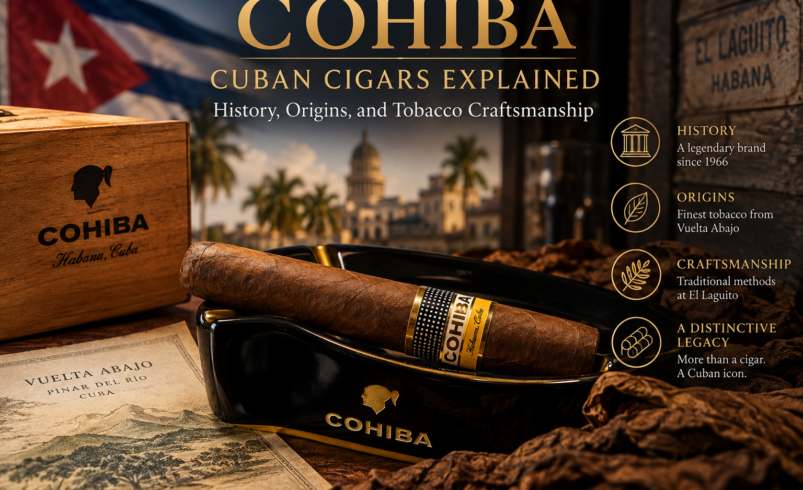

Cohiba Pirámides Extra is a distinctive cigar within the Cuban Cohiba portfolio, combining a large format with the tapered profile known as a figurado. Introduced in 2012, it became the first figurado to join Cohiba’s permanent Línea Clásica range. Its Cuban tobacco, handmade construction, additional fermentation, and unusual proportions give it a clear identity within the wider Cohiba collection.
The Cuban Origins of Cohiba
Cohiba was established in Cuba in 1966. During its early years, the cigars were primarily produced as official gifts for Cuban and foreign government figures. The brand was introduced internationally in 1982, after which it became available in selected markets outside Cuba.
Production has historically been associated with the El Laguito factory in Havana. Habanos describes El Laguito as the factory where Cohiba vitolas are made entirely by hand with long filler.
The tobacco used for Cohiba comes from selected plantations in Cuba’s Vuelta Abajo region, particularly areas around San Juan y Martínez and San Luis in Pinar del Río. These locations have protected denominations of origin and are closely associated with Cuban premium tobacco production.
When Was Cohiba Pirámides Introduced?
The Pirámides shape had appeared in earlier special Cohiba productions, but the Cohiba Pirámides Extra introduced in 2012 was significant because it became part of the permanent Línea Clásica.
Habanos specifically describes it as the first figurado to join Cohiba’s permanent range. The introduction expanded the Línea Clásica beyond its more traditional straight-sided formats.
The cigar was initially presented in a wooden box of 10 units. In 2013, Habanos also introduced a three-cigar aluminium tube presentation.
Understanding the Pirámides Format
The most recognizable feature of Cohiba Pirámides Extra is its shape.
A figurado cigar has a shaped profile rather than the relatively uniform diameter associated with a traditional parejo. In the case of Pirámides Extra, the body is broad while the head tapers inward.
The official dimensions are:
- Ring gauge: 54
- Length: 160 mm
- Diameter: approximately 21.43 mm
These specifications place Pirámides Extra among the larger Cohiba formats.
The combination of length and ring gauge gives the cigar a substantial physical profile. Its tapered head also makes it visually different from formats such as the Cohiba Robusto, which has a more uniform cylindrical shape.
Why the Figurado Shape Matters
The shape of a cigar is not simply an aesthetic feature. It also influences how the tobacco is arranged and how the cigar is constructed.
A figurado requires the roller to work with changing dimensions rather than maintaining a consistent diameter throughout the cigar. This makes shaping an important part of the manufacturing process.
The tapered head also affects preparation before smoking. The closed end must be cut to create an opening for the draw, with the amount removed influencing the size of that opening.
During smoking, the changing proportions of the cigar can contribute to differences in combustion and smoke concentration as the cigar progresses.
These characteristics help explain why Pirámides Extra has a different physical identity from other Cohiba formats even though it belongs to the same Línea Clásica.
How Cohiba Pirámides Is Made
Cohiba Pirámides Extra is described by Habanos as totally handmade with long filler. Its tobacco comes from selected plantations in the Vuelta Abajo region, including San Juan y Martínez and San Luis.
Like other premium handmade cigars, its construction involves three principal tobacco components:
- Filler, which forms the interior of the cigar
- Binder, which holds the filler together
- Wrapper, which forms the outer surface
The roller must arrange these leaves carefully while creating the characteristic Pirámides profile.
Habanos describes the tobacco used for Cohiba as the “selection of the selection,” emphasizing the degree of leaf selection involved in the brand’s production.
The Tobacco Blend
Cohiba Pirámides Extra uses the Línea Clásica blend. According to Habanos, the filler incorporates three principal types of tobacco leaf:
Volado: Generally associated with combustion characteristics.
Seco: Traditionally valued for its aromatic contribution.
Ligero: A stronger leaf that contributes intensity to the blend.
For Cohiba Pirámides Extra, Habanos states that the Seco and Ligero leaves undergo additional fermentation. This additional processing is one of the production features associated with Cohiba.
The tobacco is sourced from the Vuelta Abajo area of Pinar del Río, with San Juan y Martínez and San Luis specifically identified in Habanos’ description of the format.
Additional Fermentation and Cohiba’s Production Identity
Additional fermentation is one of the most frequently discussed aspects of Cohiba production.
Habanos states that Cohiba is distinguished by additional fermentation of two of the three tobacco types used in its blend, specifically Seco and Ligero. Some official Habanos descriptions refer to this as a third fermentation.
Fermentation changes the physical and chemical characteristics of tobacco leaves. In cigar production, the process can affect aroma, color, texture, and the overall sensory character of the tobacco.
For Cohiba Pirámides Extra, the additional fermentation is part of the established Línea Clásica production method rather than a characteristic created specifically for the Pirámides format.
Flavor and Strength Characteristics
Habanos describes Pirámides Extra as having the medium-to-full flavor characteristic of the Línea Clásica.
Flavor perception is naturally subjective. Individual experiences can vary depending on the age of the cigar, storage conditions, smoking pace, and personal palate.
General descriptions associated with the Línea Clásica may include earthy tobacco, woody notes, spice, roasted impressions, and aromatic qualities. These descriptions should be treated as broad sensory references rather than fixed tasting notes.
The additional fermentation of Seco and Ligero is also relevant to the cigar’s character, as Habanos identifies the process as part of what contributes to Cohiba’s characteristic aroma and flavor.
Pirámides Compared With Other Cohiba Formats
The dimensions of Cohiba cigars vary considerably.
Pirámides Extra measures 160 mm by 54 ring gauge, giving it a long and relatively wide profile. By comparison, other Cohiba formats use different proportions, which can affect the physical smoking characteristics of each cigar.
This difference in dimensions matters because length and ring gauge influence the amount and arrangement of tobacco, combustion, draw, and the way smoke develops during the smoking session.
The figurado shape adds another variable. Unlike a straight-sided cigar, Pirámides Extra changes diameter toward the head, creating a different construction and preparation process.
What Makes Cohiba Pirámides Distinctive?
Several features define the format:
Cuban origin: The cigar belongs to the Cuban Cohiba portfolio and uses selected tobacco from Vuelta Abajo.
Distinctive shape: Its tapered figurado profile separates it from conventional parejo formats.
Large dimensions: The format measures 160 mm in length with a 54 ring gauge.
Handmade construction: It is produced entirely by hand using long-filler tobacco.
Línea Clásica blend: The blend contains Volado, Seco, and Ligero.
Additional fermentation: Seco and Ligero undergo additional fermentation as part of the Cohiba production process.
Medium-to-full character: Habanos places Pirámides Extra within the characteristic medium-to-full flavor range of the Línea Clásica.
Permanent Cohiba format: Introduced in 2012, it became the first figurado added to Cohiba’s permanent range.
Storage and Condition
As with other premium cigars, storage conditions can influence the condition and performance of Cohiba Pirámides Extra.
Tobacco is sensitive to changes in humidity and temperature. Poor storage can affect the wrapper, combustion, draw, and sensory characteristics. A cigar that has been improperly stored may therefore perform differently from one maintained under appropriate conditions.
The condition of the wrapper and overall construction can also provide useful visual information, although appearance alone cannot determine how a cigar will perform.
Final Thoughts
Cohiba Pirámides Extra combines several defining elements of Cuban cigar production in a distinctive format. Its history is connected to Cohiba’s development in Cuba, while its tobacco comes from selected areas of Vuelta Abajo in Pinar del Río.
The additional fermentation of Seco and Ligero is another important feature. Together with tobacco selection, construction, and format, these processes help explain the distinctive characteristics associated with Cohiba Pirámides Extra.
As with all tobacco products, cigar smoking carries significant health risks, including exposure to harmful substances and nicotine dependence.