

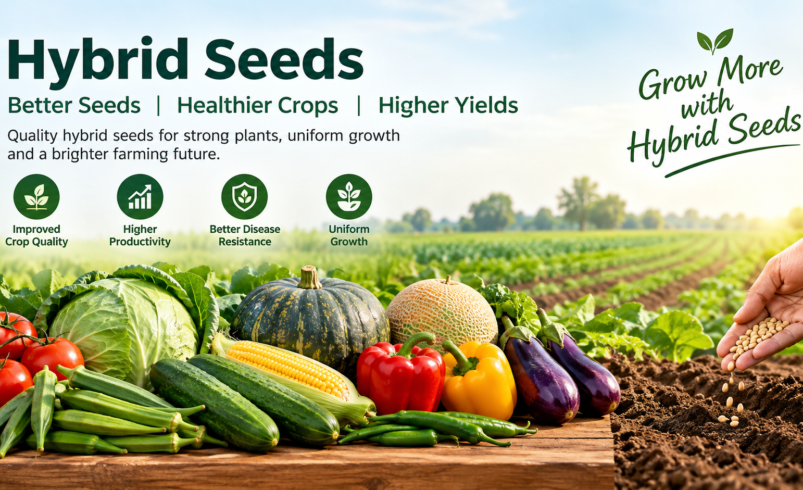

Agriculture is continuously evolving, and farmers are looking for better ways to improve crop quality, productivity, and farm management. Choosing suitable seeds is one of the most important steps toward achieving these goals. Hybrid Seeds are developed by crossing selected parent plants to combine desirable characteristics, such as uniform growth, improved quality, and productive performance. For vegetable growers, selecting the right seeds can help support a more efficient and rewarding farming experience.
Understanding Hybrid Seeds
Hybrid seeds are produced through controlled cross-pollination between selected parent varieties. This process aims to bring together useful traits from both parents. Depending on the crop and hybrid variety, these traits may include uniform fruit size, attractive appearance, suitable maturity periods, and improved performance under recommended growing conditions.
Farmers should understand that every hybrid has specific growing requirements. Soil type, climate, irrigation, nutrient management, and crop protection practices all influence the final results. Selecting seeds that suit local farming conditions is therefore essential.
Benefits of Choosing Quality Hybrid Seeds
One of the key advantages of hybrid varieties is their potential to offer uniform crop development. Consistency in plant growth and vegetable quality can make harvesting, grading, and marketing easier for farmers.
Other potential benefits include:
- Improved crop uniformity: Selected hybrids can produce more consistent plants and produce.
- Marketable quality: Certain varieties are developed for desirable shape, size, colour, and texture.
- Productive potential: Suitable hybrids may support good yields when grown under appropriate conditions.
- Crop-specific characteristics: Different hybrids are developed for the needs of crops such as tomato, cabbage, cucumber, okra, pumpkin, and sweet corn.
- Better planning: Understanding the maturity period and growing requirements of a variety helps farmers plan cultivation and harvesting.
Actual results depend on the variety, environmental conditions, and farming practices. Farmers should always review the product specifications before making a purchase.
How to Select the Right Hybrid Seeds
Choosing the right variety requires careful consideration. First, identify the vegetable crop that matches your market demand and farming conditions. Next, check whether the selected variety is suitable for your region’s climate and growing season.
Farmers should also consider disease-resistance information, maturity period, fruit characteristics, and recommended cultivation practices where these details are available. Buying seeds from a reliable supplier and following the instructions on the product label can help support successful crop establishment.
Before purchasing, compare the available varieties and select one that aligns with your production goals, available resources, and expected market requirements.
Why Choose Iris Hybrid Seeds?
Finding a dependable seed source is an important part of planning a vegetable crop. Iris Seeds provides a range of hybrid vegetable seed options for farmers looking to explore varieties suited to different cultivation needs.
Visit Iris Hybrid Vegetable Seeds to explore available options and learn more about hybrid vegetable seeds. Reviewing individual product details can help growers identify varieties that match their crop preferences and cultivation conditions.
Whether you are planning to grow tomatoes, cabbage, cucumbers, okra, or other vegetables, selecting an appropriate variety is an important step toward building a well-managed farming operation.
Tips for Better Results with Hybrid Seeds
For better crop establishment, prepare the soil properly and sow seeds according to the recommended depth and spacing. Maintain suitable moisture levels without overwatering, and provide balanced nutrients according to crop requirements. Monitor plants regularly for pests, diseases, and nutrient deficiencies.
Farmers should also follow the recommended sowing season and cultivation guidelines for each variety. Keeping basic records of sowing dates, crop growth, input use, and harvest performance can help improve decisions in future growing seasons.
Conclusion
Hybrid seeds are an important option for modern vegetable cultivation because they offer crop-specific characteristics and the potential for uniform growth and marketable produce. However, successful farming depends on choosing a suitable variety and managing the crop correctly.
By understanding crop requirements, following recommended practices, and sourcing seeds responsibly, farmers can make more informed cultivation decisions. Explore the range of Hybrid Seeds available through Iris Seeds to find options that fit your vegetable farming needs.