

Packaging plays an important role in how customers perceive a product. Before they use a product, they often notice its box, colors, graphics, and overall presentation. For businesses competing in crowded retail and online markets, thoughtful packaging can help create recognition and communicate quality.
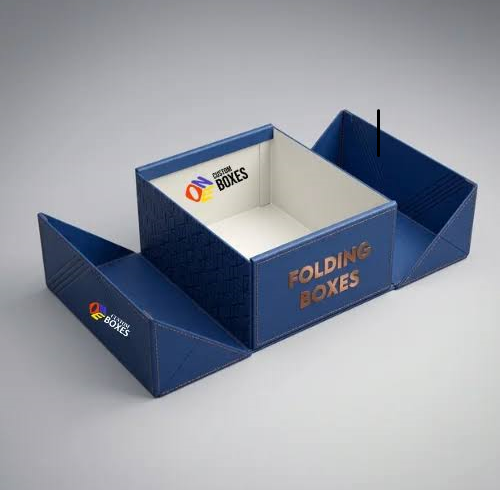
Custom folding boxes offer a practical way to combine product protection, branding, and presentation in one package. They can be designed for cosmetics, food, retail goods, electronics, promotional products, and many other applications. Because these boxes can be customized in different sizes, materials, structures, and finishes, brands can create packaging that fits their products rather than relying on generic cartons.
What Are Custom Folding Boxes?
Folding boxes are packaging cartons manufactured from paperboard or similar foldable materials. They are typically produced flat and folded into their final shape during assembly.
Unlike standard stock packaging, customized folding cartons can be created according to a brand’s specific requirements. Businesses can choose dimensions, box styles, printing, finishing, and structural features.
This makes them useful for brands that want packaging to perform two jobs at once: protect the product and communicate the brand identity.
Why Do Brands Choose Folding Boxes?
One of the biggest advantages of folding cartons is their versatility.
A well-designed folding box can help businesses:
- Protect products during handling
- Improve shelf presentation
- Display brand information
- Support product organization
- Create a consistent visual identity
- Reduce unnecessary packaging space
- Provide a professional unboxing experience
Folding cartons can also be stored flat before assembly, which can be useful for businesses with limited storage space.
Choose the Right Box Style
Different products require different structures. Choosing the right style can improve both functionality and appearance.
Tuck-End Boxes
Tuck-end cartons are among the most widely used folding box structures. They are practical, easy to assemble, and provide multiple surfaces for branding.
They can work well for cosmetics, food products, small retail items, and promotional packaging.
Auto-Lock Boxes
Auto-lock designs have a locking base that can provide additional stability. They may be suitable when quick assembly and secure product placement are priorities.
Sleeve Boxes
Sleeves can be used around trays or other containers to create a clean, layered presentation. They provide additional space for artwork without requiring a fully enclosed printed carton.
Reverse Tuck Boxes
Reverse tuck structures can be convenient for certain retail applications and are commonly considered when businesses want an efficient folding design.
The ideal structure depends on the product dimensions, weight, assembly process, and intended customer experience.
Select the Right Material
Material selection affects durability, appearance, printing quality, and cost.
Paperboard is commonly used because it offers a good balance between strength and flexibility. It also provides a smooth surface for high-quality printing.
Kraft paperboard can provide a natural appearance and may appeal to brands looking for a simple or environmentally conscious aesthetic.
For heavier products, a thicker board may be more appropriate.
When selecting material, consider:
- Product weight
- Transportation conditions
- Required durability
- Printing requirements
- Desired appearance
- Budget
- Storage conditions
There is no universal material that is best for every product. The choice should be based on actual packaging requirements.
Design Packaging Around Your Product
Accurate measurements should come before artwork.
Measure the product’s:
- Length
- Width
- Height
- Weight
- Shape
Also consider whether the product requires an insert, divider, protective wrap, or additional internal support.
A box that is too tight can make packing difficult, while an oversized package can allow unnecessary movement and increase material usage.
Creating a prototype before mass production is a practical way to check whether the structure works as expected.
Make Branding Part of the Design
A folding box provides several surfaces where businesses can communicate their identity.
Important branding elements may include:
- Company logo
- Brand colors
- Product name
- Typography
- Product imagery
- Tagline
- Website information
- Social media details
- Barcode
The design should be easy to recognize and understand.
For example, a premium skincare brand might use minimalist graphics, elegant typography, and subtle finishing. A children’s product may use brighter colors and playful illustrations.
The packaging should match the personality of the product rather than following a design trend simply because it is popular.
Printing Options for Folding Boxes
Printing determines much of the visual quality of a package.
Common printing methods include digital and offset printing.
Digital printing can be useful for smaller quantities, prototypes, and packaging with multiple variations.
Offset printing is often considered for larger production runs where consistent color reproduction is important.
Brands should discuss their artwork, quantity, material, and budget with their packaging supplier before selecting a printing process.
A proof should always be reviewed before production. This can help identify problems with colors, text, images, or layout.
Use Finishing Carefully
Finishing can add visual and tactile appeal to folding cartons.
Popular options include:
- Matte coating
- Gloss coating
- Soft-touch coating
- Foil stamping
- Embossing
- Debossing
- Spot UV
A brand does not need to use every available technique. Often, one or two well-selected finishes can create a stronger result than a box covered with decorative effects.
For example, spot UV can highlight a logo, while foil can draw attention to a product name.
The choice should support the overall design and remain consistent with the brand’s positioning.
Folding Boxes for Different Industries
The versatility of folding cartons makes them suitable for many product categories.
Cosmetic Packaging
Folding boxes can be used for mascara, lip gloss, skincare products, perfumes, and other beauty items.
Food Packaging
Businesses can use suitable paperboard folding structures for dry foods, snacks, bakery products, and takeaway applications, provided the material and construction are appropriate for food contact.
Retail Products
Small consumer goods can benefit from printed cartons that provide product information while improving shelf visibility.
Electronics
Accessories and smaller electronic products may require stronger board and internal protection.
Promotional Products
Businesses can use customized cartons for event giveaways, branded merchandise, and marketing campaigns.
This flexibility allows companies in different industries to create packaging around their specific requirements.
Custom Packaging Boxes and Brand Recognition
Packaging can become an extension of a company’s visual identity.
When customers repeatedly see the same logo, typography, colors, and design style, those elements can become associated with the brand.
For this reason, businesses should maintain consistency across packaging, websites, social media, advertisements, and other customer touchpoints.
A recognizable box can also improve product photography for online stores. Clean packaging designs tend to provide stronger visuals for product listings and social media posts.
Consider Storage and Shipping
One practical advantage of folding cartons is that they can often be stored flat before assembly.
This can reduce the amount of warehouse space required compared with fully assembled rigid packaging.
However, businesses should still consider:
- Storage humidity
- Stacking conditions
- Assembly requirements
- Shipping distance
- Product weight
- Outer shipping cartons
The packaging should be tested under realistic conditions before a large-scale launch.
Sustainability Considerations
Many businesses are exploring packaging choices with lower environmental impact.
Paper-based folding cartons can be an attractive option because they may use renewable or recycled materials and can often be designed with efficient material usage.
Brands can explore:
- Recycled-content paperboard
- Responsible paper sourcing
- Recyclable materials
- Right-sized packaging
- Reduced unnecessary components
However, sustainability claims should be based on accurate information from suppliers. Coatings, adhesives, inks, and local recycling systems can influence the end-of-life characteristics of packaging.
Common Mistakes to Avoid
A few simple mistakes can reduce the effectiveness of customized folding cartons.
Poor measurements: Incorrect dimensions can create fit and assembly problems.
Too much information: Crowded artwork can make packaging difficult to understand.
Weak typography: Small or decorative text may become difficult to read.
Ignoring the dieline: Artwork should follow the manufacturer’s exact cutting and folding template.
Skipping samples: A prototype can reveal structural issues before production.
Overcomplicating the design: A simple, well-organized package can often communicate more effectively than an overloaded design.
How to Choose a Packaging Supplier
Choosing the right supplier is an important part of the packaging process.
Before placing an order, evaluate:
- Material options
- Available box styles
- Printing capabilities
- Finishing choices
- Minimum order quantities
- Sample availability
- Production capacity
- Quality control
- Lead times
- Customer support
Ask for a sample whenever possible. Inspect the actual material, print quality, folds, dimensions, and overall construction.
Brands comparing packaging providers can consider one custom boxes when researching customized packaging solutions.
Final Thoughts
Custom folding cartons offer brands a practical combination of protection, branding, flexibility, and presentation. Their customizable structures make them suitable for products ranging from cosmetics and food to retail goods and promotional items.
The best approach is to begin with accurate product measurements, choose a suitable structure and material, and then develop artwork around the brand’s identity. Printing and finishing should enhance the design without compromising functionality or unnecessarily increasing costs.
When carefully planned, a folding box becomes more than a container. It becomes part of the product experience and a useful tool for building a consistent, professional brand presence.