
Discover how three-way ball valves simplify flow direction, improve system flexibility, and support reliable performance across industrial applications.
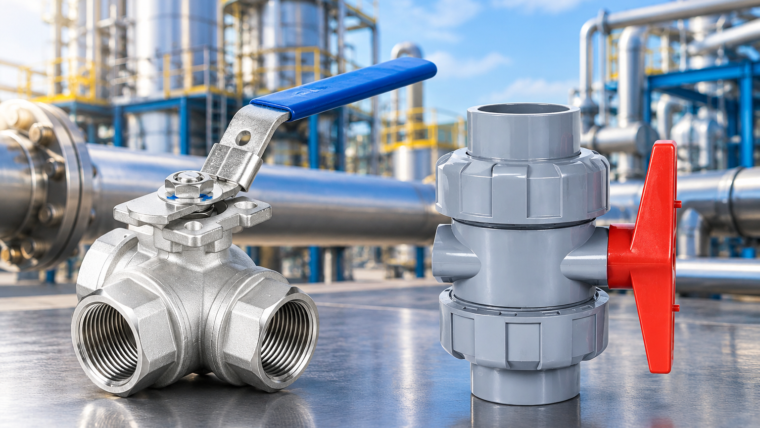
Three-way ball valves are widely used in industrial fluid handling systems where directing, mixing, or diverting flow is essential. Featuring three ports and a rotating ball with specially designed flow passages, these valves allow operators to manage fluid movement through a single compact component. They are commonly found in water treatment, chemical processing, HVAC systems, manufacturing equipment, and other applications requiring flexible pipeline control.
How Do 3-Way Ball Valves Work?
A 3-way ball valve controls fluid flow by rotating an internal ball containing an L-shaped or T-shaped passage. As the ball turns, its passage aligns with different ports, changing the available flow path. The exact routing depends on the valve’s internal design and handle or actuator position.
An L-port ball valve typically connects one inlet to one of two outlets, allowing flow to be diverted between alternative paths. A T-port ball valve can connect different combinations of three ports, making it suitable for certain mixing, distribution, or circulation arrangements. Because port configurations vary by manufacturer, users should confirm the valve’s flow diagram before installation.
Key Benefits of Three-Way Ball Valves
One major advantage of three way ball valves is their versatility. They can perform several flow-routing functions without requiring multiple separate valves, potentially simplifying piping layouts and reducing installation space. Their quarter-turn operation also allows rapid switching between available flow paths.
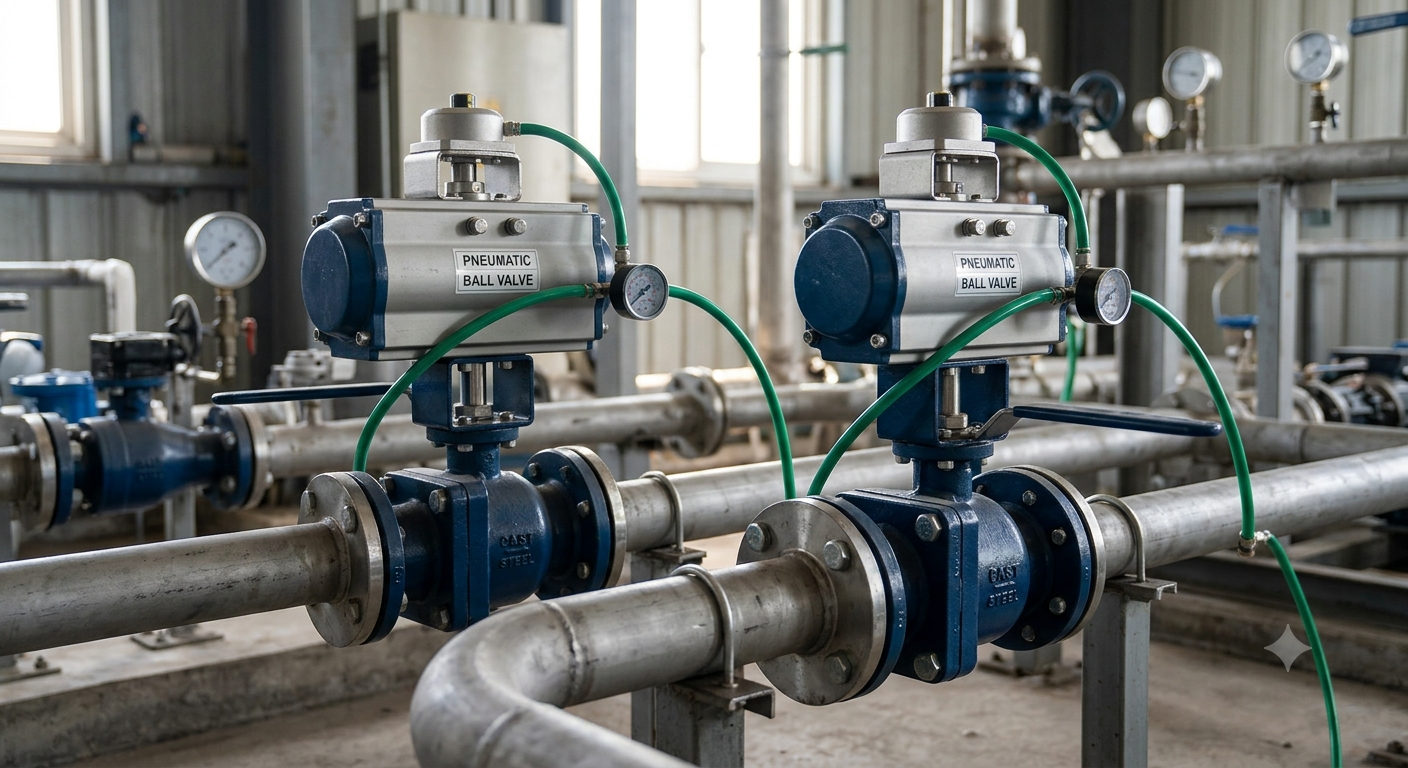
Many three-way ball valves feature a compact design, straightforward operation, and durable construction. Depending on the materials and specifications selected, they can handle different liquids and gases within their rated pressure and temperature limits. Manual models provide simple control, while compatible pneumatic or electric actuators can support remote operation and automated processes.
However, a three-way ball valve is not automatically suitable for every mixing or diversion task. The required flow path, sealing arrangement, pressure drop, and possibility of unintended cross-flow should all be evaluated during system design.
Common Industrial Applications
Three-way ball valves are used in a variety of industries. In HVAC systems, they can help direct water between circulation paths. In industrial water treatment, they may switch flow between different pipelines or equipment. In manufacturing and chemical processing, suitable models can route compatible fluids between tanks, instruments, and process lines.
They are also useful in test benches and equipment requiring flexible flow arrangements. For automated systems, an actuated three-way ball valve can respond to control signals, helping coordinate fluid routing with pumps, sensors, and other process equipment.
How to Choose the Right 3-Way Ball Valve
Selecting an appropriate ball valve begins with understanding the application. Consider the following factors:
- Port configuration: Choose an L-port or T-port design based on the required flow paths.
- Valve material: Match the body, ball, and seal materials to the fluid’s chemical properties.
- Pressure and temperature: Ensure the valve’s ratings cover the system’s operating conditions.
- Connection type and size: Confirm compatibility with the existing pipeline.
- Operation method: Select manual, electric, or pneumatic actuation according to control requirements.
- Flow capacity and sealing: Review the expected flow rate, pressure drop, and leakage requirements.
Proper installation and routine inspection are also important for maintaining sealing performance and extending service life.
Improving Fluid Control with the Right Valve
Three-way ball valves offer a practical way to manage complex flow paths while keeping fluid control systems compact and adaptable. By selecting the correct port configuration, materials, and operating mechanism, engineers and maintenance teams can improve process flexibility and simplify pipeline design.
As industrial automation continues to advance, three-way ball valves remain valuable components in efficient fluid handling systems. Understanding their operating principles and application requirements helps users choose a suitable solution for reliable, consistent, and effective flow control.