

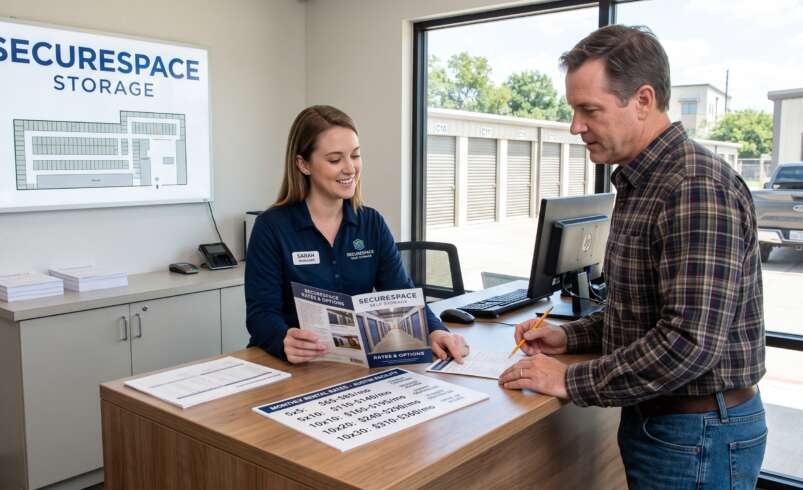

The cost of renting a storage unit can vary widely depending on its size, location, features, and rental terms. For many people, a storage unit is a practical solution when moving, downsizing, renovating, or simply needing extra space. Understanding the average storage unit cost can help you create a realistic moving and storage budget.
If you are comparing self storage unit companies, it is important to look beyond the advertised monthly rent.
Additional charges such as administrative fees, insurance, deposits, locks, transportation, and climate-controlled storage can affect the final price.
By comparing moving and storage options together, you can make better decisions about your overall moving expenses.
What Is the Average Cost of a Storage Unit?
Storage unit prices commonly range from approximately $50 to $300 or more per month, depending on the unit size and location. Smaller units in less expensive areas may cost less, while large or climate-controlled units in major cities can cost significantly more.
Typical monthly price ranges include:
| Storage Unit Size | Approximate Monthly Cost |
|---|---|
| 5 × 5 feet | $30–$80 |
| 5 × 10 feet | $50–$120 |
| 10 × 10 feet | $80–$180 |
| 10 × 15 feet | $120–$250 |
| 10 × 20 feet | $150–$300+ |
| 10 × 30 feet | $200–$400+ |
These figures are general estimates rather than fixed prices. Actual rates vary between facilities and markets.
What Determines Storage Unit Prices?
Several factors influence how much you will pay for storage. Understanding these factors makes it easier to compare different facilities.
1. Storage Unit Size
Size is one of the biggest factors affecting your monthly bill. A 5 × 5 unit is significantly cheaper than a 10 × 20 unit because it provides much less storage space.
Before renting, make an inventory of everything you need to store. Avoid paying for unused space by selecting a unit that matches your actual needs.
2. Location
Storage units in large metropolitan areas often cost more than units in smaller towns or suburban locations. High demand and expensive commercial real estate can increase rental prices.
If you have access to transportation, comparing facilities a few miles outside a busy area may help reduce your monthly cost.
3. Climate-Controlled Storage
Climate-controlled units generally cost more than standard units. They are designed to maintain more stable temperature and humidity conditions.
This type of storage can be useful for items such as:
- Wooden furniture
- Electronics
- Important documents
- Artwork
- Musical instruments
- Sensitive household belongings
Not everything requires climate control, so consider the items you are storing before paying for this feature.
4. Security Features
Facilities with gated access, surveillance cameras, individual alarms, security lighting, and on-site staff may charge higher prices.
Although security can increase your monthly expense, it may provide additional peace of mind when storing valuable belongings.
5. Indoor or Outdoor Access
Drive-up storage units are convenient because you can park close to the unit and load or unload directly from your vehicle.
Indoor facilities may offer additional protection from weather but can sometimes have higher rental rates.
Do Storage Facilities Charge Extra Fees?
The advertised monthly price is not always the complete cost. Some facilities charge additional fees when you rent a unit.
Potential charges can include:
- Administration fees
- Reservation fees
- Security deposits
- Insurance or protection plans
- Lock purchases
- Late payment fees
- Access fees
- Moving supplies
- Cleaning fees
Always ask for a complete pricing breakdown before signing a rental agreement.
How Much Does a Small Storage Unit Cost?
Small storage units are often suitable for people who need to store boxes, seasonal decorations, clothing, small furniture, or personal belongings.
A 5 × 5 unit may cost roughly $30 to $80 per month, while a 5 × 10 unit may cost around $50 to $120.
These units can be especially useful during a short-term move when you do not need to store the contents of an entire home.
How Much Does a Medium Storage Unit Cost?
A 10 × 10 storage unit is one of the most common choices for households. It can often accommodate furniture, appliances, boxes, and other belongings from a smaller apartment or home.
Depending on the market and facility, you might expect to pay approximately $80 to $180 per month.
A 10 × 15 unit provides additional space and may cost around $120 to $250 per month.
How Much Does a Large Storage Unit Cost?
Large units such as 10 × 20 or 10 × 30 feet are suitable for storing the contents of larger homes, business inventory, vehicles, or substantial household belongings.
Prices can range from approximately $150 to more than $400 per month.
If you need a large unit for an extended period, compare several facilities carefully. Even a $30 monthly difference can add up to hundreds of dollars over a year.
How Can You Reduce Storage Costs?
There are several ways to keep your storage expenses under control.
Compare Multiple Facilities
Do not automatically choose the first facility you find. Compare several self storage unit companies in your preferred area.
Look at:
- Monthly rent
- Unit size
- Security
- Access hours
- Climate control
- Additional fees
- Discounts
- Contract terms
A cheaper advertised rate is not necessarily the cheapest overall option.
Choose the Right Unit Size
Renting a unit that is too large can waste money every month. Measure your furniture and organize your belongings before choosing a unit.
Stacking boxes properly and using shelves where permitted can also help you make better use of vertical space.
Ask About Promotions
Some storage facilities offer introductory discounts, reduced first-month rates, waived administration fees, or other promotions.
However, always ask what the regular monthly rate will be after the promotional period ends.
Consider Long-Term Pricing
If you expect to store your belongings for six months or longer, calculate the total cost rather than focusing only on the first month’s price.
For example:
$100 per month × 12 months = $1,200 per year
A slightly cheaper facility can make a meaningful difference over a long rental period.
What Other Costs Should You Include in Your Budget?
Storage rent is only one part of the overall expense.
If you are using storage during a relocation, your budget may also include:
- Moving company charges
- Transportation
- Packing supplies
- Moving boxes
- Storage insurance
- Storage lock
- Labor
- Fuel
- Delivery fees
- Long-distance transportation
Instead of searching randomly for moving services, you can use a moving directory to research available moving companies and compare options as part of your relocation planning.
Should You Rent Storage During a Move?
Storage can be useful when your moving dates do not line up perfectly. For example, you may need to leave your current home before your new home is ready.
A storage unit can temporarily hold your belongings until you are ready to move them into your new property.
Storage can also help if you are:
- Downsizing
- Renovating
- Moving between states
- Staging a home for sale
- Relocating for work
- Moving into temporary housing
- Decluttering before a move
How Can My Good Movers Help With Moving and Storage Planning?
My Good Movers is a moving directory designed to help people find and explore moving companies. When storage is part of your relocation, finding the right mover can be just as important as choosing the right storage facility.
For example, you may need movers to transport your belongings from your home to a storage unit and later move them from storage to your new residence.
Using a moving directory can make it easier to research available movers, compare services, and plan the transportation side of your relocation.
Rather than treating storage and moving as completely separate decisions, consider the total cost of the entire process.
How Can You Compare Self Storage Unit Companies?
When comparing facilities, create a simple list of your priorities.
Compare Monthly Rates
Start with the advertised monthly price, but remember to ask about future rate increases and additional charges.
Check Access Hours
A low-cost unit may not be convenient if you cannot access your belongings when you need them.
Review Security
Ask whether the facility has cameras, gated access, alarms, security lighting, or on-site personnel.
Ask About Insurance
Find out whether your existing homeowners or renters insurance covers items stored outside your home. If not, the facility may offer a separate protection plan.
Read the Rental Agreement
Review the contract before signing. Pay attention to payment dates, late fees, cancellation rules, access policies, and rate changes.
Are Cheap Storage Units Always the Best Choice?
Not necessarily. The cheapest storage unit may lack features that matter to you.
For example, a very inexpensive facility might be farther away, have limited access hours, or lack climate control.
Instead of simply choosing the lowest monthly price, consider the overall value.
A unit that costs $20 more per month but is much closer to your home could save you transportation time and fuel costs.
How Long Should You Rent a Storage Unit?
The right rental period depends on your situation.
Short-term storage may be appropriate for a few weeks or months during a move. Long-term storage may be necessary if you are traveling, downsizing, or keeping belongings for future use.
Before renting, estimate how long you realistically need the space. If your plans change, check whether the facility allows you to move to a smaller unit.
Storage Unit Cost vs. Moving Cost
It is important to separate storage expenses from moving expenses.
For example, suppose you pay:
- $100 per month for storage
- $500 for the initial move into storage
- $500 for the final move out of storage
For six months, your estimated total would be:
$100 × 6 + $500 + $500 = $1,600
This simple calculation shows why storage should be included in your overall relocation budget.
Comparing movers through a directory such as My Good Movers can help you research your transportation options while you evaluate storage facilities separately.
What Size Storage Unit Do You Need?
The correct size depends on what you plan to store.
A general guide is:
5 × 5: Boxes, seasonal items, clothing, and small belongings.
5 × 10: Contents of a small room or apartment.
10 × 10: Furniture, appliances, boxes, and belongings from a small home.
10 × 15: Contents of a larger apartment or smaller house.
10 × 20: Contents of a larger home.
10 × 30: Large household inventories, business equipment, or extensive storage needs.
Always confirm the facility’s actual dimensions because layouts can vary.
Is Climate-Controlled Storage Worth the Extra Cost?
Climate-controlled storage can be worthwhile when your belongings are sensitive to temperature or humidity changes.
However, if you are storing durable items such as plastic containers, outdoor equipment, or basic household goods, standard storage may be sufficient.
Consider the replacement value of your belongings when deciding whether the additional cost is worthwhile.
How Can You Create a Storage Budget?
Start by calculating your expected monthly rent.
Then add one-time and potential recurring costs.
For example:
| Expense | Estimated Cost |
| Monthly storage | $100 |
| Storage for 6 months | $600 |
| Lock | $15–$30 |
| Insurance/protection | Varies |
| Transportation | Varies |
| Moving labor | Varies |
| Packing supplies | Varies |
Your final budget will depend on the facility, location, amount of belongings, and moving requirements.
Questions to Ask Before Renting a Storage Unit
Before making a decision, ask:
- What is the monthly rental price?
- Are there administrative or reservation fees?
- Is there a security deposit?
- Will the monthly rate change later?
- What are the access hours?
- Is the facility climate controlled?
- What security features are available?
- Is insurance required?
- Can I change to a smaller or larger unit?
- What happens if I move out early?
- Are there late payment charges?
- What type of lock is required?
Getting clear answers can prevent unexpected expenses.
Final Thoughts
The amount you should expect to pay for a storage unit depends primarily on its size, location, features, and rental terms. A small unit may cost around $30 to $80 per month, while larger units can cost several hundred dollars monthly.
When comparing self storage unit companies, look beyond the advertised rental price. Consider security, accessibility, climate control, fees, insurance, and the total cost over your expected rental period.
The best storage solution is not always the cheapest one. It is the option that provides the right amount of space, convenience, security, and value for your specific needs.
Frequently Asked Questions
How much does a storage unit cost per month?
A storage unit may cost approximately $30 to $400 or more per month, depending on its size, location, features, and demand.
What is the cheapest storage unit size?
Small 5 × 5 storage units are generally among the least expensive options and may cost approximately $30 to $80 per month.
Is a 10 × 10 storage unit expensive?
A 10 × 10 unit may cost approximately $80 to $180 per month, although prices vary by location and facility.
Does climate-controlled storage cost more?
Yes. Climate-controlled units generally cost more than standard units because they provide additional environmental protection.
Are there hidden storage unit fees?
Some facilities may charge administration fees, deposits, insurance or protection costs, lock fees, late charges, or other expenses. Ask for a complete price breakdown before renting.
How can I find affordable storage?
Compare several facilities, choose an appropriately sized unit, ask about promotions, review additional fees, and calculate the total cost over your expected rental period.
Should I choose a storage facility based only on price?
No. Consider location, security, access hours, unit size, climate control, fees, and overall convenience in addition to the monthly price.