
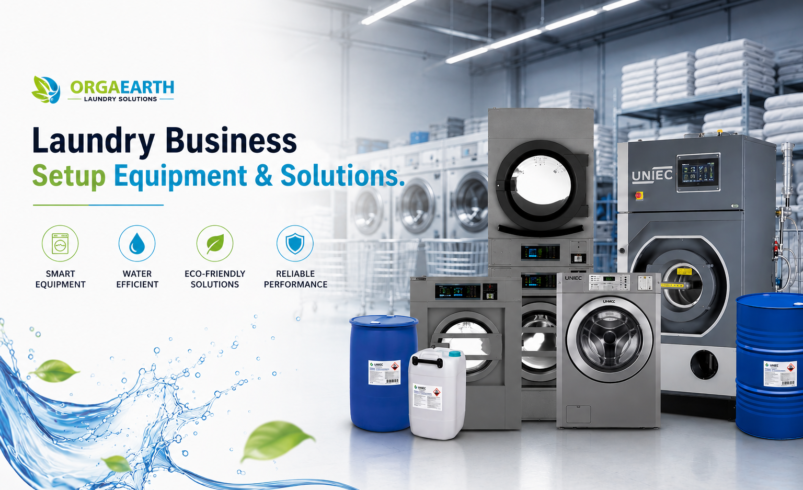

The demand for professional laundry services in India is growing rapidly due to urbanization, changing lifestyles, and increasing demand from hotels, hospitals, hostels, restaurants, and residential communities. Today, customers expect faster turnaround times, hygienic cleaning, and convenient pickup and delivery services, creating significant opportunities for entrepreneurs.
If you’re wondering how to start a laundry business, success depends on much more than buying washing machines. Careful planning, selecting the right equipment, choosing a suitable location, and understanding operating costs are essential to building a profitable business.
This guide covers everything you need to know, from business planning and investment to equipment selection and profitability.
Why Start a Laundry Business in India?
The laundry business in India has become one of the fastest-growing service industries. Rising disposable incomes, busy work schedules, and increasing awareness of hygiene have created consistent demand across residential and commercial markets.
Some key advantages include the following:
- Growing urban customer base
- Recurring monthly demand
- Multiple revenue streams
- Scalable business model
- Opportunity for commercial contracts
- Increasing demand from hospitality and healthcare sectors
With the right planning, a laundry business can generate stable income while expanding into multiple locations over time.
Step 1: Create a Laundry Business Plan
Every successful business begins with a well-structured laundry business plan. It helps define your goals, estimate investment requirements, and identify your target market.
Your business plan should include:
- Business model
- Target customers
- Location analysis
- Services offered
- Equipment requirements
- Estimated investment
- Monthly operating expenses
- Revenue projections
- Marketing strategy
- Growth plan
A detailed business plan also helps secure funding from banks or investors.
Step 2: Choose Your Laundry Business Model
Select a business model that matches your investment capacity and local market demand.
Retail Laundry Shop
Provides washing, drying, ironing, folding, and garment care services to individual customers.
Self-Service Laundromat
Customers operate the machines themselves, reducing labor costs while generating recurring revenue.
Commercial Laundry Business
A commercial laundry business focuses on bulk laundry services for hotels, hospitals, restaurants, gyms, factories, and institutions. Commercial contracts often provide consistent income and long-term business stability.
Pickup & Delivery Laundry
Customers schedule laundry collection and delivery through phone calls or mobile applications, offering convenience and expanding your service area.
Step 3: Estimate Laundry Setup Cost
The laundry setup cost depends on the size of the business, equipment capacity, location, and level of automation.
| Component | Estimated Cost |
| Commercial Washing Machines | ₹4–20 Lakhs |
| Commercial Dryers | ₹4–15 Lakhs |
| Ironing & Finishing Equipment | ₹3–12 Lakhs |
| Laundry Chemicals | ₹50,000–₹2 Lakhs |
| Interior & Store Setup | ₹3–10 Lakhs |
| Plumbing & Electrical Work | ₹2–8 Lakhs |
| Licenses & Registrations | ₹50,000–₹2 Lakhs |
| Working Capital | ₹3–10 Lakhs |
A complete commercial laundry setup generally starts from ₹20 lakhs, while larger operations require higher investment depending on capacity.
Step 4: Choose the Right Commercial Laundry Machines
Your equipment directly impacts productivity, utility costs, and service quality.
A professional laundry setup typically includes:
- Commercial washer extractors
- Commercial tumble dryers
- Flatwork ironers
- Steam finishing equipment
- Dry cleaning machines
- Garment presses
- Folding tables
- Chemical dosing systems
Modern commercial laundry machines improve efficiency while reducing water and electricity consumption.
Step 5: Select the Right Location
Location plays a major role in business success.
Ideal locations include:
- Residential societies
- Apartment complexes
- Near colleges and universities
- Hospital zones
- Hotel clusters
- Commercial markets
- Industrial areas
Choose locations with easy accessibility, parking availability, and high customer visibility.
Step 6: Complete Legal Requirements
Before operations begin, ensure your business complies with applicable regulations.
Common requirements include:
- Business registration
- GST registration
- Shop & Establishment License
- Trade License
- Pollution and wastewater compliance (where applicable)
- Fire safety approvals (if required)
- Employee registrations
Consult a local professional to understand state-specific requirements.
Step 7: Plan Your Laundry Investment Wisely
Your laundry investment should focus on long-term operating efficiency rather than only minimizing upfront costs.
Invest in:
- Energy-efficient equipment
- Durable machines
- Water-saving technology
- Reliable chemical systems
- Good ventilation
- Quality after-sales service
Lower utility costs often provide greater returns than purchasing cheaper equipment with higher operating expenses.
Step 8: Calculate Expected Profitability
Revenue depends on your service pricing, daily processing volume, and customer mix.
Example
Daily processing:
500 kg
Average billing:
₹25 per kg
Daily Revenue:
₹12,500
Monthly Revenue (26 working days):
₹3.25 Lakhs
As your customer base grows and commercial contracts increase, profitability improves while fixed operating costs remain relatively stable.
Marketing Your Laundry Business
A strong marketing strategy helps build brand awareness and customer loyalty.
Effective marketing ideas include:
- Google Business Profile
- Local SEO
- Social media marketing
- Residential society partnerships
- Hotel and restaurant contracts
- Referral programs
- Pickup & delivery promotions
- Loyalty memberships
Building long-term commercial relationships provides predictable revenue and business stability.
Common Mistakes to Avoid
Many entrepreneurs reduce profitability by making avoidable mistakes.
Avoid:
- Purchasing residential equipment
- Choosing incorrect machine capacity
- Ignoring utility costs
- Underestimating working capital
- Poor location selection
- Inadequate staff training
- Skipping preventive maintenance
- Focusing only on equipment price
Careful planning helps minimize operational challenges and supports sustainable growth.
How Orgaearth Can Help You
Starting a successful laundry business requires the right combination of equipment, planning, and ongoing support. At Orgaearth, we provide complete laundry solutions for entrepreneurs looking to establish or expand professional laundry operations.
Our services include:
- Laundry business consultation
- Project planning and layout design
- Commercial washer extractors
- Commercial tumble dryers
- Dry cleaning machines
- Laundry finishing equipment
- Professional laundry chemicals
- Installation and commissioning
- Operator training
- Spare parts support
- Preventive maintenance
- Annual Maintenance Contracts (AMC)
Whether you’re opening a neighborhood laundry shop, launching a self-service laundromat, or building a large-scale commercial laundry facility, OrgaEarth helps you choose equipment and solutions that align with your business goals and future growth.
Contact Us:
Plot no. 714, Udyog Vihar, Phase 5, Gurugram, Haryana, India-122016
Email: marketing@orgaearth.com
Contact No.: +91 7042912777
Frequently Asked Questions
How much investment is required to start a laundry business in India?
The required investment depends on the business size, equipment, and location. A professional setup typically starts from ₹20 lakhs, while larger commercial facilities require a higher budget.
What equipment is required to start a commercial laundry business?
A typical setup includes commercial washer extractors, tumble dryers, ironing equipment, dry cleaning machines, finishing equipment, laundry chemicals, and utility systems.
Is the laundry business profitable in India?
Yes. With growing demand from residential customers, hotels, hospitals, and commercial establishments, the laundry business in India offers strong long-term growth potential when managed efficiently.
What is the biggest expense in a laundry business?
The primary expenses include equipment purchase, rent, utilities, labor, maintenance, and laundry chemicals. Choosing energy-efficient equipment helps reduce ongoing operating costs.
How do I prepare a laundry business plan?
A laundry business plan should include market research, investment estimates, projected revenue, equipment selection, operational costs, marketing strategy, and growth projections.
Why should I choose OrgaEarth for my laundry business setup?
Orgaearth provides end-to-end support, including project consultation, equipment selection, installation, operator training, professional laundry chemicals, spare parts, preventive maintenance, and after-sales service, helping businesses build efficient and profitable laundry operations.