
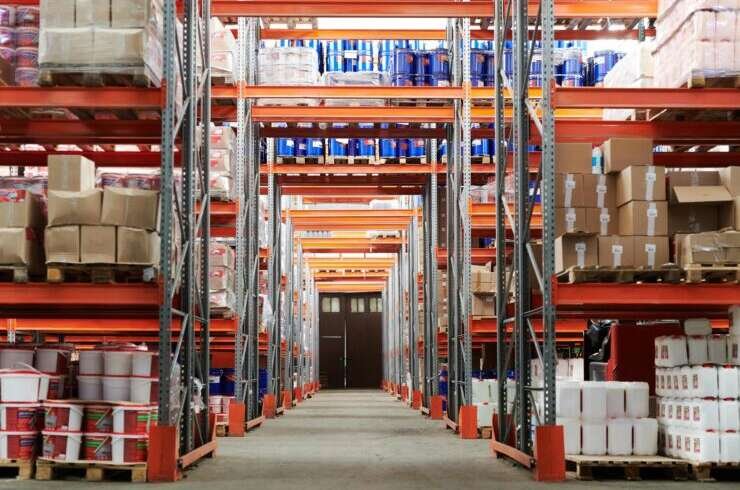

Walk onto the floor of a warehouse running a modern management system, and nothing looks particularly futuristic. There’s no visible AI, no robots gliding between racks in most facilities. What’s changed is underneath — in the logic deciding which bin a picker walks to next, which order gets prioritized when two shipments compete for the same truck, and which discrepancy gets flagged before it becomes a stockout. The intelligence isn’t visible. It’s structural.
Understanding how these systems actually function day to day — not the marketing version, but the operational one — explains why “warehouse management system” has become such an elastic term, covering everything from basic barcode scanning to platforms making dozens of micro-decisions per minute.
Inventory logic: more than a running count
The simplest way to think about a warehouse management system is as an inventory counter. That’s technically true but misses most of what the logic layer is actually doing. A modern system isn’t just tracking how many units of a SKU exist — it’s tracking where each unit sits, in what condition, allocated to which order, and how long it’s been in that state.
This matters because a single SKU rarely lives in one place. The same item might be split across a fast-pick face near the packing station, a bulk reserve location, and a returns-processing area waiting on grading. Good inventory logic treats these as related but distinct pools, so the system can answer a more useful question than “how many do we have” — it can answer “how many are actually available to promise against a new order right now.”
That distinction is where a lot of order accuracy problems either get solved or get created. A system that conflates on-hand inventory with sellable inventory will happily promise stock that’s technically present but functionally unavailable — damaged, awaiting QC, or already earmarked for a different order. The systems that avoid this treat allocation as a real-time state, not a periodic calculation.
Order accuracy: where the decision-making actually happens
Order accuracy sounds like a fulfilment metric, but it’s really a byproduct of dozens of smaller decisions made upstream of the pack station. Which pick path minimizes travel time without creating congestion at popular bins. Whether an order should be single-picked or batched with others heading to similar zones. Which substitution rules apply if a specified SKU is short.
Rule-based logic handles a lot of this — if X, then Y — but the more mature systems also weight decisions dynamically based on current floor conditions rather than static rules alone. A pick path that’s optimal at 9 a.m. might create a bottleneck at 2 p.m. if three other pickers are already working that zone. Systems built to sequence and re-sequence tasks based on live floor status handle this naturally; systems relying on fixed rules tend to degrade under exactly the volume conditions where accuracy matters most.
This is also where packaging decisions quietly enter the picture, and where they’re often underweighted. An order that’s picked correctly can still ship as a customer complaint if it’s packed in a way that damages the product in transit, or wastes so much material that unit economics suffer. Mature operations treat packaging and distribution management as an extension of order accuracy rather than a separate downstream task — the same system logic that determines what to pick should also inform how it’s packed and routed, based on product type, destination, and carrier constraints.
Real-time dashboards: visibility as a decision tool, not a report
The phrase “real-time dashboard” gets used loosely enough that it’s worth being specific about what it actually needs to do operationally. A dashboard that shows yesterday’s throughput at 9 a.m. today is a report. A dashboard that shows a supervisor, right now, that Zone C is running 20% behind pick rate and three orders are at risk of missing a carrier cutoff is a decision tool.
The difference is architectural, not cosmetic. It requires the underlying system to capture events — picks, packs, put-aways, exceptions — as they happen, rather than in scheduled batches. Dashboards built on top of batch-updated data will always lag reality by however long the batch interval is, which means the “real-time” label is doing more marketing work than technical work.
Where this actually pays off is in exception handling. A short pick, a damaged unit found during packing, a truck running late — these things happen regardless of how good the system is. What separates a well-instrumented warehouse from a poorly instrumented one is how fast that exception surfaces to someone who can act on it, versus how long it sits undetected until a customer complaint or a missed SLA makes it visible after the fact.
Why this matters more as volume grows
None of this logic is strictly necessary in a small, low-volume operation. A five-person warehouse can run on spreadsheets and institutional memory without much friction, because a human can hold the whole picture in their head. That stops being true well before most operators expect it to. Somewhere between a few hundred and a few thousand daily orders, the coordination problem outgrows manual oversight, and the quality of the underlying system logic — not the people running it — starts to determine whether the operation scales cleanly or starts accumulating errors.
AWL India approach to warehousing reflects this layered view — treating inventory logic, pick and pack decisions, and distribution as connected parts of one system rather than separate tools bolted together after the fact.
What “thinking for itself” actually means
The phrase invites more than the systems deserve — there’s no independent judgment happening, just fast, consistent execution of logic that used to depend on individual expertise and constant human correction. That’s arguably more valuable than something that sounds more impressive. A warehouse that runs well isn’t one where nobody has to think. It’s one where the routine decisions are handled reliably enough that the people on the floor can spend their attention on the exceptions that actually need it.