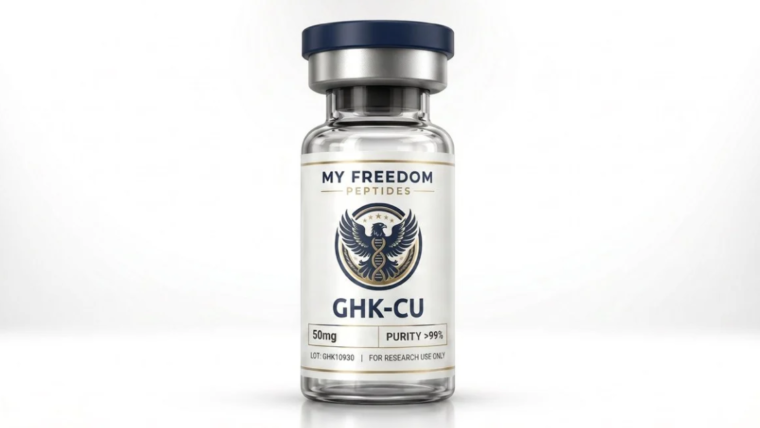
The GHK-Cu research peptide is a copper-binding peptide that has attracted scientific interest because of its molecular structure and its interaction with biological systems. GHK-Cu consists of a short chain of amino acids associated with a copper ion. Researchers studying peptides and copper-related biological processes may explore its chemical properties, stability, and behavior under controlled laboratory conditions.
What Is GHK-Cu?
GHK-Cu is commonly known as copper peptide GHK-Cu. Its peptide component is composed of glycine, histidine, and lysine, while copper is coordinated with the peptide. This combination makes it an interesting subject for biochemical research, particularly when investigating how peptides interact with metal ions.
Scientists study many types of peptides to understand their structures, chemical characteristics, and potential biological interactions. GHK-Cu is one example of a peptide complex that can be examined through analytical chemistry and laboratory research methods.
Why Is GHK-Cu Studied?
Interest in GHK-Cu includes research into copper-binding behavior, peptide chemistry, and biological signaling. Scientific publications have explored various aspects of this molecule, but findings can depend on the experimental model, concentration, formulation, and research conditions.
It is important to distinguish laboratory findings from established clinical outcomes. Results observed in cell-based experiments or other controlled settings do not automatically demonstrate that a product is safe or effective for human use. Research conclusions should always be based on the available evidence and the specific methods used in each study.
Important Research Considerations
Researchers working with peptide materials should pay attention to several factors before beginning an experiment. These include molecular identity, purity, concentration, storage requirements, and compatibility with the intended analytical method.
Documentation can help researchers understand what a supplier claims about a product. Relevant information may include a certificate of analysis, batch identification, analytical testing methods, and handling instructions. A certificate should be reviewed carefully because the type of test performed determines what the results can establish.
Purity alone does not confirm every aspect of a material’s quality. For example, a purity measurement may not independently verify the exact identity of a compound, the concentration of a prepared solution, or the absence of every possible contaminant. Different analytical methods answer different questions.
Storage and Laboratory Handling
Peptides may be sensitive to environmental conditions such as moisture, temperature, and repeated exposure to air. Appropriate storage depends on the specific material and the manufacturer’s documentation. Researchers should follow the product’s stated storage instructions and use suitable laboratory procedures to reduce contamination and material degradation.
Accurate labeling and recordkeeping are also important. Recording the batch number, date received, storage conditions, and experimental use can make research results easier to interpret and reproduce.
Choosing Research Materials Responsibly
When evaluating a research supplier, consider whether the product description is clear and whether supporting documentation is available. Transparent labeling and accessible testing information can help laboratories make informed purchasing decisions. Avoid relying exclusively on promotional language or broad claims that are not supported by verifiable evidence.
Researchers should also ensure that the material is appropriate for the intended laboratory application and complies with relevant institutional and legal requirements.
Conclusion
GHK-Cu is an interesting subject within peptide and copper-complex research. Understanding its molecular composition, analytical characteristics, handling requirements, and scientific limitations can help researchers approach it responsibly. Careful documentation, appropriate testing, and evidence-based interpretation remain essential when studying any research peptide. Laboratory findings should be evaluated objectively, without assuming that preliminary research establishes a clinical benefit.