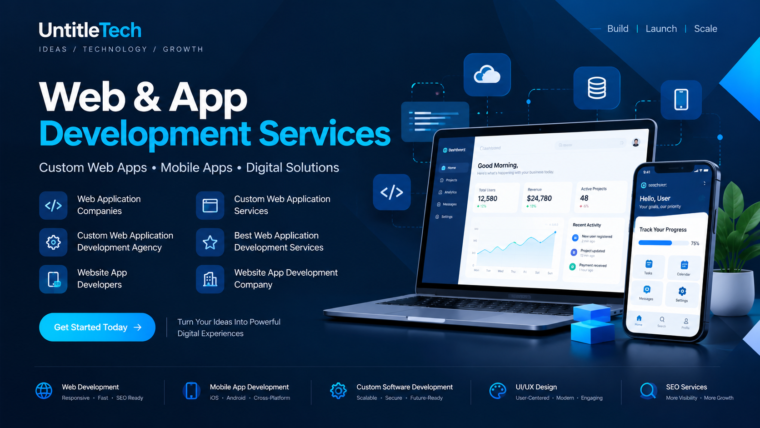

Businesses across the United States increasingly rely on digital platforms to attract customers, improve operations, and remain competitive. However, a basic website may not meet every business requirement. Companies often need interactive web applications, customized software, mobile-friendly experiences, and reliable integrations to serve their customers effectively.
Choosing the right website app development company can help businesses turn their ideas into functional digital products. From startups and small businesses to growing enterprises, a well-planned application can streamline workflows, improve customer experiences, and support long-term growth.
This guide explains how website app development services work, what to consider when selecting a development partner, and how custom web applications can support different business goals in the US market.
What Are Website App Development Services?
Website app development services include the planning, design, development, testing, deployment, and maintenance of websites and interactive web applications. Depending on a company’s requirements, these services may include customer portals, booking systems, e-commerce platforms, dashboards, internal management tools, and other browser-based applications.
A standard website usually provides information about a business, its services, or its products. In contrast, a web application enables users to complete specific tasks. For example, customers may use an application to create accounts, schedule appointments, track orders, manage subscriptions, or submit information securely.
Furthermore, businesses can connect their applications with payment systems, customer relationship management software, analytics platforms, and other business tools. These integrations help teams reduce manual work and maintain more consistent information across systems.
For example, a US-based home services company may need a website to generate leads, a booking application to schedule appointments, and an administrative dashboard to manage its workforce. A connected digital system can make these processes easier to manage.
Therefore, businesses should define their objectives before choosing a development solution. Clear requirements help teams select appropriate technologies, prioritize essential features, and avoid unnecessary development costs.
How to Choose the Right Website App Development Company
Selecting a website app development company involves more than comparing prices. The right partner should understand your business model, target customers, operational challenges, and long-term objectives.
Review the Company’s Relevant Experience
Start by reviewing available portfolios, project descriptions, and case studies. Look for examples that demonstrate experience with similar functionality, integrations, or business requirements.
However, do not rely on marketing claims alone. Ask potential providers to explain their development process, project responsibilities, and how they measure success. Verified examples can help you understand whether a proposed approach fits your needs.
Evaluate Technical Expertise
A development team should understand the technologies required for your project. Depending on the application, these may include frontend frameworks, backend development, databases, APIs, cloud infrastructure, and security controls.
In addition, ask how the proposed architecture will accommodate future updates. A suitable technical foundation can make it easier to introduce new features as your business grows.
Understand Communication and Project Management
Successful projects require clear communication. Before signing an agreement, establish how the team will share progress, collect feedback, demonstrate features, and manage changes.
A defined project plan should identify major milestones, responsibilities, deliverables, and approval processes. Consequently, everyone can understand the project’s status and address issues before they become expensive problems.
Confirm Ownership and Maintenance Terms
Before development begins, clarify source-code ownership, intellectual property, hosting arrangements, third-party licensing, documentation, and post-launch support.
You should also understand how the provider handles updates, security issues, bug fixes, backups, and future enhancements. These details help you evaluate the total cost of ownership rather than focusing only on the initial quote.
Website App Development Services for Modern Businesses
Professional website app development services can address different business requirements, from online customer experiences to complex internal workflows. The best solution depends on the problems your company needs to solve.
Responsive Website Development
A responsive website adjusts its layout to different screen sizes, including desktops, tablets, and smartphones. This approach helps users navigate pages, access information, and complete important actions across devices.
For businesses that rely on online inquiries, product discovery, or appointment requests, responsive design is an essential starting point. Clear navigation, readable content, and useful calls to action can make the experience more convenient.
Interactive Web Application Development
Interactive applications enable customers and employees to complete tasks through a browser. Common examples include booking systems, client portals, inventory dashboards, reporting tools, and account management platforms.
The application should prioritize usability, performance, and security. Moreover, development teams should test key workflows to confirm that users can complete tasks without unnecessary confusion.
Explore web application development services for building customized business platforms to learn more about this service category.
E-Commerce and Online Transaction Platforms
Online stores need more than product pages. Depending on their business models, they may require payment processing, inventory management, order tracking, customer accounts, and automated notifications.
A well-planned e-commerce platform can make shopping more straightforward. Nevertheless, payment security, accurate product information, and a reliable checkout process should remain priorities throughout development.
Website Maintenance and Improvements
A website or application requires ongoing attention after launch. Regular updates, performance checks, backups, security reviews, and usability improvements help maintain reliability.
Furthermore, monitoring user feedback can reveal confusing features or unnecessary steps. Businesses can then prioritize improvements based on actual customer needs.
Website App Developers: Skills and Expertise to Look For
Experienced website app developers combine technical knowledge with practical problem-solving skills. They should understand how users interact with a product and how the application supports wider business objectives.
Frontend Development
Frontend development focuses on the elements users see and interact with. These include page layouts, navigation menus, forms, dashboards, buttons, and responsive components.
A strong frontend experience should remain consistent across supported devices and browsers. Developers should also consider accessibility, readable typography, and predictable interactions.
Backend Development
Backend development supports the application’s underlying functionality. It may include business logic, database operations, authentication, integrations, and data processing.
For example, an appointment platform may need to check available time slots, store booking details, send confirmations, and prevent scheduling conflicts. Reliable backend logic helps these features work together correctly.
Database and API Integration
Many applications need to exchange information with external platforms. APIs can connect applications with payment processors, customer management tools, email services, analytics systems, and other business software.
However, integrations require careful planning. Teams should consider authentication, data validation, error handling, compatibility, and security before connecting different systems.
Testing and Quality Assurance
Testing helps identify functional problems before they affect customers. Development teams should check forms, navigation, user permissions, payment workflows, responsive layouts, and integrations.
In addition, they should test unexpected situations, such as invalid inputs or temporary service failures. This approach helps create a more dependable user experience.
Custom Web App Dev Services for Specialized Business Needs
Custom web app dev services are useful when standard software cannot fully support a company’s workflows. Instead of forcing a business to adapt to a generic tool, a custom application can be designed around specific requirements.
For example, a logistics company may need delivery tracking and dispatch management. Meanwhile, a professional services firm may require a secure client portal with document sharing, appointment scheduling, and project updates.
Business Process Automation
Custom applications can automate repetitive tasks such as data entry, notifications, approvals, reporting, and appointment scheduling.
As a result, employees may spend less time managing repetitive processes and more time supporting customers or improving operations. However, automation should be designed around a clearly documented workflow.
Customer Portals and Account Dashboards
A customer portal can provide access to account details, invoices, order histories, support requests, and service updates. These features help customers find information without contacting support for every routine question.
Similarly, internal dashboards can give employees access to relevant operational data. Appropriate access controls should ensure that users see only the information they need.
Integration With Existing Software
Businesses often use multiple tools to manage daily operations. A custom application can connect selected systems and reduce duplicated information.
Before integration, teams should review available APIs, data formats, licensing requirements, and security considerations. This preparation helps prevent avoidable compatibility issues.
Businesses that need a broader digital solution can also explore custom software development services for tailored business workflows.
Custom Web App Development Consultancy: Planning Before Building
A custom web app development consultancy can help businesses evaluate their requirements before committing to a full development project. Effective planning identifies business goals, user needs, technical constraints, and potential risks.
Define the Business Problem
Start by describing the problem your application should solve. For example, your company may want to reduce manual booking work, improve customer communication, centralize records, or simplify reporting.
Next, identify the people who will use the application. Customers, administrators, managers, and employees may have different needs and permissions.
Establish Project Requirements
Document essential features, expected user journeys, integrations, security requirements, and reporting needs. Separate must-have features from optional improvements.
This distinction helps the team prioritize the initial release. It also makes proposals easier to compare because providers can estimate the same core requirements.
Create a Realistic Roadmap
A project roadmap should include discovery, design, development, testing, deployment, and maintenance. Each stage should have clear deliverables and review points.
Furthermore, teams should discuss dependencies that could affect the timeline, such as third-party approvals, data migration, or access to existing systems.
Define Success Metrics
Before launch, decide how you will measure the application’s value. Relevant metrics may include task completion rates, processing time, qualified leads, conversion rates, support requests, and user satisfaction.
A clear measurement plan helps businesses determine whether the product is achieving its intended goals.
Customized Web Application Development for Different Industries
Customized web application development can support a wide range of industries. However, each solution should reflect the organization’s actual processes, users, and regulatory responsibilities.
Healthcare and Wellness
Healthcare organizations may need appointment scheduling, administrative dashboards, patient communication, or staff coordination tools.
These applications require careful attention to privacy, security, and applicable compliance requirements. Organizations handling regulated health information should obtain appropriate legal and security guidance before implementation.
Retail and E-Commerce
Retail businesses may benefit from inventory dashboards, product management, customer accounts, order tracking, and online payments.
In addition, integrating inventory and order systems can help teams maintain more consistent information. Clear product descriptions and a straightforward checkout experience also support customers during purchasing.
Education and Training
Educational organizations may use applications to manage courses, learning resources, assessments, student accounts, and progress reporting.
Accessible navigation and responsive layouts are particularly important because learners may use different devices and assistive technologies.
Professional Services
Consultants, agencies, and other professional firms can use client portals, document management features, booking systems, and project dashboards.
These tools can organize communication and help clients access relevant information. Nevertheless, access permissions and data protection should remain central design considerations.
Logistics and Field Services
Logistics companies and field service businesses may need dispatch dashboards, route information, delivery updates, job scheduling, and customer notifications.
By connecting these features, a business can improve coordination between office staff, field workers, and customers.
Enterprise Web App Development Services for Growing Organizations
Enterprise web app development services support organizations with more complex operational requirements. These projects may involve multiple departments, large user groups, role-based permissions, advanced reporting, and integrations with existing business systems.
Scalability and Performance
Enterprise applications should be planned around expected usage, data volumes, and future growth. Architecture decisions should reflect realistic requirements rather than adding complexity without a clear purpose.
Performance testing can help teams identify bottlenecks before the platform serves a larger audience. Monitoring after launch can also reveal where optimization is needed.
Security and Access Management
Enterprise applications may contain confidential operational or customer information. Therefore, teams should plan authentication, authorization, logging, data protection, and recovery procedures according to the project’s risk profile.
Regular security reviews and dependency updates also help teams respond to changing technical risks.
Legacy System Integration
Established businesses may rely on older systems that cannot be replaced immediately. Integration can help connect selected legacy tools with newer applications.
However, teams should assess compatibility, data quality, and maintenance requirements before proceeding. A phased migration may be more practical than replacing every system at once.
Reporting and Business Intelligence
Dashboards and reporting tools can help managers monitor operational activity and make informed decisions. Useful reports should focus on reliable data and clearly defined business indicators.
The objective is not to collect every possible metric. Instead, choose information that supports specific decisions.
Web Application Development Agencies: How to Compare Providers
Web application development agencies can differ in their technical expertise, project processes, communication styles, and support offerings. A structured evaluation helps you compare providers fairly.
Consider these factors:
- Relevant experience: Look for work that resembles your business requirements.
- Technical approach: Ask why the proposed architecture and technology suit the project.
- Design process: Confirm how the team researches user needs and tests interfaces.
- Security planning: Review how the provider handles authentication, permissions, and sensitive data.
- Testing standards: Establish how functionality, compatibility, and performance will be checked.
- Project transparency: Confirm milestone reporting, feedback procedures, and change management.
- Post-launch support: Understand maintenance responsibilities, response arrangements, and future enhancement options.
Request a written proposal with scope, deliverables, assumptions, responsibilities, and payment milestones. In addition, ask how the provider will handle changes that arise during development.
Do not select a partner solely because it offers the lowest price. Instead, consider the overall value, clarity of the proposal, and suitability of the solution.
How Much Do Website App Development Services Cost?
The cost of website app development services depends on project scope, design complexity, integrations, security requirements, and ongoing support. A simple business website usually requires less work than a multi-user application with custom workflows and third-party integrations.
Features and Functionality
Payment processing, dashboards, search, subscriptions, notifications, and reporting can increase development effort. Therefore, prioritize features according to their business value.
Design and User Experience
Custom interface design, prototypes, usability testing, and accessibility improvements can influence project costs. These activities can also help teams identify problems before development becomes more expensive.
Data Migration and Integrations
Connecting external systems or transferring existing data may require additional planning and testing. The effort depends on the quality of the source data, the compatibility of the systems, and the required security controls.
Maintenance and Hosting
A complete budget should consider hosting, monitoring, backups, software updates, security reviews, and support. These recurring expenses continue after launch.
To manage costs, begin with a minimum viable product that solves the most important problem. Then gather feedback and expand the application as your requirements become clearer.
How SEO Supports Website App Development
Development and search engine optimization should work together when organic visibility is important to the business. A technically sound website can make its content easier for search engines to discover, although technical improvements alone do not guarantee rankings.
Use descriptive page titles, clear headings, useful content, accessible navigation, and relevant internal links. Also, ensure that important pages are crawlable and work well on mobile devices.
A topic-cluster strategy connects related pages through meaningful contextual links. For example, an article about web applications can link to custom software development, mobile application development, and SEO services. These links help visitors discover relevant information while clarifying relationships between pages.
Explore search engine optimization services for improving technical SEO and organic visibility to understand how SEO can complement a website development strategy.
For general background, read the Wikipedia explanation of web applications. You can also consult the official USAGov business resource for general information relevant to operating a business in the United States.
Security, Privacy, and Accessibility Best Practices
Security and accessibility should be considered throughout development. Adding them only at the end can lead to avoidable problems and expensive revisions.
Protect Customer Information
Collect only the information needed for a defined purpose. Use appropriate access controls, secure data transmission, and documented retention practices. Businesses should also review their legal obligations based on the information they collect and the locations where they operate.
Test Before Launch
Test important user journeys, including account creation, forms, bookings, payments, and account permissions. Check how the application behaves when users enter invalid data or an external service becomes unavailable.
Improve Accessibility
Use readable text, sufficient color contrast, descriptive labels, useful alternative text, and predictable navigation. Where applicable, test keyboard navigation and assistive-technology compatibility.
These practices help make digital products more usable while reducing avoidable technical risks.
How to Measure the Success of a Web Application
Launching an application is only the beginning. Businesses should monitor meaningful indicators to understand whether the product meets its objectives.
Conversion rate: Measure how often visitors complete an important action, such as submitting an inquiry or making a purchase.
Task completion: Evaluate whether users can finish bookings, transactions, or other essential workflows.
Performance: Monitor loading speed, errors, uptime, and responsiveness.
Feature adoption: Review whether customers and employees use the features designed for them.
Operational efficiency: Measure changes in manual work, processing time, and support requests.
Customer satisfaction: Collect feedback to identify confusing steps and opportunities for improvement.
Choose metrics that match the business model. For example, a lead-generation website may focus on qualified inquiries, while a subscription application may prioritize activation and retention. Review results regularly and use them to guide future improvements.
Why Choose UntitleTech for Web and App Development?
A successful digital project begins with clear requirements, realistic planning, and a focus on customer needs. UntitleTech offers a starting point for exploring web application development, custom software, mobile app development, and SEO-related services through its published service pages.
Before choosing any provider, explain your objectives, required features, expected timeline, and budget range. Ask for a clear project scope, an achievable roadmap, and details about testing and post-launch support.
Visit the official UntitleTech website to explore its services. You can also review its web application development services, custom software development services, and mobile app development services.
Evaluate any provider based on verifiable experience, the relevance of its proposed solution, and the clarity of its communication. A suitable development plan should connect each major feature to a genuine business or user need.
Frequently Asked Questions About Website App Development Services
1. What does a website app development company do?
A website app development company can plan, design, build, test, and maintain websites and web applications. Depending on the project, its work may include integrations, dashboards, customer portals, and ongoing technical support.
2. What are custom web app dev services?
Custom web app dev services create applications around a business’s specific requirements. Examples include booking platforms, client portals, internal dashboards, and workflow automation tools.
3. How do I choose among web application development agencies?
Compare relevant experience, technical planning, security practices, communication, testing, pricing, and post-launch support. Request a written proposal that clearly defines scope and deliverables.
4. What affects the cost of enterprise web app development services?
Costs depend on the application’s complexity, number of users, security requirements, integrations, data migration, testing, and maintenance needs. A discovery phase can help establish a realistic estimate.
5. Should I choose a responsive website or a mobile app?
A responsive website may be sufficient for business information, lead generation, and many online transactions. A mobile app may be useful when users need frequent access to specialized features or device integrations. Choose based on customer needs and expected business value.
Start Your Web Application Development Project Today
Your digital platform should do more than look professional. It should solve real problems, improve customer experiences, and support your business goals.
Start by identifying your most important requirements, defining success metrics, and prioritizing essential features. Then compare development options and choose a solution that fits your budget, timeline, and long-term plans.
Ready to discuss your project? Share your goals and requirements to explore suitable development options.
Visit the UntitleTech contact page to discuss your website, web application, custom software, or mobile app project.
Contact and Related Services
- Official website
- Web application development services
- Custom software development services
- Mobile app development services
- Search engine optimization services
- Contact UntitleTech