
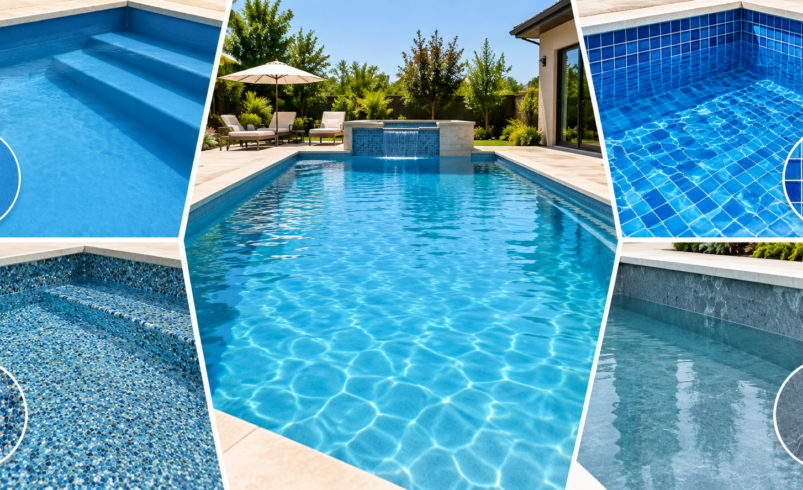

A pool finish is an important part of any swimming pool. It is the final layer placed over the inside of the pool and plays a big role in how the pool looks and feels. The finish can change the color of the water, the feel of the surface, and how much care the pool needs over time.
There are many types of pool finishes to choose from. Some are simple and affordable, while others offer a more stylish look and added durability. The right choice will depend on your budget, pool design, maintenance needs, and personal taste.
In this guide, we will explain the most common pool finishes and what you should know about each one.
What Is a Pool Finish?
A pool finish is the surface layer that covers the inside of a concrete or gunite swimming pool. It protects the pool structure and gives the pool its final look.
The finish can affect several things, including:
- The color of the pool water
- The look of the pool
- How smooth or textured the surface feels
- Cleaning and maintenance needs
- How long the surface may last
- The overall cost of the pool project
Before choosing a finish, it is helpful to understand how each material works and what it can offer.
1. White Plaster
White plaster is one of the most common and traditional types of pool finishes. It is usually made with white cement and marble-based material. It gives the pool a clean and simple appearance.
When the pool is filled with water, white plaster often creates a light blue water color. It works well with many pool styles and is often chosen because it is more affordable than many other finish options.
Benefits of White Plaster
- Affordable compared with many premium finishes
- Simple and clean appearance
- Works with different pool designs
- Easy to repair
- Commonly available
The main downside is that white plaster can show stains and discoloration more easily. It may also show signs of wear over time.
Proper water care can help protect the surface and keep it looking good for longer.
2. Colored Plaster
Colored plaster is similar to traditional white plaster, but color is added to the material. This gives homeowners more choices when deciding how they want their pool to look.
Common colors include blue, gray, tan, and other soft shades. A darker finish can give the water a deeper appearance, while a lighter finish can make the pool look bright and open.
Colored plaster is one of the more flexible types of pool finishes for homeowners who want something different from plain white plaster without choosing a high-cost finish.
One thing to keep in mind is that darker colors may make fading or uneven areas easier to notice. Keeping the pool water properly balanced is important for helping the finish last.
3. Quartz Finish
A quartz pool finish contains small pieces of quartz mixed into a cement-based surface. Quartz is harder than the material used in basic plaster, which can make this type of finish more resistant to everyday pool use.
Quartz finishes are available in many colors and can give the pool a clean and slightly textured appearance.
Benefits of Quartz
- More durable than basic plaster
- Available in many colors
- Attractive appearance
- Good choice for regular pool use
- Can last longer than standard plaster
Quartz usually costs more than basic plaster, but it can be a good middle option for homeowners who want better durability without moving to one of the most expensive finishes.
4. Pebble Finish
Pebble finishes use small natural stones or polished pebbles to create the pool surface. They are among the most popular premium types of pool finishes because they give the pool a natural and unique appearance.
Pebble finishes come in many colors and sizes. Some can create a natural lagoon-style look, while others can give the pool a more modern appearance.
There are also smooth and more textured pebble options. The type you choose can change how the surface feels under your feet.
Benefits of Pebble Finishes
- Strong and durable surface
- Natural appearance
- Many colors and styles
- Can help hide small stains
- Works well with custom pool designs
Some pebble finishes can feel rougher than plaster or polished surfaces. If you spend a lot of time walking or sitting in the pool, ask about the surface texture before choosing this option.
5. Glass Bead Finish
Glass bead finishes use small pieces of glass within the pool surface. They are known for creating a bright and sparkling appearance.
When sunlight hits the glass, it can reflect light through the water. This can make the pool look more colorful and eye-catching.
Glass beads are available in many colors, so they can be used to create different water shades.
Why Choose Glass Beads?
- Creates a bright and stylish appearance
- Reflects light
- Available in many colors
- Can give the water a sparkling look
- Works well with modern pool designs
Glass bead finishes usually cost more than basic plaster and some quartz options. They are often chosen when the appearance of the pool is a major part of the design.
6. Polished Aggregate Finish
Polished aggregate finishes contain small stones or other materials that are polished to create a smoother surface.
This type of finish can give you the natural look of stone without the rough feel that may come with some exposed pebble finishes.
Polished aggregate is available in different colors and material combinations. It can work well with both modern and natural-looking pools.
For homeowners comparing different types of pool finishes, polished aggregate can be a good choice when they want durability, style, and a smoother surface.
7. Pool Tile
Pool tile is another option for finishing a swimming pool. Tiles can be made from materials such as ceramic, porcelain, and glass.
Tile can be used across the entire pool or only in certain areas, such as the waterline, steps, spa, or decorative sections.
A fully tiled pool can create a high-end look, and there are many colors, shapes, patterns, and designs to choose from.
Benefits of Pool Tile
- Many design choices
- Easy to create custom patterns
- Smooth surface
- Easy to clean
- Durable when properly installed
- Can create a high-end appearance
The main downside is cost. A full tile finish can be much more expensive than plaster or aggregate finishes. Good installation is also important to help prevent loose or damaged tiles.
8. Pebble and Glass Combination
Some pool finishes combine different materials to create a special look. A common example is a mixture of pebbles and glass beads.
The pebbles can provide a natural base, while the glass beads can add sparkle and color. This combination can create a unique appearance that is different from a standard plaster or pebble finish.
These finishes are often used in custom pools where homeowners want a more personal design.
The final cost will depend on the materials used, the size of the pool, and the amount of detail in the finish.
How Do You Choose the Right Pool Finish?
With so many types of pool finishes available, it can be hard to know which one is right for your pool. Start by thinking about a few important factors.
Consider Your Budget
Your budget will have a major effect on your choice. Basic plaster is generally more affordable, while quartz, pebble, glass, and full tile finishes can cost more.
Do not only look at the starting price. Think about how long the finish may last and how much care it may need over time.
Think About the Look
The finish can change the way your pool looks once it is filled with water.
Light finishes often create lighter water colors, while darker finishes can give the pool a deeper blue or green appearance.
Think about how the finish will look with your pool deck, landscaping, home, and outdoor lighting.
Check the Surface Feel
The texture of the pool surface is also important.
Some pebble finishes can feel rough under your feet, while plaster, polished aggregate, and tile can provide a smoother feel.
If children or family members spend a lot of time in the pool, surface comfort may be an important factor.
Think About Maintenance
Every pool finish needs regular care. Proper water balance is especially important for plaster and other cement-based finishes.
Before making your choice, ask what type of cleaning and maintenance the finish requires. This can help you avoid unexpected problems later.
Consider Durability
Different types of pool finishes have different levels of durability. Basic plaster can provide good performance when properly cared for, while quartz, pebble, glass, and tile may offer longer-lasting options depending on the material and installation.
A pool professional can help you compare the expected life and care needs of each finish.
How Long Does a Pool Finish Last?
The life of a pool finish can depend on several factors. These include the material, installation quality, water chemistry, cleaning routine, and how often the pool is used.
Basic plaster may need to be replaced sooner than some premium finishes. Quartz and pebble finishes can often last longer when properly installed and maintained. Tiles can also last for many years, although individual tiles or grout may sometimes need repairs.
Keeping the pool water balanced is one of the most important ways to protect the finish. Poor water chemistry can damage some surfaces and may shorten their useful life.
Final Thoughts
There are many types of pool finishes, and each option has its own benefits. White plaster is a simple and affordable choice, while colored plaster provides more style options. Quartz can offer added durability, pebble finishes create a natural look, and glass beads can add sparkle to the water. Tile provides even more choices for homeowners who want a custom design.
The right finish depends on your budget, preferred appearance, surface comfort, maintenance needs, and long-term plans for the pool. If you are planning a new pool or updating an existing one, getting advice from experienced Pool builders Palm Beach Gardens can help you compare pool finish options and choose one that fits your pool design, outdoor space, and needs. Professional pool builders can also help with the planning and construction process to create a pool that works well for your home.