
Order data and inventory sync failures usually happen when different systems are not speaking the same language at the same time. A sale may be recorded in one platform, but the stock deduction, customer record, warehouse update, or accounting entry may lag behind or never arrive at all. For Australian retailers, wholesalers, hospitality operators, and eCommerce businesses, these gaps can quickly create overselling, stock shortages, delayed dispatches, and frustrated customers.
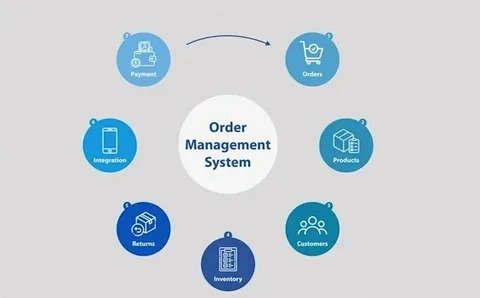
These issues are especially common when businesses rely on separate tools for sales channels, warehouse management, point of sale, and fulfilment. A online order management system can help bring these moving parts into one workflow, but the real challenge is understanding where sync failures begin. Once you know the weak points, it becomes much easier to prevent errors before they affect customers or stock levels.
In practice, sync failures are rarely caused by one single mistake. They often come from a mix of timing issues, poor data mapping, unreliable integrations, manual overrides, and inconsistent stock rules. The good news is that most of these problems can be identified and reduced with the right processes and controls.
Key Points
- Sync failures usually occur when order, stock, and fulfilment systems update at different times or use different data structures.
- Common causes include poor integration setup, API interruptions, duplicate records, manual edits, and mismatched product identifiers.
- Businesses often notice problems through overselling, inaccurate stock counts, delayed orders, or incorrect shipping allocations.
- Strong product data, regular reconciliation, and clear system rules reduce the likelihood of sync errors.
- Monitoring alerts, audit logs, and exception handling make it easier to catch issues before customers are affected.
What Order Data and Inventory Sync Really Means
Order and inventory synchronisation refers to the automatic exchange of information between business systems. When a customer places an order, the sale should update stock levels, trigger fulfilment, notify relevant teams, and reflect in reporting systems. Ideally, this happens in near real time.
In a simple setup, this might involve an online store and a warehouse database. In more complex businesses, the same order may need to move through a marketplace, ERP platform, accounting software, shipping provider, and in-store POS system. The more systems involved, the more opportunities there are for mismatch.
Sync failures happen when one part of that chain breaks. The order may be accepted, but stock is not reserved. The stock may be reduced, but the order status does not change. Or the same order may be processed twice because the system did not recognise that it had already been handled.
Where Failures Most Commonly Start
1. Integration setup errors
Many sync problems begin during setup. If product codes, variants, warehouse locations, or tax settings are mapped incorrectly, systems may still exchange data, but the data will be wrong. This is one of the most common sources of hidden errors because the system appears to work until orders start flowing at scale.
For example, if a shirt is listed under one SKU in the online store but a different SKU in the warehouse system, stock may not deduct correctly. The result is often overselling or stranded inventory that cannot be found when needed.
2. API delays or interruptions
Most modern systems rely on APIs to share information. If the API is slow, unavailable, rate-limited, or returns an error, the sync may fail or be delayed. In busy trading periods, such as Black Friday, EOFY sales, or Christmas, these delays become more visible.
A temporary outage does not always mean data is lost, but if the system has weak retry logic, the update may never complete. That can leave order records and stock levels out of step for hours or even days.
3. Manual changes outside the main workflow
Manual edits are a major source of inconsistency. If staff adjust stock in one system but not the others, the numbers quickly diverge. This often happens in fast-moving environments such as retail stores, cafés, and wholesale dispatch centres where teams are trying to solve problems quickly.
Common examples include:
- Changing stock quantities directly in a POS system
- Editing an order after it has been sent to fulfilment
- Marking an item as shipped without confirming dispatch
- Applying refunds or cancellations in only one platform
4. Duplicate or conflicting records
When customer details, product listings, or order references are duplicated, systems may not know which record to trust. This can create duplicate shipments, duplicate invoices, or stock being reserved twice. In some cases, the same customer order may appear under different identifiers across platforms, making reconciliation difficult.
How Businesses Notice the Problem
Sync failures often show up as operational symptoms before anyone spots the technical cause. These signs can be subtle at first, but they tend to repeat.
Overselling and stockouts
This is one of the clearest indicators. A product appears available online even though the warehouse is already out of stock. Customers place orders that cannot be fulfilled, which creates refunds, delays, and support workload.
Stock discrepancies between systems
If the same product shows different quantities in the warehouse, POS, and online store, there is likely a sync issue. Even a difference of a few units can matter when stock is tight.
Delayed order processing
Orders that sit in a pending state longer than expected may be waiting for a failed sync or a manual review. This slows fulfilment and increases the chance of customer complaints.
Incorrect fulfilment allocation
When order data is incomplete or inaccurate, the wrong warehouse or store may receive the order. This is common in multi-location businesses where stock visibility is poor.
Why Data Quality Matters So Much
Good synchronisation depends on good source data. If product names, SKUs, barcodes, categories, and units of measure are inconsistent, even the best integration will struggle. Data quality is often overlooked because it feels administrative, but it is one of the strongest predictors of reliable stock control.
Australian businesses that trade across multiple channels should standardise the way product data is created and maintained. That means using one naming convention, one SKU structure, one unit format, and one rule for how bundles, packs, and variants are stored. Without that discipline, systems can exchange data and still produce poor outcomes.
Operational Factors That Increase Risk
High order volume
The more orders processed in a short period, the more strain on integrations. Peak sales events expose weak retry logic, slow APIs, and poor exception handling.
Multiple sales channels
Businesses selling through online stores, marketplaces, wholesale portals, and physical locations face more complexity. Each channel may update stock differently, and one delay can ripple across all others.
Mixed manual and automated processes
If some staff work from spreadsheets while others work from live systems, the chance of mismatch rises sharply. Mixed workflows are often a sign that the business has outgrown its current process.
How to Reduce Sync Failures
Use one master source for product data
Decide which system controls the truth for product details, pricing, and stock. Every other system should reference that source rather than creating its own version.
Set clear validation rules
Prevent bad data from entering the system in the first place. Validate SKU formats, product codes, and stock adjustments before they are saved.
Monitor logs and alerts
Good systems record failed sync attempts, missing fields, and retry events. These logs help teams identify patterns before they become customer-facing problems.
Reconcile stock regularly
Do not rely entirely on automation. Daily or weekly reconciliation between systems helps catch small mismatches early. This is especially important for fast-moving stock or high-value items.
Train staff on exceptions
Staff should know what to do when an order fails to sync, when stock looks wrong, or when a customer reports an issue. Clear escalation steps reduce confusion and prevent ad hoc fixes.
Practical Example
Consider a business that sells homewares online and through two retail stores. A customer buys the last available table lamp online at 4:05 pm. The order is confirmed in the web store, but the warehouse system does not receive the stock update until 4:30 pm because of a queue delay. During that gap, another customer purchases the same lamp in-store.
Now both customers have paid for the same final unit. One order must be refunded or substituted, and the business must explain why the item was shown as available when it was not. This is a classic sync failure caused by timing, not necessarily by a broken system.
Better stock reservation rules, faster message delivery, and regular reconciliation would reduce the risk. So would a workflow that updates all channels at the same moment a sale is confirmed.
Conclusion
Order data and inventory sync failures usually arise where systems, processes, and people do not align. The problem may start with a wrong SKU mapping, a delayed API call, a manual override, or inconsistent product data, but the result is the same: inaccurate stock, slower fulfilment, and avoidable customer frustration.
For Australian businesses, the most reliable approach is to simplify the data flow, define a single source of truth, and monitor exceptions closely. When order and inventory systems are properly connected and regularly checked, businesses can reduce stock errors, improve service, and operate with far greater confidence.
FAQ
What is the most common cause of order and inventory sync failure?
One of the most common causes is poor data mapping between systems, especially when SKUs, product variants, or stock locations do not match exactly.
Can sync failures happen even if the software is working?
Yes. A system can be technically operational but still produce wrong results if the timing, rules, or data structure are not aligned.
How do I know if my business has a sync problem?
Common signs include overselling, stock numbers that do not match across systems, delayed order processing, and repeated manual corrections.
Should businesses rely only on automation?
No. Automation should be supported by clear workflows, regular reconciliation, and staff training for exceptions. Human oversight is still important.
What is the best way to prevent inventory mismatches?
Use one master source for product data, standardise SKU rules, monitor system logs, and reconcile stock regularly between platforms.
Why are multi-channel businesses more at risk?
Because each sales channel may update stock at different speeds or in different formats. More systems mean more chances for data to drift apart.