

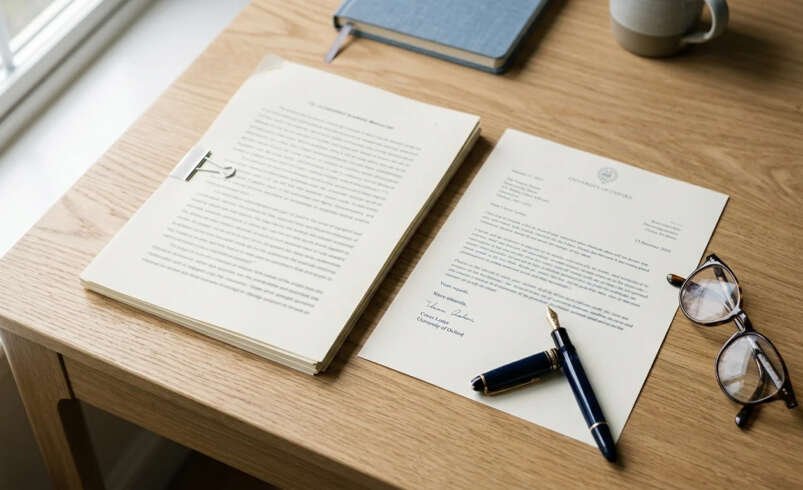

Submitting a manuscript to an academic journal can feel like sending your work into a black box. You spend months, sometimes years, gathering data and refining an argument, and then the whole thing rests on a submission portal, a cover letter, and a group of anonymous reviewers you will never meet. Understanding the full journal submission process, from the first formatting check to the final publication decision, removes a lot of that uncertainty and puts control back in your hands.
This guide walks through what actually happens at each stage of submitting to a peer reviewed journal, what editors expect from a strong cover letter, and how to respond when reviewers ask for changes. Whether this is your first paper or your fifteenth, a clear map of the process helps you avoid the small mistakes that lead to an easily avoidable desk rejection.
What Editors Are Really Evaluating Before Peer Review Even Starts
Before a single reviewer sees your paper, an editor or editorial assistant screens it for fit and basic quality. This initial check, often called a desk review, filters out manuscripts that are outside the journal’s scope, poorly formatted, or missing required documents. According to Wiley’s overview of the process, the editorial office first confirms the paper meets the requirements in the author guidelines, and only afterward does the editor in chief assess its scope, originality, and merit.
That means a technically sound study can still be rejected within days if it does not follow the journal’s formatting rules or clearly match its aims and scope. Reading the author guidelines in full, not skimming them, is one of the highest value steps in the entire journal submission process.
Step One: Choose the Right Journal Before You Write the Cover Letter
Picking a journal is not just about impact factor. Consider the following before you submit:
- Does the journal regularly publish studies with a similar design, sample size, or methodology to yours
- Is your topic within the stated aims and scope, not just loosely related to it
- What is the typical time from submission to first decision for that publication
- Does the journal accept the article type you are submitting, such as original research, a review, or a case study
Checking recent issues of the journal is a quick way to confirm fit. If your manuscript would feel out of place next to the last twelve articles the journal published, it probably is.
Step Two: Prepare the Manuscript to the Letter of the Guidelines
Every journal has its own formatting requirements for references, word counts, figures, and supplementary files. Reformatting a manuscript for a specific journal after it has already been rejected elsewhere is tedious, but skipping it invites an immediate rejection at the editorial check stage described above.
A few details that frequently trip up authors:
- Reference style, since APA, Vancouver, and journal specific formats are not interchangeable
- File naming conventions for figures and supplementary materials
- Word or page limits for the abstract, main text, and cover letter
- Required declarations, such as conflict of interest statements or data availability statements
Many research teams now build a simple checklist from the author guidelines before formatting begins, which catches these issues earlier and saves a round of frustrating back and forth with editorial staff.
Step Three: Write a Cover Letter That Earns a Second Look
A cover letter is your one direct, unfiltered message to the editor before peer review begins. Several publishers, including Taylor and Francis, note that the letter should explain the significance of the work and why it belongs in that particular journal, rather than simply repeating the abstract.
A well built cover letter typically includes:
- A clear statement of the manuscript title, article type, and author names
- A short, plain language summary of the study’s purpose and key finding
- An explanation of why the paper fits the journal’s scope and readership
- Required declarations, such as no competing interests or prior submission history
- Suggested reviewers, if the journal allows this, along with anyone who should be excluded due to a conflict of interest
- Contact details for the corresponding author
Keep the letter to one page and address the handling editor by name whenever it is listed on the journal’s website. Avoid copying your abstract word for word, and resist the urge to instruct the editor on what to do next. A short, respectful closing line thanking them for their time is enough.
What Happens After You Hit Submit
Once the manuscript clears the editorial check, it enters peer review. The exact number of stages varies slightly by journal, but the general sequence looks like this:
| Stage | What Happens |
| Editorial screening | An editor checks scope, formatting, and originality |
| Reviewer assignment | The handling editor invites two to four subject experts |
| Review period | Reviewers evaluate methods, results, and originality |
| Editorial decision | The editor weighs the reviews and issues a verdict |
| Author revision | You respond to comments and resubmit if requested |
| Final decision | The editor accepts, rejects, or requests another round |
Timelines vary enormously by field and journal. Editors typically need to invite several researchers before enough agree to review, since peer review is unpaid work fitted around teaching and grant writing. Across many journals, initial editorial screening takes roughly one to three weeks, and a single review round often adds another four to eight weeks. A full cycle from submission to a first decision commonly falls somewhere between two and four months, though highly selective or high volume journals can take considerably longer.
Because the process involves so many moving parts, some authors bring in outside help before submitting, whether that means a colleague’s careful read through or professional research publication services that specialize in formatting, reference checks, and plain language proofreading. This kind of second pair of eyes rarely changes the science, but it does catch the small errors that slow down an editorial screening.
How to Respond When Reviewers Ask for Changes
A request for major or minor revisions is not a rejection. It usually means the editor sees enough merit in the work to invest more time in it. When you receive reviewer comments:
- Respond to every point, even ones you disagree with, and explain your reasoning clearly
- Separate your response letter from the cover letter, since they serve different purposes
- Track every change in the manuscript so the editor and reviewers can see exactly what moved
- Stay factual and courteous, even if a comment feels unfair or based on a misreading
If a reviewer clearly misunderstood a section, that is often a sign the writing needs to be clearer, not that the reviewer is wrong. Treating feedback as a chance to strengthen the paper, rather than a personal critique, tends to produce a better final version and a smoother second round.
Common Reasons Manuscripts Get Rejected
A few patterns show up again and again in rejection letters:
- The study does not match the journal’s scope or readership
- The methodology section lacks enough detail to be reproducible
- The manuscript exceeds word limits or ignores formatting rules
- The cover letter fails to explain why the work matters to that specific audience
- Ethical approvals or data availability statements are missing
Most of these are avoidable with careful preparation rather than a change in the underlying research.
Bringing It All Together
A strong journal submission process is less about luck and more about preparation. Choosing the right journal, following its formatting guidelines exactly, and writing a focused, honest cover letter all reduce the chances of an early rejection. Once your paper is under review, patience and a clear, professional response to feedback carry you the rest of the way.
Teams at Harvard Publication Hub often remind authors that the manuscript itself only tells part of the story. How you present it, from the first line of the cover letter to the last revision you submit, shapes how an editor reads your work. Taking the time to get those details right is one of the most practical steps any researcher can take toward a successful publication.
Frequently Asked Questions
How long does the whole process take?
It depends heavily on the field and journal, but a range of two to six months from submission to a first decision is common, with additional time needed for any revision rounds.
Can I suggest my own reviewers?
Many journals allow this. The final choice always rests with the editor, but a well reasoned suggestion can occasionally speed up reviewer assignment.
What if my paper is rejected?
Read the reviewer comments carefully, revise where the feedback is fair, and consider a different journal whose scope more closely matches your study.
Is a cover letter always required?
Not always, but most journals request one. A clear Cover Letter for Journal Submission is worth preparing carefully even when it is optional, since it is often the editor’s first impression of your work.