
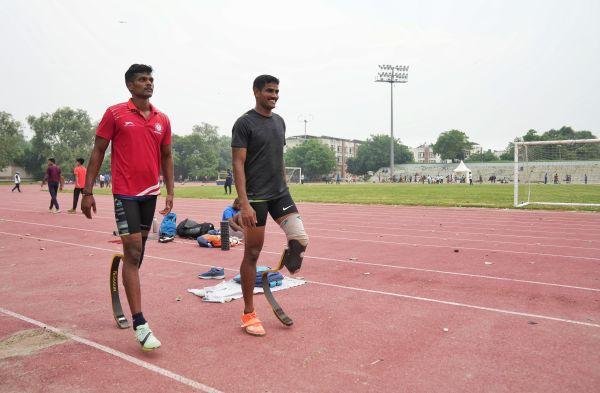

For a long time, Indian sport was discussed mainly through the achievements of cricket stars, Olympic medalists and a small group of established athletes. Para-sport rarely received the same attention. That is changing, and India’s para-athletes are playing a major role in changing it.
The numbers tell an important part of the story. At the Paris 2024 Paralympic Games, India won 29 medals—7 gold, 9 silver and 13 bronze—finishing 18th in the overall medal table. It was India’s most successful Paralympic campaign ever.
But the significance of these athletes goes beyond a medal count.
A para-athlete competing at the highest level is not simply overcoming a disability. They are competing against some of the world’s best athletes within carefully designed classification systems, while dealing with the same pressure, preparation, tactical decisions and expectations found across elite sport.
Their rise is therefore changing how India understands sporting excellence.
The story now includes athletes such as Avani Lekhara, Sumit Antil, Harvinder Singh, Praveen Kumar, Preethi Pal and Sheetal Devi, among many others. Their performances have helped move para-sport from the margins of Indian sporting conversation toward the centre.
How India’s Para-Sport Movement Is Building a Stronger Future
The biggest change is that India’s para-sport success increasingly looks like a system rather than a collection of isolated breakthroughs.
At Paris 2024, India sent 84 competitors—52 men and 32 women—and competed across multiple sports.
That breadth matters.
A strong para-sport programme cannot depend on one exceptional athlete. It needs coaches who understand different impairments, accessible facilities, sports science, classification expertise, medical support, equipment and regular international competition.
The progress can be seen across several disciplines.
Para athletics remains one of India’s strongest areas. Sumit Antil successfully defended his Paralympic javelin title and broke the Paralympic record three times during his Paris 2024 competition. Praveen Kumar won high-jump gold in the T64 category with an Asian record. Preethi Pal, making her Paralympic debut, won bronze medals in both the 100m and 200m T35 events.
Para shooting has also become a major source of Indian success.
Avani Lekhara won gold in the women’s 10m air rifle standing SH1 event at Paris 2024, while Mona Agarwal took bronze in the same event. Rubina Francis also won bronze in the women’s 10m air pistol SH1 competition.
Then there is para archery.
Sheetal Devi attracted global attention because of the extraordinary way she shoots using her feet, having been born without arms. At just 17, she won a bronze medal in the mixed compound open team event at her Paralympic debut.
Her story is particularly important because it demonstrates what adaptive sport is really about.
The equipment, technique and rules are designed around an athlete’s functional abilities. The objective is not to pretend that every athlete has the same physical circumstances. Instead, para-sport creates competitive structures that allow athletes to demonstrate what they can do at the highest possible level.
That is why classification is so important.
A casual viewer may see athletes competing in different categories and wonder why the system appears complicated. Classification exists to group athletes according to eligible impairments and their impact on sporting performance, helping create fairer competition.
Understanding that system makes para-sport more interesting rather than less.
It allows spectators to appreciate why a particular athlete may compete in one category and another athlete with a different impairment competes elsewhere.

The Athletes Changing India’s Sporting Conversation
The most powerful change may be cultural.
When a young person with a disability sees an Indian para-athlete competing internationally, sport becomes more imaginable.
That matters because participation often begins with representation.
Consider a child who uses a wheelchair and has never thought about competitive sport. Seeing wheelchair basketball, para badminton or para athletics on television can provide a completely different message: sport is not something that exists only for people without disabilities.
The same is true for families.
Parents may initially worry about injury, facilities, transportation or whether competitive sport offers a realistic future. Visible success stories can help challenge those assumptions.
However, para-athletes should not be presented only as inspirational figures.
That framing can unintentionally reduce elite athletes to stories of personal struggle. Their technical skill deserves equal attention.
When Avani Lekhara shoots, the story is not simply about her disability. It is about concentration, shot execution, consistency and competition management.
When a javelin athlete throws, biomechanics and speed matter.
When a para-badminton player changes direction, tactical intelligence matters.
That distinction is important because respect in sport comes from recognising athletes as competitors first.
The growth of para-sport is also creating better conversations about accessibility.
An athlete cannot train effectively if the stadium has inaccessible changing rooms. A wheelchair racer cannot develop properly without suitable equipment. A swimmer needs appropriate access to the pool. A visually impaired athlete may require specialised guidance and communication.
Therefore, investment in para-sport can improve sporting infrastructure for everyone.
A more accessible sports centre can benefit children, older people, rehabilitation programmes and recreational athletes as well as elite competitors.
India has also expanded support mechanisms around high-performance sport. Government programmes including Khelo India and the Target Olympic Podium Scheme have increasingly included para-athletes within broader elite-sport development efforts. In 2024, the Ministry of Youth Affairs and Sports noted that 18 Khelo India athletes were part of India’s Paralympic team during the Paris Games.
Financial support remains important because elite para-sport can involve additional expenses.
A conventional athlete may need shoes, clothing and training equipment. A para-athlete may also require specialised wheelchairs, prosthetic components, adapted equipment or other sport-specific technology.
These costs can be substantial.
For that reason, sponsorships, government assistance, foundations and corporate support can have a direct effect on an athlete’s career.
One example came after Paris 2024, when IndianOil announced monthly scholarships and medical insurance support for para-athletes in partnership with the Paralympic Committee of India.
The wider sports economy is changing as well.
Para-athletes now have opportunities to build audiences through social media, interviews, documentaries and brand partnerships. Digital visibility can help athletes attract sponsors and give fans a closer understanding of their preparation.
That does not mean every athlete will become commercially successful.
The priority should remain sporting development.
Online sports searches can sometimes include terms such as gold365 terms but athletes and families looking for legitimate para-sport opportunities should rely on recognised federations, government programmes and established sporting organisations for accurate information.
There is another important challenge: access to early talent identification.
A talented child with a disability may never enter competitive sport if their school has no inclusive physical education programme or if their family does not know where to find a suitable coach.
This is where grassroots programmes can make an enormous difference.
Schools, district sports centres and rehabilitation organisations can become entry points for children who might eventually compete nationally.
A practical pathway for a young para-athlete could involve:
- Discovering a suitable sport through school or community activities
- Getting an appropriate medical and sporting assessment
- Finding a coach experienced in para-sport
- Understanding the relevant classification process
- Developing basic technical and physical skills
- Competing at local and state-level events
- Tracking performance improvements
- Applying for recognised development programmes
- Gradually increasing competition exposure
- Seeking specialist support when moving toward international competition
The key is progression.
A 13-year-old should not be treated like a miniature professional simply because they show talent.
Young para-athletes need age-appropriate training, education and adequate recovery. Coaches also need to understand that impairment and physical development can interact differently from athlete to athlete.
This makes individualised coaching especially important.
The same training programme will not work for everyone.
Another area requiring attention is women’s para-sport.
Paris 2024 provided several visible examples of Indian women succeeding at the highest level, including Avani Lekhara, Sheetal Devi, Preethi Pal, Mona Agarwal and Rubina Francis.
Their visibility can help challenge two assumptions at once: that disability limits sporting potential and that elite sport is primarily a male space.
The next step is making participation easier before athletes reach the elite level.
Safe transport, accessible facilities, family awareness, female coaches, appropriate equipment and regular competitions can all influence whether a young girl continues in sport.
The same principle applies to athletes from smaller towns.
India’s para-sport system cannot depend entirely on major cities.
A promising athlete may live hundreds of kilometres from a specialised training centre. Travel costs, accommodation and family responsibilities can become major obstacles.
Building regional centres and developing local coaching networks could help solve this problem.
The goal should be simple: talent should not disappear because the nearest suitable facility is too far away.
For audiences who follow sports through online platforms, gold365 bonus may appear alongside general sports searches, but the more meaningful development story is taking place inside training centres, shooting ranges, athletics tracks and sports halls across India.
There are also misconceptions worth correcting.
The first is that para-sport is mainly about overcoming adversity. The reality is that elite para-athletes are highly trained competitors whose performances depend on technical preparation and strategy.
The second is that disability automatically determines sporting ability. It does not. Athletes with different impairments can excel in completely different disciplines.
The third is that medals are the only measure of progress.
An athlete who qualifies for a major championship, reaches a final, improves a personal best or moves into a higher level of international competition may be making significant progress without winning a medal.
The fourth is that accessibility benefits only para-athletes.
Accessible sports facilities create better environments for a much wider population.
Key takeaways:
- India won a record 29 medals at the Paris 2024 Paralympic Games.
- India’s para-athletes are succeeding across athletics, shooting, archery, badminton and other sports.
- Classification helps create fair competition between athletes with different eligible impairments.
- Government programmes, federations, sponsors and specialist coaches are strengthening the development pathway.
- Grassroots talent identification remains one of the biggest opportunities for future growth.
- Accessible facilities are essential for both elite competition and wider participation.
- Women and athletes from smaller cities need stronger pathways into organised para-sport.
- Para-athletes should be recognised for sporting skill and achievement, not only for overcoming adversity.
What India’s Next Generation Needs From Para-Sport
The next stage should focus less on celebrating individual breakthroughs and more on making those breakthroughs repeatable.
That means identifying young athletes earlier, improving coaching education and expanding access to sports science. It means ensuring that equipment is available when athletes need it rather than after they have already reached international level.
It also means building stronger links between schools, rehabilitation centres, local sports clubs, state federations and national programmes.
For an athlete, the ideal pathway should feel less like a maze and more like a ladder.
Each level should make it clear what comes next.
Digital platforms can contribute by making information easier to find. Searches involving 365 win or other sports-related terms may bring people into India’s wider digital sports audience, but credible information about para-athlete development should always come from official sporting sources.
There is also a role for spectators.
Fans can support para-sport simply by watching competitions, learning the classification system, following athletes throughout the year and treating para-events as serious sporting contests rather than occasional inspirational stories.
Media organisations have an equally important responsibility.
Coverage should include tactics, records, rankings, rivalries and technical performances. Para-sport becomes stronger when athletes receive sustained coverage instead of attention only after a major medal.
Frequently Asked Questions
How successful was India at the Paris 2024 Paralympics?
India won 29 medals—7 gold, 9 silver and 13 bronze—and finished 18th in the medal standings. It was India’s best-ever Paralympic performance.
Which Indian para-athletes became prominent at Paris 2024?
Several athletes made headlines, including Avani Lekhara, Sumit Antil, Harvinder Singh, Praveen Kumar, Preethi Pal, Sheetal Devi, Kumar Nitesh and Navdeep Singh. Their medals came across sports including shooting, athletics, archery and badminton.
What is para-sport classification?
Classification groups eligible para-athletes according to the type and impact of their impairment so that competitions can be structured as fairly as possible. It is a fundamental part of international para-sport.
How can a young person become a para-athlete in India?
A good starting point is a school, local sports programme or recognised club. From there, the athlete can work with an experienced coach, participate in competitions, learn about classification and progress through recognised state and national pathways.
Does India provide support for para-athletes?
Yes. Para-athletes can receive support through government sports programmes, national sporting bodies, federations, sponsors and other initiatives. Khelo India and TOPS are among the programmes that have supported India’s wider high-performance ecosystem.
What role do sponsors play in para-sport?
Sponsors can help cover training, travel, equipment, medical needs and other expenses that athletes and families may struggle to manage alone. Long-term sponsorship is particularly valuable because elite development takes years.
Is para-sport only about the Paralympics?
No. Para-athletes compete throughout the year at national championships, world championships, Asian Para Games, World Para Athletics events, World Para Swimming competitions and many other international events. The Paralympics is the biggest stage, but it is only one part of the competitive calendar.
What does gold365 vip have to do with para-sport?
It is not part of India’s official para-sport development structure. Anyone researching para-athlete opportunities, competitions or selection should use information published by recognised sporting authorities and federations.
The most important change in Indian para-sport may therefore be the shift in expectations.
The question is no longer whether Indian para-athletes can compete with the world. Paris 2024 provided a powerful answer to that.
The more important question is how far India can take this progress.
If the country continues investing in accessible facilities, specialist coaching, grassroots identification, equipment, sports science and long-term athlete welfare, today’s medal winners can become the foundation for an even deeper talent pool.
Indian para-athletes are already redefining what sporting excellence looks like. Their achievements show that excellence is not defined by having a conventional physical profile. It is defined by preparation, skill, discipline, competition and the determination to keep improving.
The next breakthrough may come from an athlete the country has never heard of yet. The responsibility now is to make sure that athlete gets the opportunity to be found.