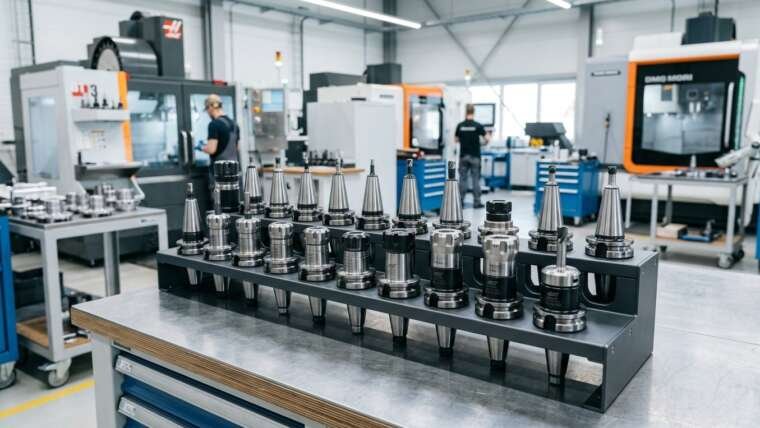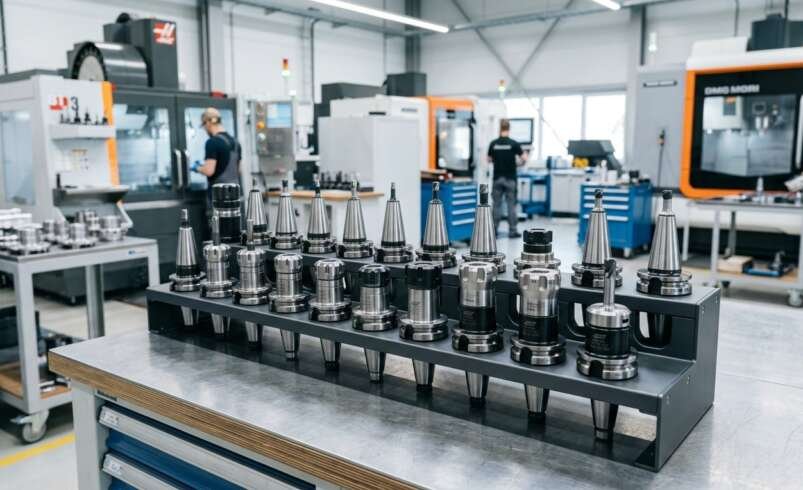

Choosing the right CNC toolholder is essential for accurate machining, stable cutting performance, and reliable production. A toolholder connects the machine spindle to the cutting tool, so its compatibility, rigidity, and clamping performance can directly affect machining quality.
Buying the wrong toolholder can lead to excessive runout, vibration, poor surface finish, tool slippage, and unnecessary downtime. Even a high-quality toolholder may perform poorly if it does not match the machine spindle or cutting application.
For businesses seeking dependable industrial tooling solutions, Khokhawala Trading LLC, an Industrial Tools Supplier in Dubai, understands the importance of selecting suitable tooling for different machining requirements.
This guide explains the essential factors to check before purchasing CNC toolholders, helping you make an informed decision and avoid common selection mistakes.
Table of Contents
- What Is a CNC Toolholder?
- Check Spindle Compatibility
- Select the Correct Toolholder Type
- Verify Cutting Tool Compatibility
- Check Runout and Accuracy
- Consider Rigidity and Tool Overhang
- Verify Speed and Balancing Requirements
- Check Coolant Compatibility
- Evaluate Quality, Cost, and Availability
- Common Mistakes to Avoid
- Frequently Asked Questions
- Conclusion and Call to Action
1. What Is a CNC Toolholder?
A CNC toolholder is a component that connects a cutting tool to the spindle of a CNC machine. It securely grips the tool, transfers rotational torque, and helps maintain the correct position during machining.
Different toolholders are designed for different applications, including milling, drilling, boring, reaming, and tapping.
Common types include:
- ER collet chucks: Offer flexibility for holding different tool-shank diameters within the compatible collet range.
- End mill holders: Use a side-lock mechanism to secure compatible tools with a shank flat.
- Shrink-fit holders: Use thermal expansion and contraction to clamp compatible tool shanks.
- Hydraulic toolholders: Use hydraulic pressure to grip suitable cutting tools with high concentricity.
- Milling chucks: Provide strong clamping for appropriate milling applications.
- Drill chucks and specialized holders: Designed for particular drilling or machining requirements.
The best choice depends on the machine, cutting tool, material, spindle speed, and required machining accuracy.
2. Check Spindle Compatibility
Spindle compatibility should be your first priority when buying a CNC toolholder. The holder must match the exact interface specified by the machine manufacturer.
Common spindle interface systems include BT, CAT, HSK, and ISO/SK. Although some interfaces may look similar or share general taper geometry, their flange dimensions, retention features, and other specifications can differ.
What Should You Verify?
Before purchasing, confirm:
- The exact spindle interface and taper size.
- The flange and drive-slot specifications.
- The required pull stud or retention knob.
- The spindle’s clamping mechanism.
- Whether the machine requires a compatible face-contact system.
- Automatic tool changer requirements.
For example, BT40 and CAT40 toolholders should not automatically be considered interchangeable simply because they share a nominal taper size.
Always check the machine manual or existing toolholder specifications before ordering. An incompatible holder may fail to seat or clamp correctly and could damage the spindle or create a safety risk.
3. Select the Correct Toolholder Type
Different machining operations require different toolholding characteristics. Choosing the correct design helps balance rigidity, accuracy, flexibility, and cost.
| Toolholder type | Typical application | Main consideration |
|---|---|---|
| ER collet chuck | General milling, drilling, and reaming | Collet range and clamping accuracy |
| End mill holder | Suitable milling operations requiring positive side-lock retention | Correct shank flat and screw position |
| Shrink-fit holder | Precision milling and suitable high-speed applications | Compatible shank and heating equipment |
| Hydraulic holder | Precision finishing and applications needing good runout control | Manufacturer’s load and speed limits |
| Milling chuck | Suitable milling operations requiring strong clamping | Cutter compatibility and operating conditions |
Do not select a holder based on its name alone. Review its specifications and ensure that the design is suitable for your cutting tool and machining conditions.
4. Verify Cutting Tool Compatibility
The toolholder must match the cutting tool’s shank and clamping requirements.
Before buying, check the following details:
Shank Diameter
The holder’s bore or collet must accommodate the cutting tool’s specified shank diameter. A mismatch can result in poor clamping or tool movement.
Shank Design
Some tools have cylindrical shanks, while others feature a Weldon flat, thread, or specialized interface. The holder must support the correct design.
Tool Length
The cutting tool must fit within the holder’s usable clamping length. Insufficient insertion or excessive projection can compromise stability.
Clamping Components
Check whether the holder requires a specific collet, nut, sleeve, clamping screw, or other accessory. These components must be compatible with the holder.
Correct matching helps reduce tool slippage, improve machining stability, and maintain consistent cutting performance.
5. Check Runout and Accuracy
Runout refers to the deviation of a rotating tool or holder from its intended rotational axis. Excessive runout can cause uneven cutting-edge loading and affect machining accuracy.
It may contribute to:
- Inconsistent hole diameters.
- Poor surface finish.
- Premature cutting-edge wear.
- Uneven chip loads.
- Reduced tool life.
- Dimensional variation between components.
How to Evaluate Runout
Ask the supplier for the specified runout tolerance and measurement conditions. Confirm where the runout is measured and whether the figure applies to the holder alone or to a complete holder, collet, and cutting-tool assembly.
Precision finishing and small-diameter tooling may require tighter runout control than some general machining operations.
Remember that the cutting tool, collet, spindle condition, and assembly procedure also affect total runout. A precision toolholder cannot compensate for every problem elsewhere in the system.
6. Consider Rigidity and Tool Overhang
Toolholder rigidity affects how well the cutting tool resists deflection under machining forces. A less rigid setup may experience vibration, chatter, dimensional errors, and poor surface finish.
One important factor is tool overhang, which refers to the distance the tool extends from its supporting holder.
Longer overhang generally increases deflection and can reduce machining stability.
What Should You Check?
- Choose the shortest practical holder and tool assembly for the required reach.
- Consider cutting forces and the workpiece material.
- Check clearance around fixtures, workpieces, and machine components.
- Evaluate whether the operation involves heavy roughing or precision finishing.
- Confirm that the holder provides suitable support for the selected cutter.
For deep cavities or hard-to-reach features, additional reach may be necessary. In these cases, choose a suitable extended holder and adjust cutting conditions as needed.
7. Verify Speed and Balancing Requirements
If your CNC machine operates at high spindle speeds, toolholder speed ratings and balancing requirements become particularly important.
An unsuitable or poorly balanced rotating assembly can increase vibration and place additional loads on machine components.
Before Buying, Check:
- The maximum rated spindle speed of the toolholder.
- Any specified balance grade and reference speed.
- Whether the rating applies to the holder alone or the complete assembly.
- The requirements for collets, nuts, pull studs, and cutting tools.
- The machine manufacturer’s operating limits.
A holder rated for a particular speed should not automatically be assumed safe at that speed with every tool and accessory.
Always follow the lowest applicable speed limit among the spindle, holder, cutting tool, retention components, and complete assembly.
8. Check Coolant Compatibility
Coolant delivery can influence cutting temperature, chip evacuation, tool life, and machining performance.
Depending on the application, you may need external coolant delivery, through-spindle coolant, or through-tool coolant.
Before purchasing, confirm:
- Whether the holder supports the required coolant arrangement.
- Whether compatible seals or coolant components are needed.
- Whether the cutting tool has the appropriate coolant passages.
- Whether the holder and accessories meet the machine’s pressure and operating requirements.
Selecting the wrong coolant configuration may reduce cooling effectiveness or prevent the system from working as intended.
9. Evaluate Quality, Cost, and Availability
Price is important, but the cheapest toolholder is not necessarily the most economical option over its working life.
A suitable purchasing decision should consider product quality, accuracy, compatibility, maintenance, and replacement availability.
Review Product Specifications
Look for clear information about dimensions, material, runout, balance, maximum speed, and intended applications.
Consider Replacement Parts
Check the availability of compatible collets, nuts, pull studs, seals, and other accessories required for routine maintenance.
Evaluate Supplier Support
A reliable supplier should help clarify product specifications and compatibility requirements. Accurate product information can reduce purchasing errors and unnecessary returns.
Compare Total Cost
Consider the purchase price alongside tool life, downtime risk, maintenance costs, and the impact of machining quality on overall production.
For workshops with multiple CNC machines, standardizing suitable toolholder systems where practical can also simplify inventory management.
10. Common Mistakes to Avoid
Avoid these common mistakes when buying CNC toolholders:
- Choosing by taper size alone: Confirm the complete spindle interface and retention system.
- Ignoring shank dimensions: Match the holder to the cutting tool’s exact shank specifications.
- Overlooking runout: Check whether the accuracy meets your machining requirements.
- Using excessive tool overhang: Select the shortest practical assembly.
- Ignoring speed ratings: Verify the limits of the complete rotating setup.
- Forgetting coolant requirements: Confirm the holder supports the required coolant delivery method.
- Buying incompatible accessories: Ensure collets, nuts, pull studs, and other components match.
- Selecting by price alone: Consider quality, service life, and technical support as well as cost.
11. Frequently Asked Questions
1. What is the most important factor when buying a CNC toolholder?
The first priority is spindle compatibility. The holder must match the machine’s exact interface, taper size, and retention requirements before other performance factors are considered.
2. Which CNC toolholder is best for precision machining?
The best choice depends on the cutting tool, required tolerance, spindle speed, and operation. Hydraulic and shrink-fit holders can be suitable for certain precision applications, while properly selected collet systems may meet other requirements.
3. How does toolholder runout affect machining quality?
Excessive runout can create uneven cutting loads, poor surface finish, dimensional variation, and premature tool wear. The acceptable level depends on the application and measurement conditions.
4. Why is toolholder balancing important?
Balancing helps control vibration caused by uneven mass distribution during rotation. It becomes especially important in high-speed applications and must be considered alongside the machine and complete tool assembly’s speed limits.
5. Can I use the same toolholder for different cutting tools?
Sometimes. A compatible ER collet chuck, for example, can accommodate different shank diameters within its specified range by changing collets. However, every tool must match the holder and clamping components, and the setup must suit the operation.
6. How can I tell if a CNC toolholder is damaged?
Look for dents, corrosion, worn contact surfaces, damaged threads, distorted clamping components, or signs of fretting. If machining accuracy changes unexpectedly, arrange an appropriate inspection before continuing precision work.
7. What information should I provide when requesting a toolholder?
Provide the machine make and model, spindle interface, taper size, cutting-tool shank diameter, required projection, machining application, spindle speed, and coolant requirements. Photographs and existing holder markings can also help confirm compatibility.
12. Conclusion and Call to Action
Choosing the right CNC toolholder requires more than matching a taper or selecting a product by price. Spindle compatibility, cutting-tool dimensions, runout, rigidity, tool overhang, speed ratings, balancing, and coolant requirements all influence machining performance.
By checking these factors before purchasing, manufacturers can reduce setup errors, improve machining accuracy, protect machine components, and achieve more consistent production results.
Khokhawala Trading LLC aims to support businesses seeking dependable industrial tooling solutions. If you are looking for an Industrial Tools Supplier in Dubai, make sure your tooling selection matches your machine specifications and production requirements.
Contact Khokhawala Trading LLC to discuss your industrial tooling needs and identify suitable solutions for your CNC machining operations.