
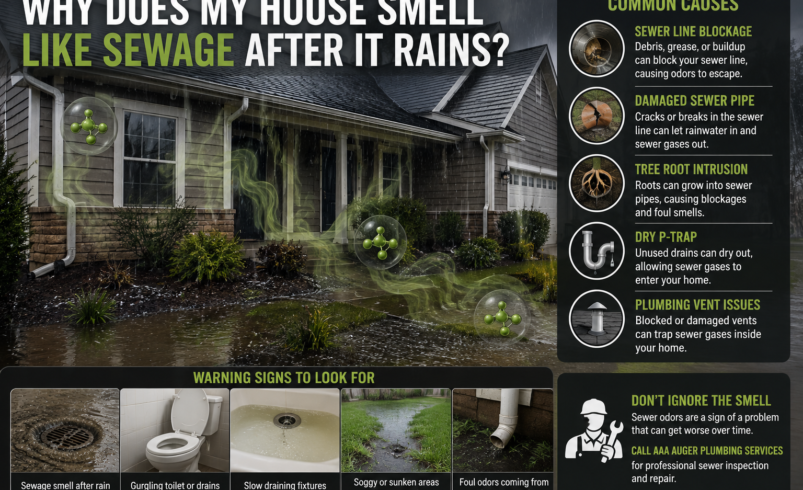

If you have ever wondered, “Why does my house smell like sewage after it rains?”, the answer may be connected to your drains, sewer line, plumbing vents, or a problem outside your home. Rain can expose existing drainage issues by increasing the amount of water entering the sewer system and surrounding soil. If the smell keeps returning, professional sewer line services can help identify where the odor is coming from and determine whether a blockage, damaged pipe, or sewer backup is involved.
AAA AUGER Plumbing Services provides sewer, drain cleaning, leak detection, and general plumbing services. Its plumbing guidance identifies unpleasant sewer odors, gurgling drains, slow drainage, and wastewater backups as warning signs that should not be ignored.
Why Does My House Smell Like Sewage After It Rains?
Rain itself does not normally cause a sewage smell inside a properly functioning home. Instead, heavy rainfall can make an existing plumbing or sewer problem more noticeable.
When rainwater enters the ground, storm drainage systems, and surrounding areas, it can increase pressure around underground pipes. If your sewer line already has a partial blockage, crack, root intrusion, or other defect, wastewater and sewer gases may find an easier path into your home or yard.
The location and timing of the odor can provide important clues about the problem.
1. A Sewer Line May Be Partially Blocked
A partial blockage in your main sewer line is one possible reason for a sewage smell after heavy rain.
Your home’s sinks, showers, toilets, and other drains eventually connect to the main sewer line. When that line becomes restricted, wastewater may not flow away from your home as efficiently as it should.
AAA AUGER lists invasive tree roots, accumulated debris, and collapsed or broken pipes among potential causes of drain and sewer blockages. Common warning signs include slow drains, gurgling toilets, backups, and foul odors.
A partial blockage may not cause an immediate backup. Instead, you may first notice an unpleasant smell, particularly after periods of heavy rainfall.
2. Rainwater Can Put Pressure on a Damaged Sewer Line
Underground sewer pipes can develop cracks, damaged joints, or other structural problems over time. When the surrounding ground becomes saturated after rain, water can enter damaged sections of the sewer system.
This can affect normal wastewater flow and potentially contribute to sewer odors around your property.
If the smell consistently appears after storms and disappears when the weather becomes dry, it is worth having the sewer system inspected rather than assuming the odor is simply caused by wet soil.
3. Tree Roots May Be Affecting the Sewer Pipe
Tree roots naturally search for moisture. If an underground sewer pipe has a crack or weak joint, roots can sometimes grow into the opening.
Once inside the pipe, roots can collect debris and gradually restrict wastewater flow. The resulting blockage may cause sewer odors, slow drains, gurgling toilets, or backups.
AAA AUGER specifically identifies invasive tree roots penetrating pipes or sewer lines as a potential cause of clogged drainage systems.
This problem can be particularly difficult to diagnose because the damaged section of pipe may be underground and invisible from inside the house.
4. A Dry P-Trap May Be Allowing Sewer Gas Inside
Not every sewage smell after rain means the main sewer line is damaged.
Everyday plumbing fixtures typically have a P-trap, which holds water and helps prevent sewer gases from entering the home through drains. If a drain is rarely used, the water inside the trap can evaporate.
Without that water barrier, sewer gases can travel through the drain opening and create an unpleasant smell.
Check rarely used sinks, showers, floor drains, and utility drains. Running water through an infrequently used fixture can restore the water barrier in the trap.
If the odor continues despite this simple step, there may be another plumbing issue that needs investigation.
5. A Plumbing Vent Problem Could Be Responsible
Your home’s plumbing system includes vent pipes that help regulate air pressure and allow sewer gases to escape safely outside.
If a vent becomes blocked or damaged, gases may not move through the system correctly. Changes in pressure during heavy rainfall or increased drainage activity can make an existing vent problem more noticeable.
You may notice:
- Sewage odors inside the home
- Gurgling drains
- Slow-draining fixtures
- Unusual toilet behavior
- Odors that become stronger after rain
Because plumbing vents are often located in difficult-to-access areas, a professional inspection may be necessary to determine whether ventilation is contributing to the odor.
6. A Sewer Backup May Be Developing
A sewage smell can sometimes be an early warning sign of a developing sewer backup.
AAA AUGER’s sewer guidance notes that unpleasant sewer odors, slow drainage in multiple fixtures, gurgling sounds, and water backing up into sinks, tubs, or floor drains can indicate a sewer problem.
Pay particular attention if the smell is accompanied by wastewater appearing in a bathtub, shower, floor drain, or toilet.
At that point, avoid using large amounts of water until the cause has been determined. Running a washing machine, taking a long shower, or repeatedly flushing toilets can add more wastewater to an already restricted system.
How Can You Find the Source of a Sewage Smell?
Start by determining where the odor is strongest.
Check floor drains, bathrooms, utility rooms, basements, crawl spaces, and areas around sewer cleanouts. Also pay attention to your yard. Wet or unusually lush areas near an underground sewer line can sometimes indicate a problem with the buried pipe. AAA AUGER identifies soggy or sunken areas and unusually lush grass near sewer lines as potential warning signs.
If the smell continues, professional sewer inspection can help identify problems that are not visible from above ground.
AAA AUGER states that its plumbers use video camera inspection equipment to inspect and clean main sewer lines and identify potential repair needs.
How Can You Prevent Sewer Odors After Rain?
Regular plumbing maintenance can help reduce the likelihood of serious sewer problems.
Consider these preventative steps:
- Keep grease, oils, and inappropriate materials out of drains.
- Do not flush items other than toilet paper.
- Keep rarely used drain traps filled with water.
- Pay attention to recurring slow drains.
- Do not ignore gurgling toilets or foul drain odors.
- Have recurring sewer problems professionally inspected.
- Consider periodic sewer line inspection if your property has recurring drainage issues.
AAA AUGER recommends professional attention when drains are slow, frequently clogged, produce foul odors, or make gurgling sounds.
When Should You Call a Plumber?
A sewage smell that occurs once may have a simple explanation, such as a dry P-trap. However, repeated sewage odors after rainfall should not be ignored, especially when combined with other drainage symptoms.
Contact a plumbing professional if you notice:
- Sewage smells throughout the house
- Multiple slow drains
- Gurgling toilets or pipes
- Water backing up into fixtures
- Standing water near floor drains
- Soggy areas in the yard
- Recurring sewer problems after storms
AAA AUGER offers 24/7 plumbing services, including sewer repair, drain cleaning, leak detection, and emergency plumbing. Its plumbers are licensed and insured, and the company serves communities including San Antonio, Austin, Dallas, Fort Worth, and surrounding Texas areas.
Final Thoughts
If your house smells like sewage after it rains, the rain may not be the actual cause. Instead, rainfall can expose an existing sewer line blockage, damaged pipe, tree root intrusion, dry P-trap, plumbing vent problem, or developing sewer backup.
The important thing is to look for other warning signs. If the odor keeps returning or appears alongside slow drains, gurgling toilets, wastewater backups, or unusual yard conditions, professional inspection can help identify the underlying problem.
Addressing sewer issues early can help protect your home’s drainage system, reduce the risk of wastewater backups, and prevent a relatively small plumbing problem from becoming a costly repair.
FAQs
1. Why does my house smell like sewage only after it rains?
Rain can make an existing sewer or drainage problem more noticeable. A partial sewer blockage, damaged pipe, tree root intrusion, plumbing vent issue, or dry drain trap may be responsible.
2. Can heavy rain cause a sewer backup?
Heavy rainfall can increase the amount of water entering drainage systems and put additional pressure on sewer infrastructure. If your sewer line is already restricted or damaged, the additional water can contribute to backup symptoms.
3. Why does my floor drain smell like sewage after rain?
A dry P-trap can allow sewer gases to enter through a floor drain. However, recurring odors accompanied by water backup or slow drainage may indicate a deeper sewer or drain problem.
4. Can tree roots cause a sewage smell in my house?
Yes. Tree roots can enter damaged sewer pipes and contribute to blockages. The resulting restriction can cause slow drains, gurgling sounds, backups, and unpleasant sewer odors.
5. How do I know if the sewage smell means I have a sewer line problem?
Look for additional symptoms such as multiple slow drains, gurgling toilets, sewage odors near drains or the yard, wastewater backups, or soggy areas near the sewer line. These symptoms can warrant professional sewer inspection.