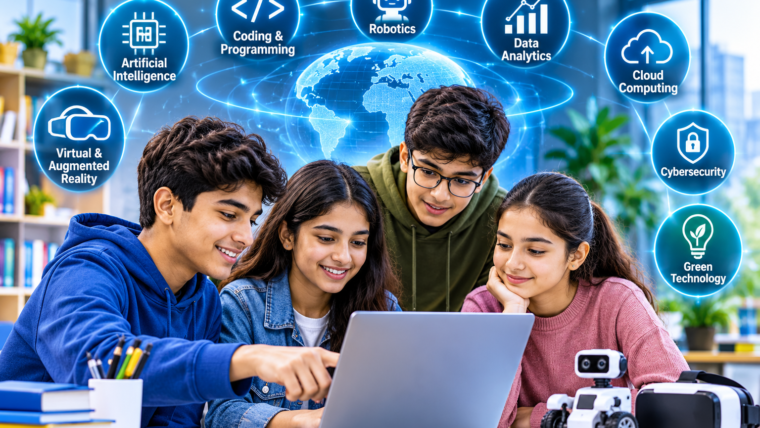
Technology is changing how people learn, work, and communicate. Students today need more than traditional classroom knowledge to prepare for future careers. They must understand digital tools, develop creative thinking, and learn how to solve problems using modern technology.
Learning future technology skills for students can help young people become confident, independent, and ready for new opportunities. From artificial intelligence to robotics, technology education gives students the knowledge they need to succeed in a digital world.
Why Future Technology Skills Are Important for Students
Technology is becoming an important part of almost every industry. Healthcare, engineering, business, education, and communication all depend on digital solutions.
Students who develop technology skills early can better understand these changes and prepare for future careers.
Preparing for Future Careers
Many future jobs will require digital knowledge and technical abilities. Students who understand technology can explore careers in software development, artificial intelligence, cybersecurity, data science, and engineering.
Learning these skills also helps students understand how technology supports different industries.
Improving Problem Solving
Technology education encourages students to think carefully and find solutions. Coding, robotics, and digital projects teach students how to break complex problems into smaller steps.
These activities help learners develop patience, logical thinking, and confidence.
Essential Future Technology Skills for Students
Students can begin developing useful digital abilities through school activities, online learning, and practical projects.
1. Artificial Intelligence and Machine Learning
Artificial intelligence is changing how people work and make decisions. Students can learn how AI systems recognise patterns, process information, and support everyday tasks.
Understanding AI also helps students use technology responsibly. They should learn about accuracy, privacy, bias, and the importance of human judgement.
2. Coding and Programming
Coding is one of the most useful technology skills for young learners. It teaches students how to create instructions that computers can understand.
Beginners can start with simple programming languages and gradually explore more advanced projects.
Coding helps students improve:
- Logical thinking
- Creativity
- Problem solving
- Attention to detail
3. Robotics and Automation
Robotics combines engineering, programming, and creative design. Students can build simple robots, control movements, and understand how machines perform tasks.
Practical robotics activities make technology learning exciting and help students understand real world applications.
4. Data Science and Digital Literacy
Students should know how to collect, organise, and understand information. Data skills help learners recognise patterns and make informed decisions.
Digital literacy is equally important. Students need to evaluate online information, protect personal data, and use digital platforms safely.
How Students Can Develop Technology Skills
Technology skills improve through regular practice and meaningful learning experiences.
Join Practical Learning Programmes
Students can explore technology through workshops, summer courses, and project based learning. A Summer Program in Oxford can provide an opportunity to explore academic subjects, develop practical abilities, and experience learning in an international environment.
A Summer Program in Oxford may also help students discover new interests and understand how technology connects with different academic fields.
Explore Business and Engineering
Technology is closely connected with business innovation and engineering development.
A business summer school can help students understand how digital tools support marketing, entrepreneurship, and business management. Students can learn how technology helps organisations make better decisions.
An engineering summer school can introduce learners to robotics, design thinking, computer systems, and technical problem solving. These experiences help students connect classroom knowledge with practical applications.
Improve Communication Skills
Technical knowledge alone is not enough. Students also need to explain ideas, work with others, and present their projects clearly.
An english summer school can help learners improve speaking, writing, and communication skills. These abilities are useful when working on technology projects with international teams.
Benefits of Learning Future Technology Skills
Developing technology skills offers several long term benefits for students.
Building Confidence and Creativity
Creating a website, designing a robot, or developing a simple application gives students a sense of achievement. These experiences encourage creativity and independent learning.
Understanding Responsible Technology Use
Students should learn that technology must be used carefully and ethically. Understanding online safety, data privacy, and digital responsibility helps them become informed technology users.
Supporting Academic Success
Technology skills can support learning in mathematics, science, business, and engineering. Students can use digital tools to research topics, organise information, and complete projects.
A business summer school can strengthen their understanding of digital business, while an engineering summer school can introduce practical technical challenges.
An english summer school can further support communication and presentation skills needed for academic projects.
Conclusion
Future technology skills for students are essential for success in an increasingly digital world. Artificial intelligence, coding, robotics, data science, and digital literacy can help young learners prepare for future opportunities.
By practising these skills through projects, workshops, and academic programmes, students can develop confidence, creativity, and problem solving abilities. Learning technology today can help them become capable and responsible leaders of tomorrow.
Frequently Asked Questions
1. What are future technology skills for students?
Future technology skills include coding, artificial intelligence, robotics, data science, digital literacy, and cybersecurity awareness.
2. Why should students learn technology skills?
Technology skills help students prepare for future careers, improve problem solving, develop creativity, and understand the digital world.
3. What is the best technology skill for beginners?
Coding and digital literacy are excellent starting points because they help students understand computers and use technology effectively.
4. How can students learn artificial intelligence?
Students can begin with basic AI concepts, educational tools, simple programming activities, and beginner machine learning projects.
5. Can technology skills help students choose a career?
Yes. Learning technology can introduce students to careers in software development, engineering, data science, cybersecurity, and digital business.
6. How can students practise technology skills outside school?
Students can practise through coding projects, robotics kits, online courses, technology clubs, and summer learning programmes.